Issue · Labor & Employment

Labor & Employment (Professional Licensing)

Every labor & employment bill, vote, and legislator stance in Maryland, automatically classified by Maddy, our AI policy reader.

Total bills
19
2026 Regular Session
Top supporter
Courtney Watson
100% support rate
Top opponent
Kathy Szeliga
0% support rate
Ranked legislators
10
5 support · 5 oppose
Key legislators

Who's moving professional licensing in Maryland

Legislators moving professional licensing in Maryland
Legislator Party Stance Support rate Votes
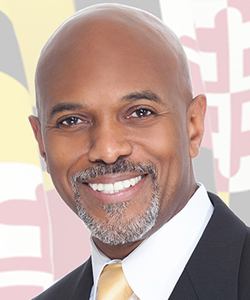
Courtney Watson
Courtney Watson House · District 9B
D
Strong +
100% 6
Guy Guzzone
Guy Guzzone Senate · District 13
D
Strong +
100% 6
Pam Guzzone
Pam Guzzone House · District 13
D
Strong +
100% 6
Ron Watson
Ron Watson Senate · District 23
D
Strong +
100% 6
Stephanie Smith
Stephanie Smith House · District 45
D
Strong +
100% 6
Kathy Szeliga
Kathy Szeliga House · District 7A
R
Strong −
0% 5
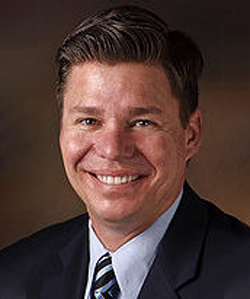
Mark Fisher
Mark Fisher House · District 27C
R
Strong −
0% 5
Matt Morgan
Matt Morgan House · District 29A
R
Strong −
0% 5
Terry Baker
Terry Baker House · District 1C
R
Strong −
0% 5
Barry Beauchamp
Barry Beauchamp House · District 38B
R
Strong −
0% 4
Showing 11–19 of 19 bills

All labor & employment bills

died · Maryland · House of Delegates Mar 16, 2026

HB 1579: State Personnel - Family and Medical Leave - Limits and Use

HB 1579 modifies Maryland state employee leave policies for family and medical care. It allows employees to take up to 30 days of paid leave without medical certification for childcare following a birth or adoption placement, and up to 60 days total for two employees jointly caring for a child. The bill also ensures state units cannot limit federal Family and Medical Leave Act (FMLA) coverage below 24 weeks for Executive Branch employees caring for a newborn, adopted child, or a child with a serious health condition. These changes apply specifically to employees in the State Personnel Management System within Maryland's Executive Branch, effective July 1, 2026.
passed · Maryland · House of Delegates Apr 13, 2026

HB 797: Employment Discrimination - Fire and Rescue Public Safety Employees - Use of Medical Cannabis

HB 797 prohibits employers from discriminating against fire and rescue public safety employees who use medical cannabis, provided they have a valid written certification from a licensed healthcare provider under Maryland's medical cannabis program. The bill modifies existing law to clarify that an employer cannot take adverse employment actions (like termination or denial of promotion) solely due to medical cannabis use, as long as the employee meets the state's certification requirements. It updates definitions in Maryland law to ensure fire and rescue employees qualify for the same protections as other medical cannabis patients under the existing program. The law does not override workplace safety rules or require employers to accommodate cannabis use during work hours.
passed · Maryland · House of Delegates Mar 23, 2026

HB 1325: Workers' Compensation - Evaluation of Permanent Impairments - Licensed Social Worker-Clinical

HB 1325 authorizes licensed clinical social workers to evaluate permanent impairments involving behavioral or mental disorders in Maryland workers' compensation claims. It requires these social workers to meet specific qualifications, including training in mental/behavioral conditions, rehabilitation counseling registration, two years of post-licensure experience, and COMAR authorization. The bill directly affects workers seeking compensation for mental/behavioral impairments and licensed clinical social workers who wish to provide these evaluations. It amends Maryland’s workers’ compensation law (Article 9, Section 9-721) to expand evaluation eligibility beyond psychologists and physicians. The changes take effect October 1, 2026.
in committee · Maryland · Senate Feb 12, 2026

SB 887: Labor and Employment - Greenhouse Workers - Collective Bargaining and Heat Protection

SB 887 establishes collective bargaining rights for greenhouse workers in Maryland, requiring employers in controlled-environment agricultural operations (like greenhouses) to allow employees to form or join unions. The bill creates new procedures for union elections, certification of representatives, and good-faith bargaining, overseen by the Secretary of Labor. It also mandates employer-provided rest breaks during extreme heat conditions to prevent heat-related illness, aligning with existing heat safety standards. This law directly affects greenhouse workers and their employers, adding specific protections not previously covered under Maryland labor law.
signed · Maryland · Senate Apr 28, 2026

SB 439: Employment Discrimination - Fire and Rescue Public Safety Employees - Use of Medical Cannabis

SB 439 prohibits Maryland fire and rescue public safety employers from taking negative employment actions (like firing or denying promotions) against employees who use medical cannabis, provided the employee has a valid medical cannabis certification under state law. It amends existing Maryland law to explicitly add this protection for public safety workers, aligning with current medical cannabis certification requirements. The bill does not change how medical cannabis is certified but ensures these employees cannot face discrimination solely for using cannabis legally under the state program. This applies to all fire and rescue employees who meet the state's medical cannabis eligibility criteria.
Sub-Topics Employment Discrimination Professional Licensing Tags Public Safety
signed · Maryland · House of Delegates Apr 28, 2026

HB 557: Occupational Licensing and Certification - Criminal History - Predetermination Review Process

HB 557 creates a pre-approval review process for individuals with non-violent criminal convictions seeking occupational licenses (e.g., cosmetology, contracting, healthcare roles) in Maryland. It requires state departments (excluding Public Safety and Correctional Services) to provide a binding determination on whether an applicant’s criminal history would block their license *before* they formally apply, based on specific criteria like the nature of the offense, time since conviction, and rehabilitation evidence. The bill prohibits denial solely for past non-violent convictions unless a direct relationship to the job or safety risk exists, and establishes a $100 fee (waivable for low-income applicants) for the review. It applies to most occupational licenses but excludes sex offense convictions and automatically allows licenses after 7 years without new offenses.
Sub-Topics Professional Licensing Tags Licensing
in committee · Maryland · House of Delegates Jan 19, 2026

HB 317: Recipients of Economic Development Assistance or State Contracts - Certification of Compliance With State Labor Laws

HB 317 requires businesses or organizations receiving $100,000+ in state economic development assistance or $250,000+ in state contracts to annually certify compliance with Maryland labor laws. This certification, due by July 1 each year starting in 2027, confirms they weren’t subject to final labor violations in the prior year and aren’t currently failing to meet labor judgments. If they fail to certify, the administering agency must pause new disbursements or contract renewals for 30 days, with the pause lifting once certification is filed or after 12 months if compliance issues remain. The bill excludes minor violations (under $5,000 without willful misconduct) and clarifies it doesn’t create new audits or require reimbursement for past funds.
signed · Maryland · Senate May 26, 2026

SB 242: Modernizing Civil Relief for Service Members Act

SB 242, the Modernizing Civil Relief for Service Members Act, allows active-duty service members and their spouses to practice in Maryland under an occupational or professional license issued by another state, without needing to meet all of Maryland’s usual licensing requirements. It also expands eligibility for veterans’ licensing benefits to include former service members who were discharged more than a certain period before applying for a license. The bill creates new provisions (Subtitle 14A) in Maryland law to streamline this process and updates definitions to clarify who qualifies under these rules. These changes directly affect military personnel, their families, and veterans seeking to work in licensed professions across Maryland.
died · Maryland · House of Delegates Feb 23, 2026

HB 370: Prince George's County - Income Tax - Credit for Employers Providing Parental Engagement Leave PG 419-26

HB 370 creates a state income tax credit for employers in Prince George’s County who provide "parental engagement leave" to qualified employees. The leave must be 10-20 hours per employee, paid at regular wage rates, and used solely for attending school-related events (e.g., parent-teacher conferences) at a public or nonpublic school in the county. Employers must obtain a certification form signed by school officials (e.g., principal and county board member) to claim the credit, which is calculated as the employee’s hourly wage multiplied by hours used, capped at $800 per employee annually. This credit directly affects PG County employers, qualified parents/guardians of school students, and school officials who verify attendance.
Showing 11 to 19 of 19 bills