Issue · Labor & Employment

Labor & Employment (Public Employees)

Every labor & employment bill, vote, and legislator stance in Maryland, automatically classified by Maddy, our AI policy reader.

Total bills
12
2026 Regular Session
Top supporter
Courtney Watson
100% support rate
Top opponent
April Rose
0% support rate
Ranked legislators
10
5 support · 5 oppose
Key legislators

Who's moving public employees in Maryland

Legislators moving public employees in Maryland
Legislator Party Stance Support rate Votes
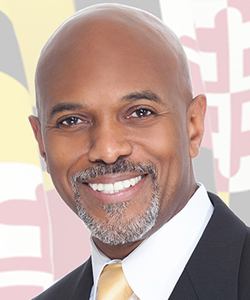
Courtney Watson
Courtney Watson House · District 9B
D
Strong +
100% 10
Guy Guzzone
Guy Guzzone Senate · District 13
D
Strong +
100% 10
Pam Guzzone
Pam Guzzone House · District 13
D
Strong +
100% 10
Ron Watson
Ron Watson Senate · District 23
D
Strong +
100% 10
Stephanie Smith
Stephanie Smith House · District 45
D
Strong +
100% 10
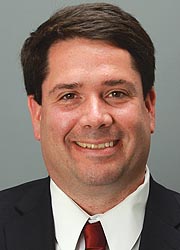
April Rose
April Rose House · District 5
R
Strong −
0% 7
Chris Adams
Chris Adams House · District 37B
R
Strong −
0% 7
Jay Jacobs
Jay Jacobs House · District 36
R
Strong −
0% 7
Kathy Szeliga
Kathy Szeliga House · District 7A
R
Strong −
0% 7
Lauren Arikan
Lauren Arikan House · District 7B
R
Strong −
0% 7
Showing 1–10 of 12 bills

All labor & employment bills

in committee · Maryland · Senate Feb 12, 2026

SB 922: Collective Bargaining - Local Government Employees and Public Employee Relations Act

SB 922 establishes collective bargaining rights for county and municipal employees in Maryland by applying the state's Public Employee Relations Act to local governments. It defines "public local employees" (excluding confidential/management staff and school/library workers) and requires counties/municipalities to adopt local labor laws for negotiations. Key provisions include mandatory good-faith bargaining, binding arbitration for unresolved disputes, and procedures for local governments to seek board reviews of their labor policies. The bill directly affects local government workers and employers across Maryland's counties and cities, excluding school boards, community colleges, and public libraries.
in committee · Maryland · House of Delegates Feb 19, 2026

HB 831: Collective Bargaining - Local Government Employees and Public Employee Relations Act

HB 831 establishes collective bargaining rights for county and municipal employees in Maryland by applying the state's Public Employee Relations Act (PERA) to local government workplaces. It defines "public local employees" (excluding confidential and management staff) and creates procedures for negotiations, including binding arbitration to resolve disputes between local governments and employee representatives. The bill also modifies the Public Employee Relations Board's structure and explicitly excludes school boards, community college boards, and public library systems from coverage. This directly affects thousands of local government workers across Maryland's counties and municipalities who will now have formalized bargaining processes for wages, hours, and working conditions.
in committee · Maryland · House of Delegates Mar 11, 2026

HB 1492: Collective Bargaining - Public Employees - Revocation of Certification and School and Library Employees' Right to Strike

HB 1492 establishes the right to strike for specific public school and library employees in Maryland, including certificated and noncertificated staff like substitute teachers, nurses, and JROTC instructors in certain counties. The bill prohibits public school and library employers from taking disciplinary action against employees who participate in or support strikes. It repeals the Public Employee Relations Board’s authority to deny or revoke a union’s certification as an exclusive bargaining representative under certain circumstances. These changes apply to defined groups of employees under Maryland’s Education Article, ensuring their collective bargaining rights are protected from employer retaliation.
in committee · Maryland · House of Delegates Mar 13, 2026

HB 1565: Public Health - Obesity Management and Treatment Programs (Healthy Maryland for Every Body)

HB 1565 requires Maryland’s State Employee and Retiree Health and Welfare Benefits Program to include an obesity treatment and management program for state employees. It also mandates that private health insurers, nonprofit health plans, and health maintenance organizations cover evidence-based obesity treatment - including FDA-approved medications, metabolic/bariatric surgery, and CDC-approved behavioral programs - for individuals diagnosed with obesity, diabetes, or related conditions. The program must be developed with the Secretary of Health and follow the same coverage rules applied to other chronic diseases, avoiding stricter requirements. This bill directly affects state employees and covered individuals with qualifying health conditions by expanding access to medically necessary obesity care.
signed · Maryland · Senate Apr 28, 2026

SB 777: Labor and Employment - Workforce Development - Hospital Employee Retraining and Placement Program and Workforce Development and Local Workforce Development Boards (Local Workforce Solutions Investment Act)

SB 777 requires Maryland’s Department of Labor to allocate funds from the Hospital Employees Retraining Fund to local workforce development boards when hospitals close, downsize, or merge. It mandates that these boards be included in state workforce programs and receive funding for the State’s quick response program to assist workers affected by job losses. The bill also requires local boards to provide grants to employers through the Apprenticeship Career Training in Our Neighborhoods Program. These changes directly affect local workforce boards, hospitals facing operational changes, and workers needing retraining or job placement support.
died · Maryland · House of Delegates Mar 16, 2026

HB 1579: State Personnel - Family and Medical Leave - Limits and Use

HB 1579 modifies Maryland state employee leave policies for family and medical care. It allows employees to take up to 30 days of paid leave without medical certification for childcare following a birth or adoption placement, and up to 60 days total for two employees jointly caring for a child. The bill also ensures state units cannot limit federal Family and Medical Leave Act (FMLA) coverage below 24 weeks for Executive Branch employees caring for a newborn, adopted child, or a child with a serious health condition. These changes apply specifically to employees in the State Personnel Management System within Maryland's Executive Branch, effective July 1, 2026.
signed · Maryland · House of Delegates May 12, 2026

HB 1248: Workgroup for an Inclusive State Workplace - Established

HB 1248 establishes a 3-year pilot program (2026-2029) requiring five selected Maryland state agencies to convert eligible full-time positions into two part-time roles with prorated benefits. The bill mandates agencies to evaluate full-time vacancies for potential conversion to part-time roles and document reasons if conversion isn’t possible. It directly affects participating state agencies and future job seekers by increasing part-time employment options with benefits in state government. Agencies must report annually on conversion status and new part-time hires to the Governor and General Assembly. The program aims to improve workforce inclusivity by expanding flexible work opportunities without altering existing part-time employment rules.
Sub-Topics Public Employees
signed · Maryland · Senate Apr 28, 2026

SB 831: Labor Law - Child Labor Penalties, Private Sector Employee Labor Relations, and State Employee Labor Standards

SB 831 strengthens Maryland's child labor protections by establishing civil penalties for employers who violate child labor laws (replacing some misdemeanor penalties with fines), directly affecting employers and minors. It prohibits employers from supporting organizations that avoid federal labor law oversight (like those exempt from the National Labor Relations Act) and allows private employees to petition the Public Employee Relations Board for resolution of certain workplace issues. The bill also bans state government agencies from seeking federal waivers of the Fair Labor Standards Act. These changes impact employers, minors, private employees, and state employees across Maryland.
passed · Maryland · House of Delegates Mar 23, 2026

HB 1480: Labor Law - Child Labor Penalties, Private Sector Employee Labor Relations, and State Employee Labor Standards

HB 1480 strengthens child labor protections by prohibiting minors from working in specific hazardous occupations (like manufacturing hazardous substances, construction, or operating machinery) and imposing civil penalties of up to $10,000 for employers who violate these rules. It also creates a new process allowing private sector employees to petition the Public Employee Relations Board to resolve workplace disputes, while banning employers from supporting organizations exempt from federal labor law (like the National Labor Relations Act). Additionally, the bill prohibits state agencies in the Executive Branch from seeking federal waivers of the Fair Labor Standards Act. These changes directly affect employers, private employees, and state government entities in Maryland.
signed · Maryland · Senate Apr 14, 2026

SB 136: Collective Bargaining - Alcohol, Tobacco, and Cannabis Commission - Police Officers

SB 136 extends collective bargaining rights under Maryland's state employee laws to police officers employed by the Alcohol, Tobacco, and Cannabis Commission (ATCC) who are authorized to make arrests. It amends state law to explicitly include these officers under Section 3-102(a)(4) of the State Personnel and Pensions article, placing them in the same category as other covered state employees. This change applies to all full-time ATCC police officers at the rank of first sergeant and below, excluding supervisory or confidential roles as defined by regulations. The bill takes effect on October 1, 2026.
Showing 1 to 10 of 12 bills
1 2 Next