Issue · Housing

Housing

Every housing bill, vote, and legislator stance in Maryland, automatically classified by Maddy, our AI policy reader.

Total bills
146
2026 Regular Session
Top supporter
Cheryl Kagan
100% support rate
Top opponent
Johnny Mautz
0% support rate
Ranked legislators
10
5 support · 5 oppose
Key legislators

Who's moving housing in Maryland

Legislators moving housing in Maryland
Legislator Party Stance Support rate Votes
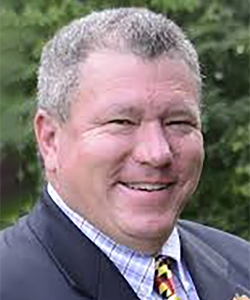
Cheryl Kagan
Cheryl Kagan Senate · District 17
D
Strong +
100% 82
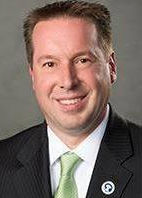
Kevin Harris
Kevin Harris Senate · District 27
D
Strong +
100% 82
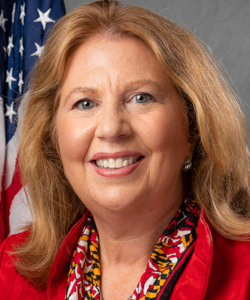
Craig Zucker
Craig Zucker Senate · District 14
D
Strong +
100% 85
Dalya Attar
Dalya Attar Senate · District 41
D
Strong +
100% 47
Dawn Gile
Dawn Gile Senate · District 33
D
Strong +
100% 83
Johnny Mautz
Johnny Mautz Senate · District 37
R
Strong −
0% 85
Jack Bailey
Jack Bailey Senate · District 29
R
Strong −
0% 80
Paul Corderman
Paul Corderman Senate · District 2
R
Strong −
3% 85
Johnny Salling
Johnny Salling Senate · District 6
R
Strong −
3% 85
Mary Beth Carozza
Mary Beth Carozza Senate · District 38
R
Strong −
3% 85
Showing 101–110 of 146 bills

All housing bills

passed both · Maryland · House of Delegates Apr 13, 2026

HB 523: Real Property - Residential Foreclosures - Commencement Restrictions

HB 523 (Real Property - Residential Foreclosures - Commencement Restrictions) delays foreclosure actions on residential properties by requiring a 90-day waiting period after a default or notice of intent to foreclose, whichever is later. It directly affects homeowners facing foreclosure and mortgage lenders by adding this waiting period, with limited exceptions for fraud, no payments, property destruction, bankruptcy, or vacant properties. Key provisions include mandatory affidavits verifying default details and notice accuracy, a $450 filing fee, and requirements for loss mitigation documentation. The bill modifies Maryland's foreclosure law to provide additional time for homeowners to seek alternatives before a foreclosure case can proceed.
Sub-Topics Mortgages
signed · Maryland · House of Delegates Apr 14, 2026

HB 226: Department of Disabilities - Housing Programs and Affiliated Foundations - Establishment

HB 226 requires Maryland's Department of Disabilities to establish affordable and accessible housing programs for people with disabilities. It also allows the department to create affiliated foundations that can raise funds from businesses, nonprofits, and individuals to support housing initiatives, assistive technology, employment accommodations, and community living programs. These foundations operate separately from the state government and cannot be considered state agencies or incur state debt. The bill directly affects individuals with disabilities by expanding access to housing and related support services through these new programs and funding mechanisms.
Tags People with Disabilities
passed both · Maryland · Senate Apr 13, 2026

SB 180: Evidence - Interception of Oral Communications - Fair Housing Testing

SB 180 allows fair housing testers working for specific programs (federal, state, local governments, or qualifying nonprofit civil rights organizations) to legally record oral communications during housing tests to document potential discrimination. The bill creates an exception to Maryland's wiretap law, permitting testers to intercept conversations they are party to if the recording is solely for gathering evidence of fair housing violations under federal, state, or local law. Crucially, recordings made under this exception cannot be used as evidence in court or other proceedings except to enforce fair housing laws. The law takes effect October 1, 2026, and directly affects fair housing testing organizations and their trained testers.
in committee · Maryland · House of Delegates Jan 29, 2026

HB 602: Baltimore County - Transfer Tax - Exemption for First-Time Home Buyers

HB 602 exempts first-time home buyers in Baltimore County from the county's transfer tax when purchasing improved residential property they will occupy as their primary residence. It directly affects individuals who have never owned residential property in Maryland that served as their principal residence before. To qualify, buyers (or their agents) must provide a sworn statement confirming their first-time buyer status and intent to live in the property as their primary home. The exemption takes effect July 1, 2026, and applies to property transfers meeting these specific criteria.
died · Maryland · House of Delegates Mar 4, 2026

HB 368: Prince George's County - Supplemental Homeowners' Property Tax Credit - Required PG 412-26

HB 368 requires Prince George's County to provide an additional property tax credit for homeowners, supplementing Maryland's existing state credit. The credit reduces taxes based on income: 0% on the first $8,000, 4% on the next $4,000, 6.5% on the following $4,000, and 9% on income above $16,000. Homeowners must have combined income under $75,000 and net worth under $200,000 to qualify. The State Department of Assessments and Taxation administers the credit, and Prince George's County must reimburse the state for administrative costs. The law takes effect for tax years beginning after June 30, 2026.
in committee · Maryland · House of Delegates Jan 21, 2026

HB 391: Creation of a State Debt – Maryland Consolidated Capital Bond Loan of 2026, and the Maryland Consolidated Capital Bond Loans of 2015, 2016, 2017, 2018, 2019, 2020, 2021, 2022, 2023, 2024, and 2025

HB 391 authorizes Maryland to issue $1.824 billion in state debt through a "Consolidated Capital Bond Loan of 2026" to fund state capital projects. The bill directs proceeds toward building, renovating, and equipping state facilities, acquiring real estate, and providing grants to local governments and organizations for development projects. It requires matching funds from grantees, sets deadlines for project spending, and amends prior bond loan laws (2015-2025) to clarify funding rules and project requirements. The bill does not create new policies but establishes the financial mechanism for state capital investment.
in committee · Maryland · House of Delegates Jan 29, 2026

HB 556: Property Tax Credit - Utility Service Expenses for Dwellings (Maryland Family Utility Tax Relief Act)

HB 556 creates a property tax credit for Maryland households that spend a significant portion of their income on utilities. It allows Baltimore City or local counties to grant a credit against property taxes for "eligible individuals" who pay at least 25% of their household net income on utility services (electricity, gas, water, or internet) for their primary residence. Local governments would determine the credit amount, duration, and additional eligibility rules through their own ordinances. The credit applies to property taxes on the dwelling, not utility bills directly, and would take effect for taxable years starting after June 30, 2026.
signed · Maryland · House of Delegates May 26, 2026

HB 161: Property Tax Credit - Retail Service Station Conversions

HB 161 creates a property tax credit for property owners who convert former gas stations (retail service stations) to new uses like retail stores, homes, or mixed residential-retail spaces. Local governments (counties or cities) can grant this credit to offset property taxes, and the state will reimburse them 50% of the lost tax revenue. The credit is specifically intended to help cover costs for removing old underground gas tanks and cleaning up contamination. This applies to properties converted after June 30, 2026, and affects property owners making such conversions in Maryland jurisdictions.
in committee · Maryland · House of Delegates Jan 19, 2026

HB 239: Land Use - Zoning - Limitations (Starter and Silver Homes Act of 2026)

HB 239, the "Starter and Silver Homes Act of 2026," prohibits Maryland local governments from enforcing zoning rules that restrict lot size, setbacks, lot coverage, or architectural features for certain single-family homes. It specifically prevents bans on "starter homes" (smaller, affordable single-family homes) and "silver homes" (housing designed for older adults) in zones where they are currently prohibited, and allows subdivisions of certain lots to create these housing types. The bill directly affects counties and municipalities by limiting their authority over zoning for these home types, requiring them to permit such developments in applicable areas. Key provisions include repealing existing zoning restrictions and adding new requirements to state law that mandate local jurisdictions to allow these housing options.
signed · Maryland · House of Delegates May 26, 2026

HB 315: Landlord and Tenant - Discrimination in Housing for Income-Based Housing Subsidies and Positive Rental History Reporting

HB 315 prohibits landlords from refusing to rent to potential tenants who pay rent using income-based housing subsidies (like federal vouchers) based on the tenant's income, credit score, or past credit issues that occurred before they received the subsidy. It directly affects landlords and tenants using such subsidies, making refusal a discriminatory housing practice enforceable by the Maryland Commission on Civil Rights. The bill includes an exception allowing landlords who receive funding requiring income qualification (e.g., for income-restricted housing) to collect financial information as a condition of that funding.
Showing 101 to 110 of 146 bills
Previous 1 10 11 12 15 Next