

In committee Sep 23, 2026
1 co-sponsor
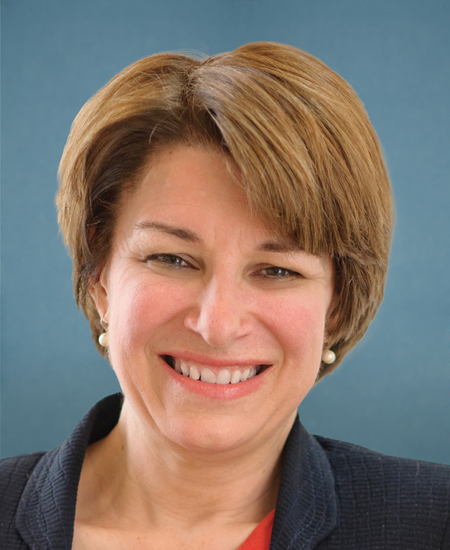
Total votes
1,044
all sessions
Attendance
99%
12 missed
Near the chamber average
With party
98%
of cast votes
Higher than 85% of chamber peers
Bipartisan score
1%
crosses aisle rarely
Lower than 87% of chamber peers
Sponsored
2,456
bills & resolutions
Higher than 95% of chamber peers
Committees
18
assignments
2,456 bills and resolutions
Sponsored bills
Total
2,456
Primary
430
Co-sponsor
2,026
This page
2,456
matching current filters
In committee Sep 23, 2026
1 co-sponsor
A resolution recognizing Hispanic Heritage Month and celebrating the heritage and culture of Latinos in the United States and the immense contributions of Latinos to the United States.
Maddy summarySRES 870 is a congressional resolution that officially recognizes Hispanic Heritage Month, which runs from September 15 to October 15, 2026. The bill highlights the demographic, economic, and military contributions of Latino Americans, noting their significant role in population growth, workforce participation, and national defense. It urges the public to observe the holiday with programs that celebrate the heritage and culture of Latinos in the United States.
Passed Sep 22, 2026
1 co-sponsor
Connected Vehicle Security Act of 2026
Maddy summaryThe Connected Vehicle Security Act of 2026 restricts the importation, sale, and use of connected vehicles and related technology from China, Russia, Iran, and North Korea to protect national security. Starting in 2027, the bill generally bans these vehicles if they originate from or are controlled by these countries, with separate restrictions on software and hardware taking effect in 2030. The Secretary of Commerce is authorized to issue specific exemptions for items that do not pose a security risk and must publish a list of approved products. The law also requires companies to submit declarations confirming their vehicles comply with the rules and imposes heavy fines for violations.
TechnologyOpposes TechnologyBill restricts importation, sale, and use of connected vehicles and related technology from specific countries, limiting market access and technological availability.
TransportationOpposes TransportationBill restricts importation, sale, and use of connected vehicles from specific countries, limiting vehicle availability and technology access.
In committee Sep 22, 2026
1 co-sponsor
Diversify Act
Maddy summaryThe Diversify Act amends the TEACH Grants program to double the maximum grant amount from $4,000 to $8,000 per year and increases the total debt conversion penalty for failing to complete service requirements from $16,000 to $32,000. The bill expands eligibility by allowing recipients to fulfill their teaching service obligations in high-need early childhood education programs, not just traditional K-12 schools. Additionally, it prohibits the government from imposing monetary penalties for refusing to complete service and requires the Secretary of Education to issue an electronic certificate upon completion. Finally, the act exempts these grants from automatic federal spending cuts known as sequestration.
Budget & TaxesSupports Budget & TaxesThe bill doubles the maximum TEACH Grant amount, increasing federal spending on education grants and potentially impacting the budget. This directly relates to government appropriations and fiscal management.
EducationSupports EducationThe bill doubles the maximum TEACH Grant amount, expands eligibility to early childhood education, and provides relief from monetary penalties, all of which strengthen educational access and support teachers.
Labor & EmploymentSupports Labor & EmploymentThe bill expands eligibility for teaching service obligations to early childhood education, which could increase employment opportunities for educators in that sector.
In committee Sep 17, 2026
1 co-sponsor
Lewis and Clark Regional Water System Expansion Feasibility Study Act
Maddy summaryThis bill authorizes a feasibility study to assess expanding the Lewis & Clark Regional Water System, which serves communities in Iowa, Minnesota, and South Dakota. The Secretary of the Interior must coordinate with the water system's nonprofit operator to evaluate the project's viability, including cost-sharing (requiring at least 25% non-Federal contribution for construction) and financial feasibility. The study will produce a report for Congress and the public, with the federal government covering up to 50% of the study costs ($10 million authorized). The bill does not fund construction but sets the process for determining whether expansion should proceed. The study authorization expires 10 years after enactment.
In committee Sep 17, 2026
1 co-sponsor
A resolution honoring the life and legacy of the late Constance Benjamin Clery.
Maddy summaryThis Senate resolution honors the life and legacy of Constance Benjamin Clery, who passed away in June 2026. It recognizes her pivotal role in establishing the Jeanne Clery Campus Safety Act after the murder of her daughter, which requires colleges to disclose crime statistics and security policies. The text also highlights her decades of work with the Clery Center to support victims and improve campus safety standards. Finally, the resolution expresses condolences to her family and reaffirms the Senate's commitment to enforcing existing federal campus safety laws.
Criminal JusticeSupports Criminal JusticeThe bill honors Constance Benjamin Clery, recognizing her pivotal role in establishing the Jeanne Clery Campus Safety Act. This act requires colleges to disclose crime statistics and security policies, which directly improves criminal justice by e...
EducationSupports EducationThe resolution honors Constance Benjamin Clery, recognizing her pivotal role in establishing the Jeanne Clery Campus Safety Act, which improves campus safety standards for colleges and universities.
In committee Sep 16, 2026
0 co-sponsors
Runway SAFE-T Act
Maddy summaryThe Runway SAFE-T Act establishes a task force to study and recommend improvements for driver training programs at airports, ensuring that ground vehicle operators receive consistent and modern safety instruction. Additionally, the bill authorizes federal grants from 2027 to 2031 to help airports purchase advanced technologies, such as sensors and simulation systems, that enhance situational awareness and reduce vehicle-related safety incidents on airport runways and taxiways. These grants are intended to assist airport sponsors in overcoming barriers like cost and workforce availability while prioritizing projects tailored to specific airport layouts and safety needs.
TechnologySupports TechnologyBill authorizes federal grants to purchase advanced technologies like sensors and simulation systems to enhance airport safety.
TransportationSupports TransportationBill establishes a task force for driver training and authorizes federal grants to fund advanced safety technologies for airport ground vehicles, directly enhancing transportation safety.
In committee Sep 16, 2026
1 co-sponsor
Virginia Graeme Baker Pool and Spa Safety Reauthorization Act
Maddy summaryThis bill reauthorizes the Virginia Graeme Baker Pool and Spa Safety Act, providing federal grants to States, Indian Tribes, and qualified nonprofits to prevent drowning and drain entrapment. It requires grant recipients to spend at least 25% of funds on hiring/training personnel for pool safety enforcement and drain cover inspections, with the remainder for public education on pool safety. The program allocates $2.5 million annually (2026-2030) for grants and a national awareness campaign, prioritizing areas with higher drowning rates and underserved communities. Recipients must report on fund usage, outcomes, and barriers. The law defines "nonprofit" as 501(c)(3) organizations with proven pool safety experience.
In committee Sep 16, 2026
0 co-sponsors
A resolution designating September 2026 as "National Voting Rights Month".
Maddy summaryThis Senate resolution designates September 2026 as National Voting Rights Month to highlight the importance of voting access and the history of voter suppression in the United States. The bill encourages Congress to pass legislation that strengthens protections under the Voting Rights Act of 1965 while opposing measures that could restrict voter eligibility. It also recommends that schools develop curricula on voting rights history and invites the government to fund public service announcements to remind citizens of election dates and registration deadlines.
In committee Sep 15, 2026
1 co-sponsor
Ask Maddy
·
AI policy assistant
Ask Maddy about Amy Klobuchar
Scope: maine
Hi! I can help you understand Amy Klobuchar's legislative record. What would you like to know?
Try one of these
i
Maddy answers using official bill text and legislative records. Always verify before sharing.
Sources cited inline