

Maddy summaryThis bill directs the U.S. Secretary of State to create and execute a plan to end the operations of the United Nations Relief and Works Agency for Palestine Refugees in the Near East (UNRWA) across the Middle East. The legislation requires a detailed strategy that assesses current programs like education and healthcare, identifies new organizations to take over these services, and outlines how to fund and oversee the transition without interrupting aid. Once the plan is submitted to Congress, the State Department must begin implementing it within a year while coordinating with host countries and international partners. The bill emphasizes maintaining service continuity and ensuring that any successor groups meet strict standards for transparency and accountability.
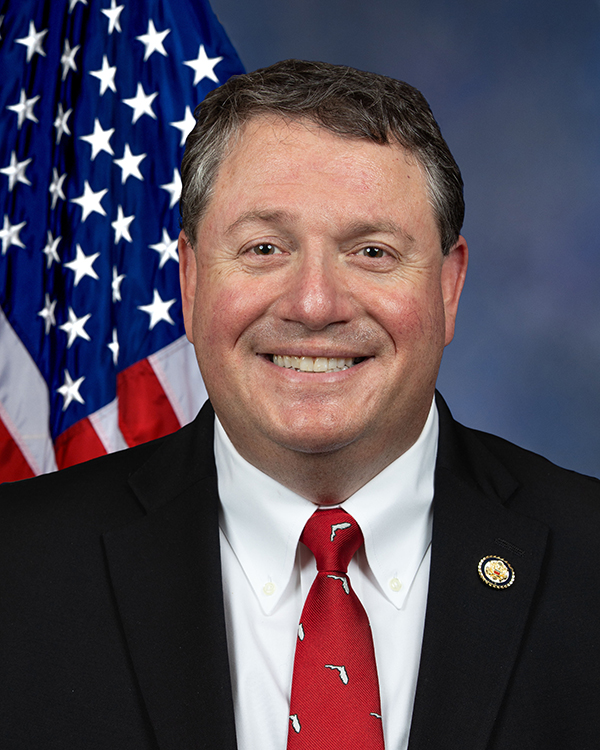
Rep. Randy Fine
Sponsored bills
Maddy summaryThe Jewish American Security Act aims to combat antisemitism by strengthening protections for Jewish students, securing Jewish communities, and increasing transparency regarding online hate speech. For educational institutions receiving federal funds, the bill mandates the creation of specific coordinators to handle discrimination complaints, requires annual training on handling antisemitism, and establishes a new federal clearinghouse to share best practices for campus safety. To support physical security, the legislation expands grant funding for nonprofit organizations and directs the Attorney General to provide resources for law enforcement agencies protecting houses of worship. Additionally, the act requires major online platforms with over 50 million monthly users to submit detailed reports to the Federal Trade Commission on how they detect, remove, and moderate antisemitic content.
Maddy summaryThe Declaration of Independence Reaffirmation Act of 2026 directs Congress to formally reaffirm the Declaration of Independence as an organic law of the United States. This legislative measure is intended to commemorate the 250th anniversary of American independence by restating the document's principles regarding natural rights, equal citizenship, and government by consent. The bill includes the full text of the Declaration of Independence as part of its provisions. It does not create new legal obligations or alter existing laws but serves as a symbolic recognition of the document's foundational role in American political order.
Maddy summaryThe PARITY Act modifies the Higher Education Act by removing specific regulatory requirements related to institutional accreditation. This change directly affects colleges and universities by eliminating the need to comply with the repealed provisions regarding their status and oversight. The bill achieves this by amending Section 487 to delete a specific paragraph and an entire subsection that previously imposed these rules.
Maddy summaryThis bill prohibits federal funding under the Elementary and Secondary Education Act for any program, activity, literature, or material provided to children under 18 that includes "sexually oriented material," defined as depictions of explicit conduct or content involving gender dysphoria or transgenderism. It exempts standard science courses (like biology and anatomy), religious texts, and specific "classic" works of literature and art listed in designated references (e.g., *Great Books of the Western World* and Smarthistory guides). The law directly affects federally funded K-12 educational programs, restricting how school districts can use federal dollars for curriculum materials. It does not ban teaching about human anatomy, art history, or literature, as those are explicitly excluded from the definition of prohibited material.
Maddy summaryHR 4398, the Veteran Burial Timeliness and Death Certificate Accountability Act, requires Veterans Affairs (VA) physicians or nurse practitioners to certify the death of a veteran who dies of natural causes within 48 hours of learning of the death. This directly affects veterans' families, who previously faced delays of up to eight weeks in burial and access to survivor benefits due to slow death certifications. The bill mandates annual reports to Congress on VA compliance with the 48-hour rule, including statistics on delays and their causes. The key change is establishing a strict timeline for death certification to prevent unnecessary delays in honoring veterans' final arrangements.
Maddy summaryThe Marketplace Fraud Accountability Act requires the healthcare.gov website to use multi-factor authentication for users enrolling in health plans or accessing their personal enrollment data. This security measure, which involves verifying identity through at least two methods like passwords and biometrics, must be implemented within one year of the bill's enactment. The law includes an exception for individuals who lack access to broadband or cellular service or cannot otherwise use this technology. By strengthening identity verification, the bill aims to protect consumer information while maintaining access for those with connectivity limitations.
Maddy summaryThe Homeownership Eligibility Reform Act restricts access to government-backed and private mortgage insurance for single-family homes to individuals who are U.S. citizens. Specifically, the bill amends laws governing the Federal Housing Administration, Fannie Mae, and Freddie Mac to require that borrowers for one-to-four-unit properties must be citizens to qualify for their mortgage products. This change directly affects foreign nationals and non-citizen residents who currently might purchase homes with these types of financing, effectively limiting their eligibility for these specific mortgage programs.
Maddy summaryThe End EPA Abuse Act of 2026 amends the Clean Air Act to limit the Environmental Protection Agency's authority to create new regulations. Specifically, it prohibits the EPA Administrator from issuing rules that restrict the sale or use of internal combustion engine vehicles, force power plants to switch fuel sources, or reduce the reliability of the electric grid. The bill also bars the agency from mandating technologies that are commercially unavailable, too expensive without subsidies, or technically unfeasible due to geographic or infrastructure limitations. Additionally, the law prevents the EPA from expanding its regulatory power beyond what Congress originally intended. These changes directly affect the EPA's ability to enforce environmental standards and impact industries such as automotive manufacturing and energy production.
Maddy summaryThis bill redesignates the existing National Parks and Public Land Legacy Restoration Fund as the America's Legacy Restoration Fund to address deferred maintenance on federal lands. It directs revenue from recreation fees and a portion of energy development income into the fund, which must be used primarily for repairing critical infrastructure like roads, trails, and buildings managed by agencies such as the National Park Service and the Forest Service. The legislation establishes strict rules requiring that most funds go toward non-transportation projects, mandates transparency through public dashboards tracking project status, and sets aside a small percentage for matching private donations. Additionally, the bill increases entrance fees for foreign visitors to ensure they contribute to the fund, while prohibiting the use of these specific funds for land acquisition or employee bonuses.