Issue · Budget & Taxes

Budget & Taxes

Every budget & taxes bill, vote, and legislator stance in Maine, automatically classified by Maddy, our AI policy reader.

Total bills
15
119th Congress
Top supporter
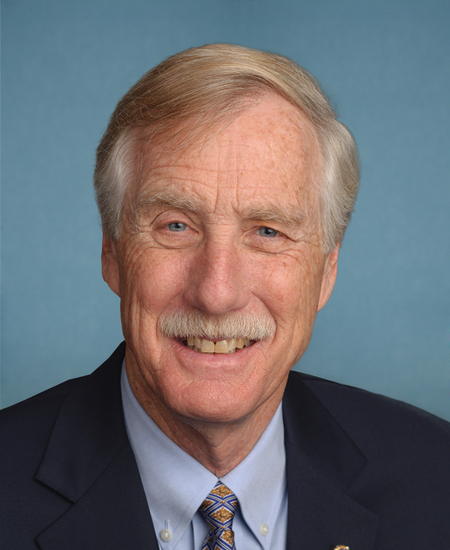
Angus S. King, Jr.
66% support rate
Top opponent
Chellie Pingree
21% support rate
Ranked legislators
4
1 support · 3 oppose
Key legislators

Who's moving budget & taxes in Maine

Legislators moving budget & taxes in Maine
Legislator Party Stance Support rate Votes
Angus S. King, Jr.
Angus S. King, Jr. Senate
I
Support
66% 272
Chellie Pingree
Chellie Pingree House · District 1
D
Oppose
21% 184
Jared F. Golden
Jared F. Golden House · District 2
D
Oppose
29% 183
Susan M. Collins
Susan M. Collins Senate
R
Mixed −
47% 274
Showing 1–10 of 15 bills

All budget & taxes bills

in committee · United States · Senate Jun 16, 2026

S 4791: A bill to abolish the Anti-Weaponization Fund, and for other purposes.

This bill abolishes the Anti-Weaponization Fund, a financial reserve created by the Attorney General during the Trump v. Internal Revenue Service legal case. It also declares an order issued on May 19, 2026, regarding the release of certain claims as invalid and without effect. The legislation directly impacts the Department of Justice by removing this specific fund and reversing the associated administrative directive.
in committee · United States · House Jun 11, 2026

HR 9289: Keep Public Funds in Public Schools Act of 2026

The Keep Public Funds in Public Schools Act of 2026 eliminates a federal tax credit that allowed parents to deduct contributions to scholarship granting organizations from their income. By removing these specific tax breaks, the bill prevents the use of public tax dollars to support private school vouchers and scholarship programs. This change directly affects families who currently rely on these tax incentives to fund education outside the public school system. The provisions take effect for taxable years beginning after December 31, 2026.
in committee · United States · Senate Apr 14, 2026

S 4287: GRATS Act

This bill, known as the GRATS Act, modifies federal tax law regarding certain types of trusts and wealth transfer strategies, primarily affecting individuals who use these tools for estate planning. It introduces new requirements for Grantor Retained Annuity Trusts (GRATs), mandating a minimum 15-year term, fixed payments that do not decrease, and a minimum value for the portion gifted to beneficiaries. The bill also changes how transactions between a grantor trust and its deemed owner are treated, making them taxable sales rather than being disregarded for income tax purposes. Additionally, it specifies that if an individual pays the income taxes for a non-revocable grantor trust they control and is not reimbursed by the trust, that payment will be considered a taxable gift to the trust's beneficiaries. These changes apply to trusts created or contributions made on or after the bill's enactment.
Sub-Topics Income Tax
in committee · United States · House Jan 16, 2025

HR 524: NO GOTION Act

HR 524, the "NO GOTION Act," blocks U.S. green energy tax credits for companies tied to specific countries. It amends tax law to deny benefits under sections like 30C, 45, and 48 to any "disqualified company" - defined as entities created in, controlled by, or linked to China, Russia, Iran, or North Korea. The law directly affects corporations with ties to these nations that seek federal tax incentives for clean energy projects. The policy takes effect for tax years after the bill's enactment, removing eligibility for these companies without altering other tax rules.
passed · United States · House Jan 13, 2026

HR 909: Crime Victims Fund Stabilization Act of 2025

HR 909, the Crime Victims Fund Stabilization Act of 2025, modifies how funds from the False Claims Act are deposited into the Crime Victims Fund. It specifies that from 2025 through 2029, certain False Claims Act proceeds (specifically those for qui tam plaintiff payments and government damage reimbursements) cannot be deposited into the fund. This change directly affects the composition of the Crime Victims Fund by excluding these specific revenue streams during the specified period. The bill does not create new benefits or alter victim services; it only adjusts fund allocation rules for existing False Claims Act revenues.
Sub-Topics Victims' Rights
in committee · United States · House Jan 14, 2025

HR 383: End Oil and Gas Tax Subsidies Act of 2025

The End Oil and Gas Tax Subsidies Act of 2025 would eliminate several tax benefits currently available to oil and gas companies, including credits for enhanced oil recovery, deductions for intangible drilling costs, and percentage depletion allowances. It would also prohibit major integrated oil companies (defined as those meeting specific production and revenue thresholds) from using last-in, first-out accounting for inventory purposes. These changes would take effect for taxable years beginning after December 31, 2024, directly affecting oil and gas producers who currently claim these tax benefits. The legislation removes specific tax advantages that have been available to the oil and gas industry, potentially increasing their tax burden.
in committee · United States · House Jul 23, 2025

HR 4714: End Polluter Welfare Act of 2025

The End Polluter Welfare Act of 2025 eliminates federal subsidies for fossil fuel production by repealing tax incentives, increasing royalty rates, and prohibiting federal funding for fossil fuel projects. It directly affects oil, gas, and coal companies by terminating tax credits like the enhanced oil recovery credit (Section 43), ending special tax treatments for fossil fuel activities, and increasing offshore royalty rates to 18 3/4 percent. The bill prohibits U.S. International Development Finance Corporation and Export-Import Bank funding for fossil fuel projects, ends interest payments on royalty overpayments, and terminates tax provisions allowing accelerated depreciation for fossil fuel infrastructure. These changes apply to taxable years beginning after the bill's enactment date, with specific provisions targeting coal, petroleum, and natural gas production.
Sub-Topics Coal Oil & Gas
in committee · United States · House Aug 12, 2025

HR 4968: Protecting and Preserving Social Security Act

This bill would change how Social Security cost-of-living adjustments are calculated by creating a new Consumer Price Index for Elderly Consumers (CPI-E) that tracks spending patterns specific to seniors aged 62 and older. It would also modify tax calculations for high earners by applying declining percentages of income above the Social Security tax cap (from 86% in 2026 down to 0% after 2031) for both wages and self-employment income. Additionally, the bill would adjust benefit calculations to include "surplus earnings" above the tax cap for individuals with high lifetime earnings. These changes would primarily affect Social Security beneficiaries and high-earning workers, particularly those becoming eligible for benefits after 2025.
Tags Seniors
in committee · United States · House Feb 12, 2026

HR 7545: Defending the Human Rights of Palestinian Children and Families Living Under Israeli Military Occupation Act

HR 7545 prohibits U.S. security assistance funds from being used to support Israeli military actions that violate international law, specifically targeting the detention of Palestinian minors, destruction of Palestinian property, and unilateral annexation of occupied land. It requires annual certifications from the State Department confirming U.S. funds aren't supporting these activities and mandates detailed reports on Israeli detention practices, property seizures, and settlement compliance. The bill directly affects U.S. security aid to Israel, including Foreign Military Financing and offshore procurement funds for defense articles. Key mechanisms include funding restrictions, annual reporting requirements, and a GAO report analyzing how offshore procurement funds impact Israel’s military budget and settlement activities.
Sub-Topics Procurement
in committee · United States · House Feb 4, 2026

HR 7346: Drain ICE Act of 2026

HR 7346, the Drain ICE Act of 2026, repeals specific funding provisions (sections 90003 and 100052) from the "One Big Beautiful Bill Act" and cancels all unspent funds allocated under those sections. This bill directly affects ICE’s detention budget by removing existing financial authority for detention operations. It does not change immigration enforcement practices or directly impact individuals; it solely modifies budgetary allocations. The bill focuses on eliminating funding mechanisms, not on policy changes for migrants or enforcement. (Procedural bill; summary limited to 2 sentences as specified.)
Showing 1 to 10 of 15 bills
1 2 Next