

Maddy summaryHR 1041, the Veterans 2nd Amendment Protection Act, prevents the Department of Veterans Affairs (VA) from automatically sending veterans' personal information to the national background check system (NICS) solely because a court has appointed a fiduciary (like a guardian) to manage their benefits. This directly affects veterans who have a fiduciary appointed due to mental health or cognitive challenges but are not deemed a danger to themselves or others. The bill requires a court order finding the veteran poses a danger before any such information can be shared with the NICS. It changes VA procedures to block unnecessary barriers to firearm ownership for veterans who qualify for fiduciary support without a judicial determination of danger.
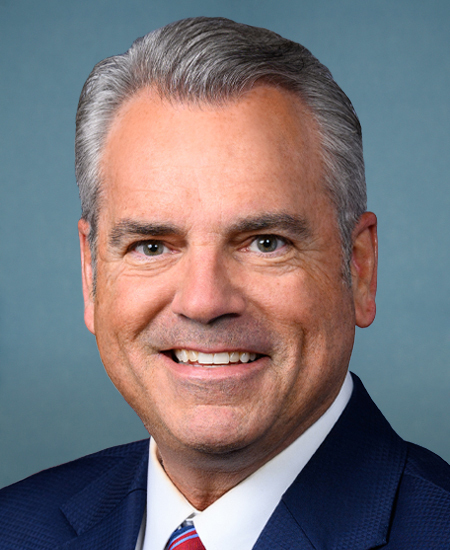
Rep. Mark Alford
Sponsored bills
Maddy summaryThe Border Patrol Supervisors Retention Act modifies federal overtime pay rules to include supervisors within the U.S. Border Patrol. Specifically, it expands eligibility for higher rates of regularly scheduled overtime pay to agents classified at grades GS-12 through GS-15, rather than limiting it to only those at the GS-12 level. This change directly affects supervisory staff who currently manage border operations and ensures they receive the same overtime compensation as their lower-grade counterparts. By updating the relevant section of the U.S. Code, the bill aims to standardize pay structures for these specific roles without altering other aspects of their employment or duties.
Maddy summaryThe Smithsonian American Women’s History Museum Act authorizes the creation of a new Smithsonian museum dedicated to women’s history, to be located within the National Mall Reserve in Washington, D.C. If the site is managed by another federal agency, the bill requires that agency to transfer the land after notifying Congress and relevant committees. The museum must ensure exhibits and programs accurately represent diverse women’s experiences by consulting a broad range of experts and community voices. The Smithsonian will submit biennial reports to Congress detailing how the museum meets these representation standards.
Maddy summaryThis bill, known as the Department of Energy Drone Defense Act, expands the authority of the U.S. Secretary of Energy to manage certain drone systems. Specifically, it allows the Secretary to procure, operate, and use federal funds for drones that are classified as "covered" and originate from "covered foreign entities." These changes modify existing restrictions found in the National Defense Authorization Act for Fiscal Year 2024, which previously limited such activities primarily to the Secretary of State. By adding the Department of Energy to the list of authorized agencies, the legislation enables the department to participate in these drone-related activities without violating current prohibitions.
Maddy summaryThis resolution designates May 29, 2026, as "Mental Health Awareness in Agriculture Day" to highlight mental health issues within the farming and agricultural workforce. It aims to reduce the stigma surrounding mental illness by acknowledging the unique stressors faced by producers and workers, such as unpredictable weather, labor shortages, and market fluctuations. The bill also draws attention to available support resources, specifically the Farm and Ranch Stress Assistance Network, and encourages the public to observe the day as a way to promote well-being in the industry.
Maddy summaryThe Build to Scale Reauthorization Act of 2026 extends funding and updates rules for the Regional Technology and Innovation Hub Program, which supports economic development in specific geographic areas. The bill defines eligible organizations as state or nonprofit groups that provide direct financing, commercialization services, and entrepreneurial support to local businesses. It mandates that the federal government cover up to 90 percent of project costs and requires outreach to rural communities and areas facing economic hardship. Additionally, the legislation authorizes $50 million annually from 2026 to 2030 and allows the use of previously unspent funds to continue the program.
Maddy summaryHR 6444 establishes a VA-DoD task force to improve care for veterans and active-duty service members diagnosed with blast-related injuries like traumatic brain injury (TBI) or PTSD. The task force will coordinate research on specific issues (e.g., sleep therapy, gut health, brain inflammation), develop clinical baselines, and create guidelines for evaluating disability claims related to blast exposure. It must report annually to Congress on research progress and claim evaluation recommendations, and will expire on September 30, 2029. The bill directly affects veterans and service members with blast exposure symptoms by focusing research and care coordination on their specific health needs.
Nationwide Consumer and Fuel Retailer Choice Act of 2025 This bill amends the Clean Air Act to address the limitations on Reid Vapor Pressure (a measure of gasoline's volatility) that are placed on gasoline during the summer ozone season. Specifically, the bill applies the waiver for Reid Vapor Pressure requirements that is applicable to gasoline blended with 10% ethanol (E10) to gasoline blended with up to 15% ethanol (E15). This change allows gasoline that is blended with 10% to 15% ethanol to be sold year-round. Currently, states may be excluded from the waiver for Reid Vapor Pressure requirements by submitting documentation supporting that the waiver would increase air pollution. The bill nullifies existing state exclusions, but states may submit documentation after enactment of the bill to be excluded going forward. The bill also modifies the Renewable Fuel Standard Program, which requires transportation fuel sold or introduced into commerce in the United States to contain minimum volumes of renewable fuel. Under the existing program, obligated parties, such as small refineries, must satisfy the volume obligations by either blending renewable fuels into their gasoline or diesel fuel products or by acquiring credits that represent the required renewable fuel volume. The bill directs the Environmental Protection Agency to return compliance credits to small refineries under certain circumstances.
Maddy summaryThe Critical Mineral and Extraction Tax Parity Act expands a federal tax credit for advanced manufacturing to include eleven new critical minerals, such as boron, copper, and uranium, while also adding specific rules for phosphate. It allows companies that extract ore in the United States to claim these credits for the extraction costs themselves, provided they certify that the ore is refined into a qualifying mineral and sold to an unrelated buyer. Additionally, the bill removes a previous penalty that reduced tax credit amounts for metallurgical coal, ensuring these materials receive the same financial support as other critical minerals. These changes are designed to encourage domestic production and processing of essential raw materials and will take effect for minerals produced and sold after December 31, 2025.
Maddy summaryThis House Resolution formally recognizes the contributions of elementary and secondary school teachers in the United States. It thanks educators for their dedication to students and communities during National Teacher Appreciation Week. The measure encourages parents, administrators, and officials to acknowledge the profession during the designated week in May.