Maddy summaryHR 4092, the Protect RAIL Act, amends U.S. immigration law to make certain crimes involving stolen goods transported by carriers (like trains, trucks, or ships) grounds for denying entry or deporting non-citizens. It adds new inadmissibility and deportability provisions for anyone convicted of theft from interstate or foreign shipments under Title 18, Section 659 of the U.S. Code. The bill directly affects non-citizens who commit these specific theft offenses, making them ineligible to enter the U.S. or subject to removal. This changes immigration consequences for existing criminal offenses, not the crimes themselves.
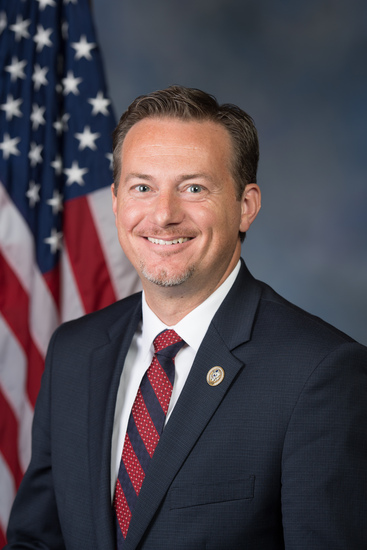
Rep. Michael Cloud
Sponsored bills
Maddy summaryThis bill prohibits male students from participating in athletic programs at the U.S. Military Academies (West Point, Annapolis, and Air Force Academy) designated exclusively for women or girls. It allows males to train with such teams only if no female athlete loses a roster spot, competition opportunity, scholarship, or other benefit. The bill defines "sex" as biological sex at birth and clarifies that "athletic programs" include all team-based activities requiring participation. It directly affects the women's sports teams at these three service academies and their eligibility rules.
Maddy summaryThe Patriots Over Politics Act (HR 3619) allows veterans discharged between August 2021 and January 2023 solely for refusing a COVID-19 vaccine to transfer their earned educational benefits to eligible dependents. Veterans must initiate the transfer within 90 days of the bill’s enactment. Dependents can use the transferred benefits only after the veteran completed at least six years of military service - a requirement already met by these veterans prior to separation. This provision directly affects veterans separated for vaccine refusal during the specified period, providing a pathway to pass on unused education benefits.
Maddy summaryHR 589, the FACE Act Repeal Act of 2025, would repeal a federal law (Section 248 of Title 18, U.S. Code) that prohibited obstructing access to reproductive health care facilities through physical means, intimidation, or violence. This repeal would eliminate the federal criminal penalty for such conduct, meaning federal prosecutors could no longer charge individuals under this specific law. The bill applies to all pending or future federal prosecutions related to these actions. It does not affect state laws that may still regulate access to reproductive health care facilities.
Maddy summaryHR 2966, the American Entrepreneurs First Act of 2025, modifies requirements for certain Small Business Administration (SBA) loans by requiring applicants to provide proof of citizenship, national status, or lawful permanent residency for themselves and all business owners. It directly affects small business applicants and their owners who are non-citizens, including refugees, nonimmigrant visa holders, DACA recipients, or undocumented individuals. The bill mandates new documentation, such as alien registration numbers for lawful permanent residents, and prohibits loans if applicants fail to provide this information or if ineligible owners are involved. These changes apply to SBA 7(a) loans and Title V investment programs, altering eligibility criteria for specific loan programs.
Maddy summaryHRES 483 is a House resolution recognizing the 250th anniversary of the U.S. Army's founding on June 14, 1775. It expresses appreciation for the Army's service over 250 years, honors soldiers' valor and core values, and calls for public observance through ceremonies and activities. The resolution has no policy impact or funding provisions - it is purely commemorative. It was introduced by 30 bipartisan House members and referred to the Armed Services Committee.
Maddy summaryHRES 475 (June 4, 2025) is a non-binding resolution that formally recognizes "Family Month" and ends the House of Representatives' recognition of Pride Month. It directs the House to "recognize the benefit of marriage and family" while stating it "no longer recognizes Pride Month," citing the resolution's view that traditional nuclear families are essential to society. The resolution does not create new laws or policies but changes the House's official acknowledgment of months. It specifically targets the House's ceremonial recognition, not federal law or programs affecting citizens. This is a symbolic procedural action with no direct impact on legislation or constituents.
Maddy summaryThis bill, titled "Make DOGE Permanent Act," amends the Federal Funding Accountability and Transparency Act of 2006 to provide Members of Congress (Senators and Representatives) with real-time access to federal award data. It requires the Office of Management and Budget to create a secure, separate online link for Congress to view updated information on federal spending, including payments to individual recipients and federal employees. The website must update in real time for this access, and the link must be established within six months of enactment. The bill directly affects congressional oversight capabilities but does not change public access to the same data.
Maddy summaryHJRES 98 is a non-binding joint resolution designating June as "Life Month" to promote awareness of the value of human life. It expresses support for protecting unborn life, references the Dobbs v. Jackson decision, and urges policymakers to defend "the sanctity of human life" through legislation. The resolution does not create new laws, alter funding, or impose requirements - its purpose is solely symbolic recognition. It was introduced by multiple representatives and referred to relevant committees for consideration.
Maddy summaryHRES 444 is a symbolic House resolution calling on all Americans to observe Memorial Day 2025 by honoring military personnel who died in service. It does not create new laws or affect specific groups, as it is a non-binding expression of national remembrance. The resolution states that Americans should commemorate the sacrifices of over one million service members who died pursuing freedom and peace, framing Memorial Day as a day to express respect for their ultimate sacrifice. This is a routine ceremonial resolution with no policy changes or concrete mechanisms beyond urging public observance.