

In committee Sep 24, 2026
1 co-sponsor
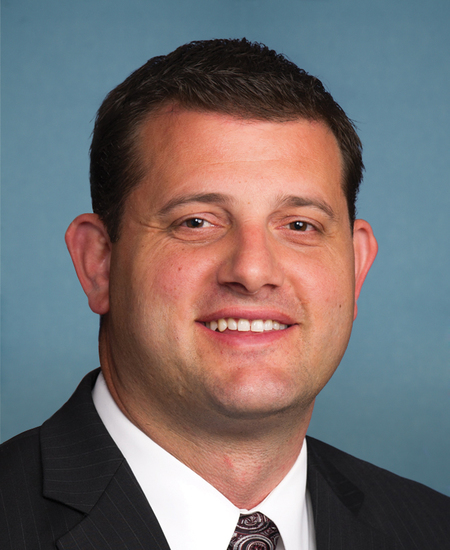
Rep. David G. Valadao
Total votes
2,831
all sessions
Attendance
98%
53 missed
Near the chamber average
With party
90%
of cast votes
Near the chamber average
Bipartisan score
5%
crosses aisle rarely
Near the chamber average
Sponsored
1,229
bills & resolutions
Near the chamber average
Committees
8
assignments
1,229 bills and resolutions
Sponsored bills
Total
1,229
Primary
69
Co-sponsor
1,160
This page
1,229
matching current filters
Ratepayer Protection Act
Maddy summaryThis bill, known as the Ratepayer Protection Act, modifies federal energy laws to ensure that large industrial customers pay for the specific infrastructure upgrades needed to serve their high electricity demands. It directly affects non-residential facilities with a peak power usage of 100 megawatts or more, requiring utilities to charge these customers the full incremental cost of any necessary generation, transmission, or distribution improvements. Under the new rules, large customers must also provide financial guarantees or contributions before such upgrades are made, ensuring utilities can recover costs even if the customer leaves the contract early. State regulators have two years to implement these standards, though the bill exempts utilities in states that have already enacted similar measures or are actively considering them.
Passed Sep 24, 2026
1 co-sponsor
Romance Scam Prevention Act
Maddy summaryThe Romance Scam Prevention Act requires online dating platforms to send immediate notifications to users who message someone banned for scamming. These warnings must include the banned user's profile details, a fraud alert, safety tips to avoid financial scams, and contact information, delivered within 24 hours (with limited exceptions for law enforcement investigations). It directly affects dating apps like Tinder or Bumble and their users by mandating clear, timely fraud alerts to prevent financial exploitation. The law takes effect one year after enactment and shields platforms from liability for following these notification rules.
Passed Sep 24, 2026
0 co-sponsors
In committee Sep 21, 2026
0 co-sponsors
Lindsey O. Graham Sanctioning Russia and Iran Act of 2026
Maddy summaryHR 5334, the SEED Act of 2025, expands the existing educator expense deduction under federal tax law to explicitly include early childhood educators. It revises the Internal Revenue Code to cover expenses for "early childhood educators" and broadens the educational levels affected to include "pre-kindergarten through grade 12." This change allows early childhood educators (such as preschool teachers) to deduct work-related expenses like classroom supplies and professional development costs, which they previously could not claim under the existing deduction for "kindergarten through grade 12" teachers. The amendment applies to expenses incurred in taxable years beginning after December 31, 2024.
Budget & TaxesSupports Budget & TaxesExpands tax deduction for early childhood educators, providing tax relief for lower/middle-income educators under IRS code, aligning with support indicators for tax relief.
EducationSupports EducationExpands tax deduction for early childhood educators' work expenses, directly supporting teachers by reducing out-of-pocket costs for supplies and professional development.
Labor & EmploymentSupports Labor & EmploymentBill expands tax deductions for early childhood educators, supporting worker benefits and financial relief for educators.
Signed into law Sep 18, 2026
1 co-sponsor
Expressing support for the designation of the third week of September as "Fungal Disease Awareness Week" and encouraging efforts to improve awareness, diagnosis, treatment, surveillance, and prevention of fungal diseases in the United States.
Maddy summaryThis House resolution expresses support for designating the third week of September as Fungal Disease Awareness Week to improve public understanding of fungal infections in the United States. It encourages healthcare providers to consider fungal causes when diagnosing pneumonia-like illnesses and calls for expanded education on specific conditions such as Valley Fever, histoplasmosis, and Candida auris. The bill also urges federal and state health agencies to strengthen surveillance systems, outbreak response capabilities, and research into better diagnostics and treatments. By highlighting the challenges of delayed diagnosis and drug resistance, the resolution aims to promote earlier recognition and more effective prevention strategies for patients and communities.
In committee Sep 17, 2026
1 co-sponsor
Expressing support for the designation of the week beginning on September 14, 2026, as "National Hispanic-Serving Institutions Week".
Maddy summaryThis House resolution expresses support for designating the week beginning September 14, 2026, as National Hispanic-Serving Institutions Week. It recognizes these colleges and universities, which enroll at least 25 percent Hispanic students, for their role in providing higher education access to low-income and underserved populations. The bill highlights that these institutions serve a significant portion of the nation's undergraduate students and contribute to economic mobility. It calls on the public and interested groups to observe the week with ceremonies and activities during Hispanic Heritage Month.
In committee Sep 17, 2026
1 co-sponsor
Supporting the designation of the week of September 20 through September 26, 2026, as "Gold Star Families Remembrance Week".
Maddy summaryThis House resolution supports designating the week of September 20 through September 26, 2026, as "Gold Star Families Remembrance Week." It aims to honor the families of service members and veterans who have died in the line of duty. The bill encourages Americans to observe this annual week by performing acts of community service and celebrating the lives of those who made the ultimate sacrifice.
In committee Sep 16, 2026
1 co-sponsor
ASAP Act
Maddy summaryThis bill would require Medicare to cover early detection screening tests for Alzheimer's disease and related dementias starting January 1, 2028. It defines eligible tests as FDA-cleared genomic blood tests, blood product analyses, or equivalent medical imaging methods (like protein expression or whole genome sequencing) that detect pre-symptomatic or early-stage conditions. Medicare beneficiaries would receive this coverage without cost-sharing for these specific screenings. The bill amends Medicare coverage rules to explicitly include these tests under Section 1861(nnn) of the Social Security Act.
In committee Sep 16, 2026
1 co-sponsor
TRAPS Act
Maddy summaryThe TRAPS Act establishes a federal Task Force on Payment Scams, chaired by the Treasury Secretary, to coordinate efforts across agencies like the FTC, Federal Reserve, and consumer groups. The Task Force will study current scam tactics (such as fake text messages or fraudulent payment platforms), evaluate prevention strategies, and develop recommendations to help consumers avoid and report scams. It must submit an initial report within one year and annual updates, focusing on improving federal-state coordination and education programs. This bill directly affects government agencies and stakeholders participating in the Task Force, with the goal of protecting consumers from evolving payment scams.
In committee Sep 16, 2026
1 co-sponsor
Ask Maddy
·
AI policy assistant
Ask Maddy about David G. Valadao
Scope: kansas
Hi! I can help you understand David G. Valadao's legislative record. What would you like to know?
Try one of these
i
Maddy answers using official bill text and legislative records. Always verify before sharing.
Sources cited inline