Maddy summaryThis bill automatically provides dependency and indemnity compensation to survivors of veterans who died by suicide and had a service-connected mental disorder. It directly affects surviving spouses, children, and parents of these veterans. The key change requires the Veterans Affairs Secretary to pay compensation without needing additional proof that the suicide was directly linked to the mental disorder, as long as the veteran had a service-connected mental health condition. This streamlines the process for families who previously faced complex claims.
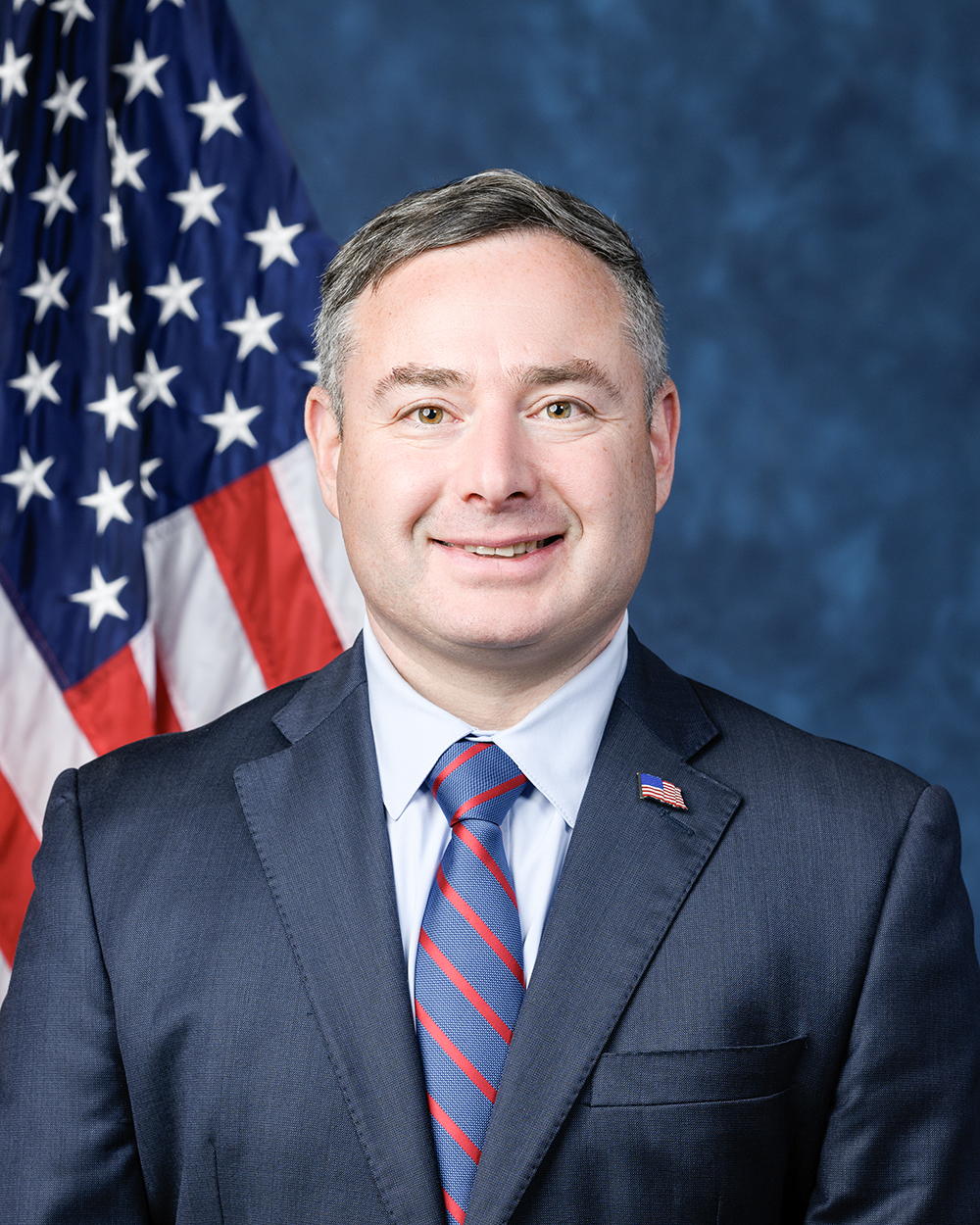
Rep. Eugene Simon Vindman
Sponsored bills
Maddy summaryHR 2244, the Michael Lecik Military Firefighters Protection Act, establishes a presumption that certain diseases suffered by military firefighters were incurred during service. It directly affects veterans who were trained in fire suppression and served at least five years in firefighting or damage control roles. The bill presumes service connection for 17 specific conditions - including heart disease, lung disease, and various cancers - if they manifest with at least 10% disability within 15 years of separation. This simplifies the process for these veterans to receive disability benefits without needing to prove direct service connection.
Maddy summaryHR 2117, the "Crop Insurance for Future Farmers Act," extends enhanced crop insurance support to beginning farmers and veteran farmers. It increases the definition of "beginning farmer" from 5 to 10 crop years and updates veteran farmer definitions similarly. The bill adds tiered premium reductions: for the first two years of participation, insurance costs are reduced by 15 percentage points each year, decreasing to 10 percentage points for years five through ten. This directly affects new and veteran farmers by lowering their insurance costs during early years of operation.
Maddy summaryThis bill, HR 2102 (Major Richard Star Act), allows veterans with combat-related disabilities to receive both full military retired pay and veterans' disability compensation simultaneously, without the previous offset that reduced retired pay. It directly affects veterans already eligible for both benefits due to combat-related injuries, removing the requirement that their retired pay be reduced by the disability compensation amount. The key provision amends Title 10 and Title 38 to eliminate the offset rule (sections 5304 and 5305 of Title 38) for these veterans. The change applies to payments starting after the bill’s enactment date, effective for all qualifying veterans. This is a policy change to increase financial support for affected veterans, not a new benefit.
Maddy summaryHR 2109, the Cybersecurity for Rural Water Systems Act, requires the federal rural water assistance program to provide cybersecurity help to small water systems serving under 10,000 people. It adds specific provisions for these systems to assess their cyber threat protections and implement security plans, procedures, and technologies. The bill increases annual funding for the program from $25 million to $32.5 million (2026-2030), with $7.5 million specifically allocated each year for this cybersecurity assistance. This directly affects rural water providers who lack resources to address growing cyber risks to their infrastructure.
Maddy summaryThis bill increases loan limits for farmers under the Farm Service Agency. It raises farm ownership loan caps from $600,000/$1.75 million to $850,000/$3.5 million (for direct/guaranteed loans) and operating loan caps from $400,000/$1.75 million to $750,000/$3 million, effective 2025. It also creates a refinancing program allowing distressed guaranteed loans to convert to direct loans if borrowers prove problems can be fixed and the farm can return to financial stability. Additionally, it doubles the microloan limit from $50,000 to $100,000 and updates inflation calculations for loan adjustments using USDA land value data instead of previous metrics.
Maddy summaryThis bill changes visa rules for foreign graduate students pursuing STEM master's or doctoral degrees in the U.S. It requires these students to apply for admission before starting their program and adds background checks and credential verification to their visa process. It also creates a new pathway to permanent residency for STEM degree holders who secure jobs in their field at median wage levels, and allows students to seek permanent residency while on student visas (dual intent). The bill directly affects international students in STEM fields, U.S. universities, and employers hiring these graduates.
Maddy summaryThe IDEA Full Funding Act (HR 2598) mandates specific annual federal funding levels for the Individuals with Disabilities Education Act (IDEA), directly affecting schools and students with disabilities nationwide. It requires the federal government to appropriate either a fixed dollar amount or a specified percentage (increasing annually from 4.5% to 40%) of a calculated total - based on the number of eligible students and average per-pupil costs - starting in fiscal year 2026 through 2035. The bill sets clear, escalating funding targets, with the higher of two calculated amounts (dollar figure or percentage) becoming available for obligation each fiscal year. This establishes a binding financial commitment to address long-standing underfunding of special education services under IDEA.
Maddy summaryThis bill establishes safety standards for poppy seeds by requiring the Health and Human Services Secretary to set maximum allowable levels of morphine, codeine, and other opioid contaminants. If poppy seeds exceed these levels, they would be deemed "adulterated" under food safety law and banned from interstate commerce. The rulemaking process must begin within one year of the bill's enactment and be finalized within two years. This directly affects poppy seed producers, food manufacturers, and distributors who must comply with the new contamination limits.
Maddy summaryHR 2594 establishes a Water Risk and Resilience Organization (WRRO), certified by the EPA Administrator, to develop and enforce cybersecurity standards for large water systems. It directly affects community water systems serving 3,300+ people or similar treatment works, requiring them to meet WRRO-developed cybersecurity risk and resilience requirements. The WRRO proposes these standards, which the EPA must approve within 90 days if deemed reasonable, and monitors compliance through annual self-attestations and 5-year third-party assessments. The bill creates a process for penalties (up to $25,000/day) for noncompliance, with appeals to the EPA, while ensuring state authority remains intact.