

Maddy summaryHR 7539, the SAFE Act, requires the Comptroller General to study "chameleon carriers" (motor carriers evading safety rules by changing names or ownership) and develop an automated tool for the Federal Motor Carrier Safety Administration (FMCSA) to detect such applicants during Department of Transportation (DOT) number registration. The bill mandates the tool to identify patterns like shared ownership, similar addresses, insurance lapses, or continuity of operations to flag suspicious applications. It directly affects motor carriers applying for DOT numbers and FMCSA staff, who must use the tool to review applications while preserving final decision-making authority. The law also requires an appeals process for denied applications, data privacy safeguards, and a two-year effectiveness report on the tool.
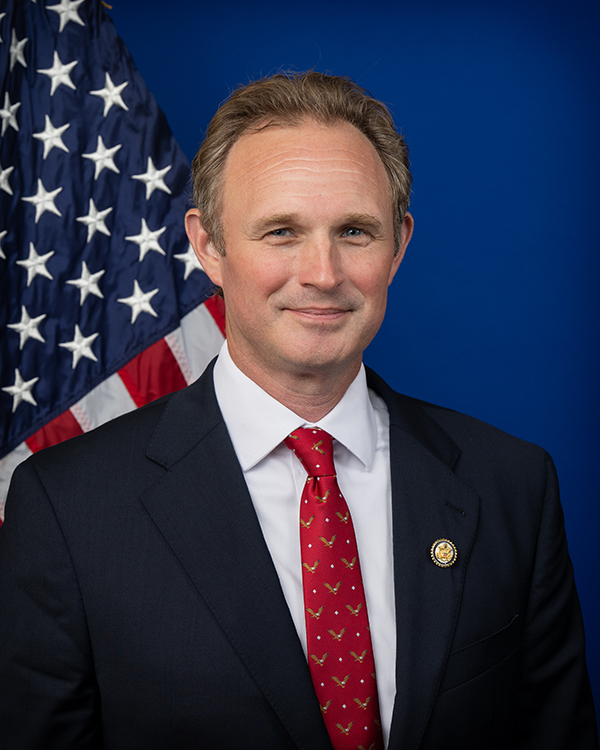
Rep. James Gallagher
Sponsored bills
Maddy summaryThis bill creates a tax exclusion for certain disaster mitigation payments received by property owners. It allows individuals to exclude from gross income funds paid by state programs (or approved entities) to make improvements that reduce damage from windstorms, earthquakes, or wildfires. The exclusion applies to payments made for specific property upgrades like storm shutters or fire-resistant roofing. The change takes effect for 2021+ tax years and includes a retroactive option for taxpayers to amend prior returns. It directly affects homeowners participating in qualifying state disaster resilience programs.
Maddy summaryThis bill creates a tax credit for businesses selling products made with U.S.-grown cotton. The credit equals 24% of the cotton's market value if processed only in the U.S. or in countries with U.S. trade deals, or 18% for other processing locations. To qualify, cotton must be digitally traced from U.S. farms to finished products and certified by the USDA as meeting origin requirements. It directly affects clothing and textile manufacturers selling qualifying products in the U.S. market.
Maddy summaryThis bill prohibits certain electric utilities from paying executive bonuses if their customer rate increases exceed the annual inflation rate (CPI-U). It directly affects state-regulated electric utilities not wholly owned by U.S. persons, including their C-suite executives (e.g., CEOs, CFOs). Key provisions require utilities to report rate changes and non-executive pay to FERC; FERC then determines if bonuses are allowed based on inflation and caps bonuses at 25% of non-executive median pay. Violations result in forfeited bonuses being refunded to customers, calculated by dividing the forfeited amount by the utility's customer count.
Maddy summaryThis bill establishes a direct payment program to compensate specialty crop growers and wine producers for financial losses caused by increased tariffs on U.S. exports after January 20, 2025. Covered losses include higher handling costs for perishable crops, reduced export revenue, canceled contracts, and lost market access due to foreign tariffs. The USDA may also purchase surplus non-wine specialty crops for nutrition programs like school meals. Payments and surplus crop purchases require annual reporting to Congress until 2030, with funding authorized for fiscal years 2026-2030.
This bill designates the facility of the United States Postal Service located at 28201 Franklin Parkway in Santa Clarita, California, as the "Deputy Ryan Clinkunbroomer Post Office Building".
Maddy summaryThis bill extends and modifies the premium tax credit (subsidy) for health insurance purchased through the marketplace, applying to coverage for 2026 and 2027. It raises the income threshold for full subsidy eligibility from 400% to 600% of the federal poverty level, meaning more low-to-moderate-income households (up to 600% of poverty) will pay lower monthly insurance costs. The bill also adds new penalties for agents or brokers who provide false information during enrollment, including civil fines up to $50,000 per person and criminal charges for intentional fraud. These changes directly affect individuals buying health insurance through marketplaces and the agents/brokers who assist them.
Maddy summaryThis bill prohibits Members of Congress, their spouses, and dependent children from owning or trading certain investments, including stocks, commodities, and derivatives (referred to as "covered investments"). It requires affected individuals to divest these investments within 90-180 days, with specific exemptions for Treasury bonds, diversified mutual funds, small business interests, and family trusts meeting strict conditions. Violations incur penalties of 10% of the investment's value plus disgorgement of profits, paid directly to the U.S. Treasury. The law applies to all covered individuals during federal service, with exceptions for investments acquired through inheritance or occupational trading (e.g., a spouse’s finance job).
Maddy summary# Summary of Proposed FEMA Reform Legislation (FEMA Act of 2025) This comprehensive legislative document proposes significant reforms to the Robert T. Stafford Disaster Relief and Emergency Assistance Act, with four main sections addressing: ## 1. Disaster Assistance Reforms - **Expanded eligibility** for assistance, including clarifying that absence of a fixed address doesn't disqualify individuals from sheltering assistance - **Improved rental assistance** with consideration of local post-disaster rent increases - **Direct assistance** for those unable to use financial assistance, with no requirement to show other assistance can cover costs (except insurance) - **Enhanced notices** for applicants, including documentation of denial decisions - **Clarification of displacement assistance** eligibility, stating insurance shouldn't be considered a duplication of benefits ## 2. Mitigation Program Enhancements - **Preapproved project mitigation plans** requiring states to develop plans with peer review processes - **Improved allocation of funds** with formulas prioritizing vulnerable communities, high-risk areas, and rural/economically distressed communities - **Resilient buildings** requirements for housing retrofits using the latest building codes - **Streamlined application processes** for hazard mitigation funds across multiple programs - **Study on mitigation benefits** to evaluate cost savings and effectiveness ## 3. Transparency and Accountability Measures - **Public dashboards** for both individual assistance (431) and public assistance (432) showing application status, approvals, denials, and funding - **Transparency requirements** for disaster declarations with detailed justifications for approvals/denials - **GAO studies** on numerous topics including: - Identity theft in disaster assistance (409) - Insurance utilization for public assistance facilities (410) - Wildfire management plans (411) - Effectiveness of alerting systems (412) - Cost savings of repair/rebuilding reforms (415) - **Prohibition on political discrimination** in assistance distribution ## 4. Workforce and Operational Improvements - **Study on workforce retention** in noncontiguous communities - **Pilot program** for preliminary damage assessments in remote communities - **Fast-moving disasters working group** to develop best practices for rapid response The legislation focuses on improving efficiency, transparency, and effectiveness of disaster relief programs while prioritizing vulnerable populations and communities with higher risk of disasters. It also emphasizes data-driven decision making through required studies and reports to continuously improve disaster management policies.
Maddy summaryHR 4354 establishes the Agricultural Emergency Relief Act of 2025, creating a new program to provide payments to farmers who suffer crop losses due to specific disasters like droughts, wildfires, floods, or extreme weather. Farmers must apply for payments by documenting "qualified losses" (such as prevented planting, crop quality damage, or wildfire smoke exposure) and agree to purchase Federal Crop Insurance or Noninsured Crop Disaster Assistance coverage for the next two crop years. Payments are calculated based on either past insurance data or farm revenue, with limits set at $125,000-$900,000 per farmer depending on their average farm income level, and capped at 70-90% of documented losses. The program requires the Secretary of Agriculture to administer both insurance-based and revenue-based payment calculations simultaneously during each crop year. This relief applies to eligible producers (excluding joint ventures or general partnerships) who experienced qualifying disasters during the crop year.