Issue · Education

Education

Every education bill, vote, and legislator stance in Iowa, automatically classified by Maddy, our AI policy reader.

Total bills
481
2025-2026 Regular Session
Top supporter
David Sieck
64% support rate
Top opponent
Brian Lohse
30% support rate
Ranked legislators
10
5 support · 5 oppose
Key legislators

Who's moving education in Iowa

Legislators moving education in Iowa
Legislator Party Stance Support rate Votes
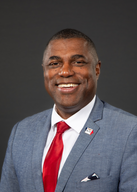
David Sieck
David Sieck House · District 16
R
Support
64% 78
Jane Bloomingdale
Jane Bloomingdale House · District 60
R
Mixed
58% 90
Matt Windschitl
Matt Windschitl House · District 15
R
Mixed
58% 81
Eddie Andrews
Eddie Andrews House · District 43
R
Mixed
57% 82
Bill Gustoff
Bill Gustoff House · District 40
R
Mixed
57% 81
Brian Lohse
Brian Lohse House · District 45
R
Oppose
30% 81
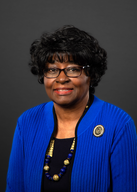
Ruth Ann Gaines
Ruth Ann Gaines House · District 33
D
Mixed −
42% 60
Elizabeth Wilson
Elizabeth Wilson House · District 73
D
Mixed −
44% 92
Mary Madison
Mary Madison House · District 31
D
Mixed −
44% 93
Larry McBurney
Larry McBurney House · District 44
D
Mixed −
44% 95
Showing 51–60 of 481 bills

All education bills

vetoed · Iowa · Senate Jun 2, 2026

SF 2320: A bill for an act modifying provisions related to the district-to-community college sharing or concurrent enrollment program.

SF 2320 modifies Iowa's concurrent enrollment program, which allows high school students (grades 9-12) to take college courses at community colleges. The bill requires students to enroll in in-person course versions unless a school superintendent (or designee) authorizes online enrollment, considering if the student is prepared for and likely to succeed in online learning. School boards must annually approve courses for high school credit based on academic rigor and college readiness. Written notice about course details, hours, and earned college credit must be provided to students and parents.
passed · Iowa · House Mar 19, 2026

HF 2362: A bill for an act relating to tuition charged to resident undergraduate students enrolled at regents institutions.

HF 2362 requires Iowa's regents institutions to establish a policy preventing tuition increases for resident undergraduate students during their subsequent years of enrollment after the first year, starting with enrollments beginning in 2027 or later. It directly affects in-state undergraduate students who begin their first academic year at a regents institution in 2027 or later, freezing tuition for up to three additional years. Key exceptions include students who transfer to a higher-tuition institution (allowing the new school to charge more) or those who complete their degree in fewer than four years using transfer credits. The policy does not apply to any academic years beyond three consecutive years after the student's first year.
Sub-Topics Higher Education
in committee · Iowa · House Feb 10, 2026

HF 2364: A bill for an act relating to the enactment of supplemental state aid and the suspension and forfeiture of legislative pay.

HF 2364 requires Iowa legislators' salaries to be suspended if the state fails to enact specific budget funding levels (state percent of growth and categorical state percent of growth) within 30 days of the governor's budget transmission. This applies directly to Iowa legislators during the regular legislative session. If the required budget provisions aren't passed by the deadline, salaries are suspended starting on day 31 and remain suspended until the funding levels are enacted. Any withheld salary is forfeited and not paid retroactively upon later enactment of the budget provisions.
in committee · Iowa · House Feb 16, 2026

HF 2457: A bill for an act establishing the credential-attainment program within the department of workforce development, making appropriations, and including effective date provisions.

HF 2457 establishes a state program where community colleges partner with employers and school districts to help high school students (grades 9-12) earn industry credentials while still in school. Employers agree to fund at least 20% of program costs and guarantee high-wage jobs (minimum 200% of federal poverty level for a family of two) for students who complete the program. In return, employers receive tax credits based on wages paid to participants, calculated as up to 10% of gross wages, which are applied against their state withholding taxes. The program requires annual budget adjustments, includes employer default procedures, and allows employers to pause hiring during economic downturns. It directly affects students, community colleges, and qualifying employers in manufacturing, construction, R&D, and services (excluding retail).
passed · Iowa · House Mar 18, 2026

HF 2649: A bill for an act establishing a pilot program that authorizes eligible community colleges to offer baccalaureate degrees.

HF 2649, the "REACH Act," creates a pilot program allowing eligible Iowa community colleges to offer bachelor's degrees in specific high-demand fields like nursing, IT, and education. To qualify, colleges must be at least 50 miles from existing bachelor's programs and limit offerings to three degrees per institution, with upper-level courses taught on campus (not online). The bill requires annual reporting on enrollment, student outcomes, and workforce alignment to the state education department and legislature. It directly affects community colleges in rural or underserved areas seeking to expand local higher education options without replacing university programs.
died · Iowa · Senate Mar 4, 2026

SF 2361: A bill for an act establishing a seal of civics excellence program administered by the department of education to recognize student excellence in civics.

This bill would establish a "seal of civics excellence" program administered by Iowa's Department of Education to recognize high school students who demonstrate proficiency in civics. The program requires students to show knowledge of American government and participate in civic activities, with the department setting the specific requirements for earning the seal. Participating schools would voluntarily notify the department of qualifying students, and the department would provide a seal (such as a sticker for transcripts or a certificate) that can be affixed to diplomas. The department may charge a nominal fee to cover printing and mailing costs for the seals.
Sub-Topics K-12 Education
in committee · Iowa · House Feb 23, 2026

HSB 676: A bill for an act relating to charter schools and innovation zone schools, including by modifying provisions related to charter school funding and operations, services provided to charter schools by area education agencies, charter school contracts, and charter school student participation in extracurricular activities provided by public schools, striking provisions allowing for the establishment of innovation zone schools, and including applicability provisions.

This bill modifies Iowa's charter school laws by eliminating "innovation zone schools" (a separate category previously allowed) and focusing solely on traditional charter schools. It requires the state board of education to be the sole authorizer for new charter schools, sets a 75-day timeline for application decisions, and mandates specific new requirements for all charter schools. These include developing math proficiency plans by 2025, creating family resources for math support, adopting device-use policies, and distributing updated U.S. civics tests to students. The bill directly affects all existing and future charter schools in Iowa, removing the innovation zone option and adding operational standards.
passed · Iowa · House Mar 30, 2026

HF 2725: A bill for an act relating to education reporting, including the sharing of unit-level wage data for secondary and postsecondary program evaluation, the establishment of the condition of education report, consolidating certain required reports, modifying responsibilities for the future ready Iowa last-dollar scholarship report, modifying Iowa workforce development data-sharing provisions, and creating a return on investment reporting system to be overseen by the Iowa student aid commission.

HF 2725 requires Iowa's Department of Workforce Development to share unit-level wage data (like job titles, earnings, and locations) with the Department of Education for evaluating secondary and postsecondary education programs. It establishes an annual "condition of education report" due April 1 each year, consolidating multiple existing reports, and creates a statewide return on investment (ROI) reporting system overseen by the Iowa Student Aid Commission. Public colleges and universities must submit program-level data - including costs, completion rates, graduate earnings, and job placement - to the Commission for public publication. Institutions failing to comply may lose eligibility for state financial aid programs, though federal aid remains unaffected. The bill directly affects public colleges, students seeking program transparency, and state agencies managing education data.
passed · Iowa · House Mar 11, 2026

HF 2510: A bill for an act relating to education, including by modifying provisions related to the social studies instruction provided to students enrolled in grades one through twelve and the educational programs provided by the institutions of higher education under the control of the state board of regents.

HF 2510 modifies Iowa's K-12 social studies curriculum requirements. It mandates specific instruction on U.S. founding documents (including the Declaration of Independence, Constitution, and Federalist Papers), "admirable Americans" like Lincoln and Douglass, and Holocaust education for both students and teachers. The bill requires grades 5-6 to study key historical documents, adds a semester of civics focusing on U.S. founding principles and government structures, and specifies that U.S. history instruction must emphasize "exceptional and praiseworthy history" using primary sources. It directly affects all public school students in grades 1-12 and their educators across Iowa.
in committee · Iowa · Senate Mar 19, 2026

SF 2413: A bill for an act relating to social studies instruction provided to students enrolled in grades seven and eight, and including applicability provisions.

This bill (SF 2413) requires all Iowa schools serving grades seven and eight - including public school districts, accredited nonpublic schools, charter schools, and innovation zone schools - to include at least one-half semester of instruction on U.S. government as part of their social studies curriculum. It expands current law, which previously only mandated civics instruction, by adding specific requirements for U.S. government education in those grades. The policy applies to all eligible schools for the 2028-2029 school year and later. The change ensures students receive dedicated time on U.S. government structure and function, alongside existing civics content.
Sub-Topics Curriculum
Showing 51 to 60 of 481 bills
Previous 1 5 6 7 49 Next