Issue · Budget & Taxes

Budget & Taxes

Every budget & taxes bill, vote, and legislator stance in Iowa, automatically classified by Maddy, our AI policy reader.

Total bills
84
2025-2026 Regular Session
Top supporter
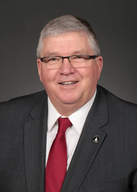
Julian Garrett
86% support rate
Top opponent
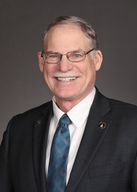
Liz Bennett
30% support rate
Ranked legislators
10
5 support · 5 oppose
Key legislators

Who's moving budget & taxes in Iowa

Legislators moving budget & taxes in Iowa
Legislator Party Stance Support rate Votes
Julian Garrett
Julian Garrett Senate · District 11
R
Strong +
86% 19
Dan Dawson
Dan Dawson Senate · District 10
R
Support
73% 45
Ken Rozenboom
Ken Rozenboom Senate · District 19
R
Support
73% 55
Dan Zumbach
Dan Zumbach Senate · District 34
R
Support
72% 56
Dennis Guth
Dennis Guth Senate · District 28
R
Support
72% 52
Liz Bennett
Liz Bennett Senate · District 39
D
Oppose
30% 54
Janet Petersen
Janet Petersen Senate · District 18
D
Oppose
31% 53
Bill Dotzler
Bill Dotzler Senate · District 31
D
Oppose
33% 57
Zach Wahls
Zach Wahls Senate · District 43
D
Oppose
33% 22
Janice Weiner
Janice Weiner Senate · District 45
D
Oppose
33% 57
Showing 21–30 of 84 bills

All budget & taxes bills

in committee · Iowa · Senate Feb 3, 2026

SSB 3019: A bill for an act relating to real estate transfer tax, including declarations of value.

SSB 3019 amends Iowa's real estate transfer tax law to expand exemptions from submitting a declaration of value when recording property transfers. It specifically exempts three new categories: (1) corporate/LLC mergers or reorganizations, (2) transfers between family entities and owners for no consideration (like shares/debt), and (3) trust asset distributions to beneficiaries without payment. This affects real estate sellers, buyers, and county recorders who process property transfers. The bill does not change tax rates but reduces paperwork for these specific exempt transactions.
in committee · Iowa · House Feb 6, 2026

HSB 642: A bill for an act relating to indirect costs charged to state-funded grants, and including applicability provisions.

HB 642 establishes a 5% cap on indirect costs (overhead expenses like administration, utilities, and shared services) charged to state-funded grants in Iowa, effective July 1, 2026. It directly affects state departments awarding grants and grantees (including nonprofits, schools, and local governments) receiving state funds. The bill requires separate budgeting for direct costs (program-specific expenses) and indirect costs, mandates documentation of cost allocations, and prohibits reclassifying indirect costs as direct costs to bypass the cap. Grantees must maintain records for 10 years, and departments must monitor compliance to disallow excess costs or recover funds.
in committee · Iowa · Senate Feb 18, 2026

SSB 3074: A bill for an act relating to indirect costs charged to state-funded grants, and including applicability provisions.

This bill sets a 5% cap on indirect costs (administrative expenses like management, payroll, and facility costs) charged to state-funded grants in Iowa, effective July 1, 2026. It directly affects grant recipients (including nonprofits, local governments, schools, and for-profits) and state departments administering grants by requiring them to: 1) Separate direct and indirect costs in budgets, 2) Prohibit reclassifying indirect costs as direct costs to bypass the cap, and 3) Maintain documentation for audits. State departments must enforce the cap during grant approval and monitor compliance, with disallowed costs recoverable from grantees.
introduced · Iowa · Legislature

5472XD: Economic Development, Tax Credit Programs and Load Forecasting (5472XD) - Economic Development Authority

This bill establishes the "EDGE Program" (Headquarters Expansion and Development for Growth and Employment), offering tax incentives to eligible businesses that expand or retain corporate headquarters in Iowa. It directly affects businesses in advanced manufacturing, bioscience, technology, or finance that generate over 50% of revenue outside Iowa, maintain comprehensive employee benefits, and prove competing states are vying for their headquarters. Key provisions require businesses to document global presence, avoid simple intra-state relocations, and meet specific wage thresholds based on local labor data. The bill also repeals several existing tax credit programs, including the New Jobs Tax Credit and Major Economic Growth Attraction Program, while creating a new fund for business incentives training.
Sub-Topics Tax Credits Tax Incentives Tags Economic Development
in committee · Iowa · House Feb 9, 2026

HSB 561: A bill for an act relating to the excise tax on certain ethanol blended gasoline purchased exclusively for use in an implement used in agricultural production.

This bill exempts ethanol-blended gasoline containing over 85% ethanol (E-85) from Iowa's excise tax when purchased at a terminal or refinery rack exclusively for use in farm machinery. It directly affects Iowa farmers and agricultural businesses that use E-85 fuel in tractors, harvesters, and other equipment for crop production. The key provision removes the requirement to pay the tax upfront and seek a refund under current law, making the exemption automatic for this specific agricultural use. This change applies only to fuel bought for farm equipment, not general vehicle use.
Sub-Topics Sales Tax
in committee · Iowa · Senate Feb 9, 2026

SF 2060: A bill for an act relating to eligibility standards for certain education programs and tax provisions based on religious or sectarian use or purpose, and including retroactive applicability provisions.

This bill modifies Iowa's education and tax laws to ensure public funding for educational programs excludes religious instruction. It defines "property" to exclude facilities used for sectarian teaching, worship, or religious training, and requires courses for high school students taking college credit to be nonsectarian. School districts must verify comparable nonreligious courses aren't available before allowing students to enroll in eligible college courses at community colleges. Textbook funding for nonpublic schools must be for nonreligious materials, and districts must annually approve courses for academic rigor. The bill affects public school districts, community colleges, and accredited nonpublic schools in Iowa.
introduced · Iowa · Legislature

5536XD: State Grants, Indirect Costs Limits (5536XD) - Administrative Services, Department of

This bill (5536XD) sets a 5% cap on indirect costs charged to state-funded grants, effective July 1, 2026. It directly affects grantees - including nonprofits, local governments, schools, and other organizations receiving state grants - by requiring that all indirect costs (like administrative overhead) combined cannot exceed 5% of the total grant amount. Key provisions mandate separate budgeting of direct and indirect costs, prohibit reclassifying indirect costs as direct costs to bypass the cap, and require grantees to maintain documentation for 10 years. Departments must review budgets for compliance and recover disallowed costs exceeding the cap. The cap does not apply to federal funds with separate indirect cost rules.
in committee · Iowa · Senate Jan 22, 2026

SF 2050: A bill for an act relating to the individual income tax by allowing members of the general assembly to deduct unreimbursed mileage when performing constituent services under certain circumstances, and including retroactive applicability provisions.

SF 2050 allows Iowa legislators to deduct unreimbursed mileage costs incurred while performing constituent services (like meeting with voters or helping residents with government issues) at the same rate used for state employee travel expenses. This deduction does not apply to mileage during legislative sessions, special sessions, or campaign-related activities. The bill applies retroactively to tax years beginning on or after January 1, 2026. It directly affects Iowa legislators who incur out-of-pocket mileage costs while serving constituents outside official session days.
Sub-Topics Income Tax
in committee · Iowa · House Feb 11, 2026

HF 2043: A bill for an act relating to the payment of dues by the general assembly for membership in professional organizations by members of the general assembly, and including effective date provisions.

HF 2043 changes how Iowa's General Assembly funds professional memberships for its members. It prohibits the state from paying dues for collective memberships (like the National Conference of State Legislatures) on behalf of all legislators. Instead, the General Assembly must annually calculate the total dues for those organizations and distribute the equal amount directly to each member, who can then use the funds only to join specific organizations listed in the bill, such as the Council of State Governments or the Heritage Foundation. This shifts funding responsibility from the state to individual legislators for these professional affiliations.
introduced · Iowa · Legislature

5374XD: Governmental Subdivision Audits, Income Tax Exemption (5374XD) - Auditor of State

This bill (5374XD) exempts certified public accountants (CPAs) from Iowa state income tax on fees earned from auditing or examining local governments (like cities, counties, or school districts). It amends Iowa tax codes 422.7 (individual tax) and 422.35 (corporate tax) to exclude such income from taxable earnings. The exemption applies retroactively to tax years beginning on or after January 1, 2026. The bill directly affects CPAs who perform these government audits, removing a tax liability on their fees for this specific service.
Showing 21 to 30 of 84 bills
Previous 1 2 3 4 9 Next