

Maddy summaryThe Jewish American Security Act aims to combat antisemitism by strengthening protections for Jewish students, securing Jewish communities, and increasing transparency regarding online hate speech. For educational institutions receiving federal funds, the bill mandates the creation of specific coordinators to handle discrimination complaints, requires annual training on handling antisemitism, and establishes a new federal clearinghouse to share best practices for campus safety. To support physical security, the legislation expands grant funding for nonprofit organizations and directs the Attorney General to provide resources for law enforcement agencies protecting houses of worship. Additionally, the act requires major online platforms with over 50 million monthly users to submit detailed reports to the Federal Trade Commission on how they detect, remove, and moderate antisemitic content.
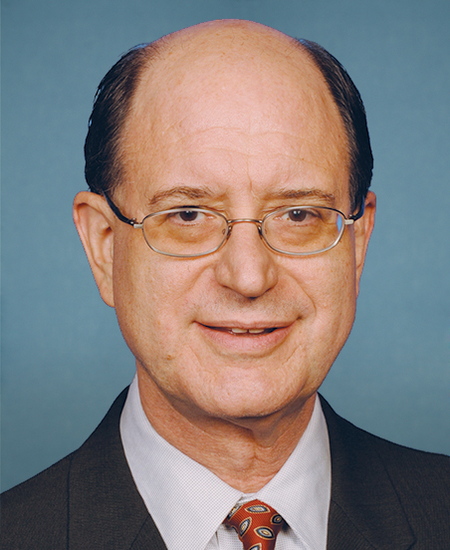
Rep. Brad Sherman
Sponsored bills
Maddy summaryThis joint resolution directs Congress to disapprove a specific foreign military sale of defense articles and services to Turkey. The measure targets the provision of engines, technical data, and related support for the TF-X aircraft, which was proposed for sale in June 2026. By prohibiting this transaction, the bill prevents the transfer of these specific defense capabilities to the Turkish government. It directly affects the proposed sale and the entities involved in supplying the F110-GE-129E/F engines.
Maddy summaryThe LIFT the BAR Act aims to restore access to federal benefits for lawfully present noncitizens by repealing several restrictions imposed by the 1996 welfare reform law and a 2024 reconciliation bill. Specifically, it would allow eligible noncitizens to receive SNAP food assistance, Medicaid, CHIP, and child nutrition programs, while also updating legal terminology to refer to "noncitizens" rather than "aliens" in relevant statutes. The legislation includes provisions to ensure these individuals can qualify for premium tax credits and would require federal agencies to issue implementation guidance within 180 days of enactment.
Maddy summaryThis bill authorizes Congress to award a Congressional Gold Medal to individuals who fought for or with the United States in the Pacific theater during World War II and subsequently became prisoners of war. The legislation specifically recognizes the service and sacrifice of those who defended locations such as Bataan and Corregidor, including Filipino soldiers and civilians who served alongside U.S. forces. To implement this award, the Speaker of the House and the President pro tempore of the Senate will arrange for the creation of a gold medal by the Secretary of the Treasury, which will be presented to the Smithsonian Institution for display. The act also allows for the production of duplicate bronze medals to cover the costs of the original gold medals, with any proceeds from these sales deposited into the United States Mint Public Enterprise Fund.
Maddy summaryThis bill authorizes Congress to award a Congressional Gold Medal to American individuals and organizations that rescued Jews and other refugees from Nazi persecution between 1933 and 1945. The legislation directs the Speaker of the House and the President pro tempore of the Senate to arrange for the creation and presentation of a single gold medal, which will be given to the United States Holocaust Memorial Museum for display and research. Additionally, the bill permits the Secretary of the Treasury to produce duplicate bronze versions of the medal for sale, with the proceeds funding the mint's public enterprise fund.
Maddy summaryThis resolution commemorates the 30th anniversary of Taiwan's first direct presidential election in 1996 and expresses support for the preservation of its democratic institutions. It acknowledges Taiwan's history of free elections and peaceful transfers of power while reaffirming U.S. policy commitments under the Taiwan Relations Act and previous agreements. The text explicitly states that it does not authorize the use of military force, serving as a symbolic statement rather than a legislative action that changes laws or policy.
Maddy summaryThis resolution honors the life, military service, and congressional career of the late Representative Charles Bernard Rangel, specifically recognizing his contributions to the alliance between the United States and South Korea. The measure formally acknowledges his bravery during the Korean War, noting his Purple Heart and Bronze Star Medal awards for leading soldiers out of an encirclement, and highlights his decades of work strengthening U.S.-South Korea ties through trade policy and veteran advocacy. Additionally, the text expresses gratitude for a similar resolution passed by the South Korean National Assembly and reaffirms the House's commitment to honoring Korean War veterans and the enduring bilateral relationship.
Maddy summaryThe Puerto Rico Democratic Self-Determination Act establishes a mandatory, two-round plebiscite in 2027 to allow eligible voters in Puerto Rico to choose among four political status options: independence, current Commonwealth status, statehood, or sovereignty in free association with the United States. If a majority vote is not achieved in the initial election, a runoff will be held to select between the two most popular choices, with the results triggering specific transition procedures for each outcome. Under the independence and free association paths, the bill outlines steps for drafting a new constitution, electing officers, and a presidential proclamation that would transfer sovereignty and end U.S. territorial control. For the statehood option, the President would issue a proclamation admitting Puerto Rico as the 51st state, while the Commonwealth option would create a joint commission to negotiate reforms to the current relationship. The legislation also details how federal laws, including tax codes and immigration rules, would change depending on the chosen status and ensures that existing economic benefits and social security rights are protected during any transition.
Maddy summaryHR 5408, the Faster Labor Contracts Act, requires employers to begin negotiating a first contract with a newly certified union within 10 days of written request. If no agreement is reached within 90 days, the parties must seek mediation, and if unresolved after 30 days of mediation, the dispute moves to binding arbitration by a three-member panel. The arbitration decision, based on factors like employer finances, industry standards, and cost of living, becomes binding for two years. This bill directly affects newly certified unions and their employers during initial contract negotiations, aiming to reduce delays that currently average 465 days.
Maddy summaryThe DOMINANCE Act aims to reduce U.S. reliance on strategic competitors like China for critical minerals by building international partnerships to secure diversified supply chains. It establishes a Minerals Security Partnership to coordinate diplomatic, development, and financial support for critical mineral projects with allies, creates a new Office of Energy Security Compacts to develop multi-year agreements with partner countries, and sets up a new Assistant Secretary position for Energy Security at the State Department. The bill also includes education programs like the Critical Mineral Mining Fellowship Program to build U.S. workforce capacity in mining. These measures are designed to enhance U.S. national security and economic competitiveness by ensuring reliable access to critical minerals needed for defense, technology, and energy systems.