Issue · Budget & Taxes

Budget & Taxes

Every budget & taxes bill, vote, and legislator stance in Indiana, automatically classified by Maddy, our AI policy reader.

Total bills
93
2026 Regular Session
Top supporter
Shelli Yoder
100% support rate
Top opponent
Eric Bassler
0% support rate
Ranked legislators
10
5 support · 5 oppose
Key legislators

Who's moving budget & taxes in Indiana

Legislators moving budget & taxes in Indiana
Legislator Party Stance Support rate Votes
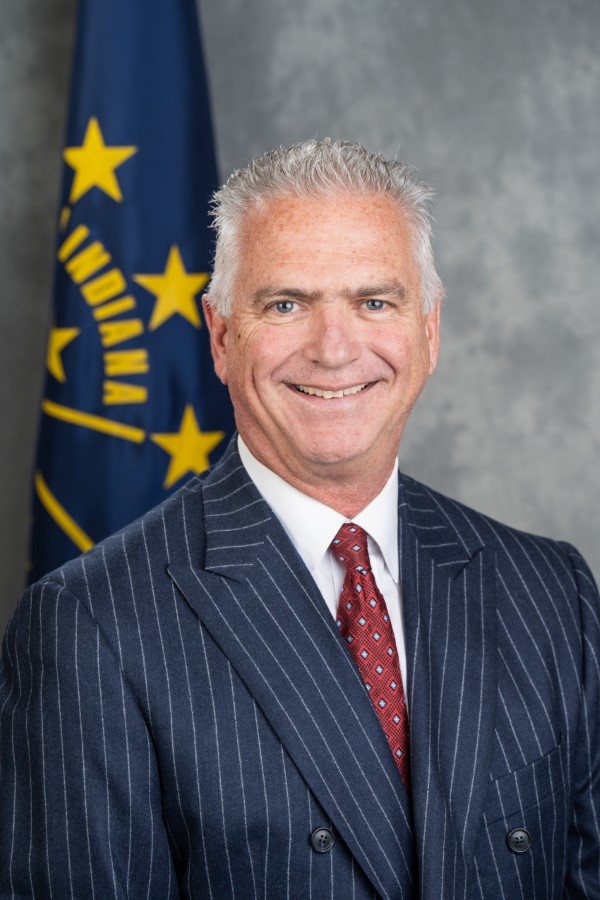
Shelli Yoder
Shelli Yoder Senate · District 40
D
Strong +
100% 75
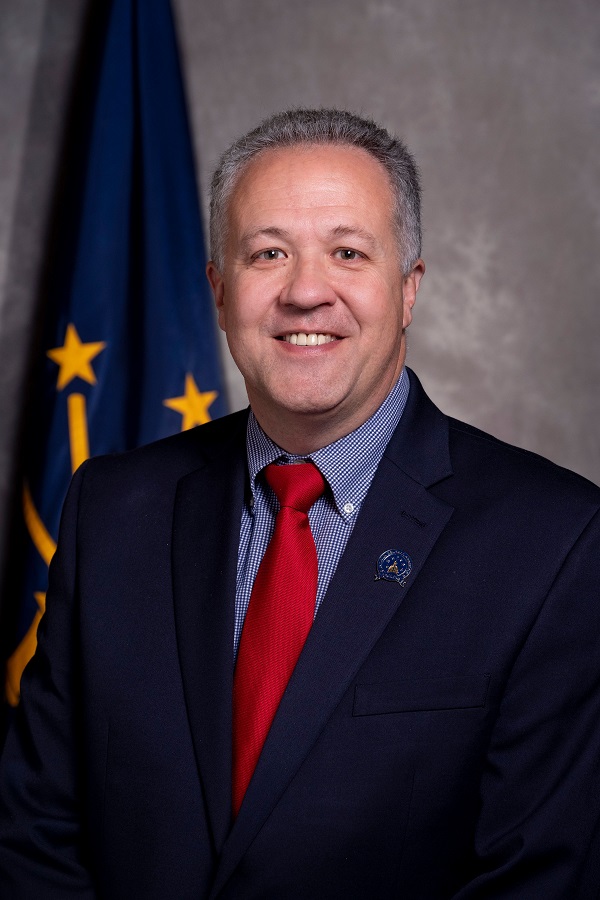
Sue Errington
Sue Errington House · District 34
D
Strong +
90% 104
Sheila Klinker
Sheila Klinker House · District 27
D
Strong +
90% 111
Chris Campbell
Chris Campbell House · District 26
D
Strong +
90% 106
Phil GiaQuinta
Phil GiaQuinta House · District 80
D
Strong +
90% 108
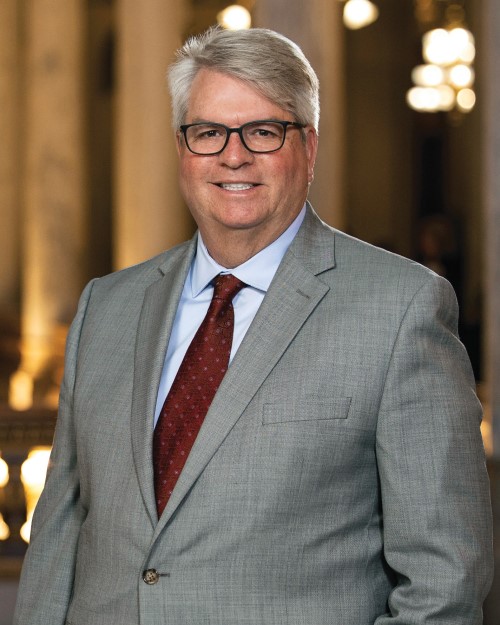
Eric Bassler
Eric Bassler Senate · District 39
R
Strong −
0% 54
Mike Gaskill
Mike Gaskill Senate · District 25
R
Strong −
0% 75
Martin Carbaugh
Martin Carbaugh House · District 81
R
Strong −
10% 103
Lorissa Sweet
Lorissa Sweet House · District 50
R
Strong −
10% 110
Robb Greene
Robb Greene House · District 47
R
Strong −
10% 110
Showing 31–40 of 93 bills

All budget & taxes bills

in committee · Indiana · Senate Jan 5, 2026

SB 165: Hobart counter-cyclical fund loan.

Cancels a 2023 loan or loans from the state of Indiana from the counter-cyclical revenue and economic stabilization fund for the purpose of providing funds to be applied to refunding certain bonds of the city of Hobart and the city of Hobart redevelopment district and offsetting property tax revenue shortfalls incurred and to be incurred by the city of Hobart. Provides that the city of Hobart is not required to make any further payments to the state of Indiana in satisfaction of the loan or loans.
Sub-Topics Property Tax Revenue
signed · Indiana · Senate Mar 5, 2026

SB 4: Various fiscal matters.

Requires the legislative services agency to perform a fiscal impact analysis for all executive orders issued by the governor within seven days of an order's issuance. (Under current law, this requirement only applies to a governor's declaration of a disaster emergency by executive order.) Provides that if the implementation and compliance costs of a proposed rule are expected to exceed $500,000 (instead of $1,000,000) over a two year period, the publisher may not publish the proposed rule until the budget committee has reviewed the rule. Amends the Pokagon Indiana Education Fund to allow payments to be made to both public and private Indiana institutions of higher learning for the purposes of the fund. Makes the following changes (effective July 1, 2028) regarding community mental health centers (CMHC): (1) Allows a county to meet CMHC funding requirements from any funding source in lieu of or in combination with property taxes but excluding federal funds. (2) Adds provisions concerning the location where certain CMHC services may be provided. (3) Specifies additional items that are required to be reported by a CMHC in its annual report. Urges the legislative council to assign to the interim study committee on courts and the judiciary the task of undertaking a comprehensive study of all court fees and fines. Allows the budget agency, subject to budget committee review, to use the appropriation to the financial responsibility and opportunity growth fund (fund) in HEA 1001-2025 or augment the fund for the purpose of providing funding to the Child Care and Development Fund voucher program in addition to the uses for the appropriation as authorized in HEA 1001-2025.
in committee · Indiana · Senate Jan 8, 2026

SB 202: Taxation of remittances.

Requires a money transmitter (entities licensed under the Money Transmission Modernization Act) to collect and remit an international money wiring fee from senders of a money transmission transaction to a location outside of the United States. Provides an income tax credit to an individual who is a citizen or national of the United States, or an alien who has lawful permanent resident status or conditional permanent resident status, and paid an international money wiring fee during the taxable year. Requires the revenue from the international money wiring fee to be deposited in the state general fund. Includes the international money wiring fee under the definition of "listed taxes" that the department of state revenue is required to collect and administer.
passed · Indiana · Senate Feb 2, 2026

SB 172: Administrative rulemaking.

Provides that if the implementation and compliance costs of a proposed rule, provisional rule, or interim rule exceed $100,000 (instead of $1,000,000) over a two year period: (1) the rule cannot be published in the Indiana Register until the budget committee has reviewed the rule; (2) the budget agency and the office of management and budget may not approve any part of the proposed rule prior to review by the budget committee; and (3) in the case of a provisional rule or an interim rule, the governor may not approve a rule prior to the budget committee's review of the rule. Provides that an agency may adopt a rule only if the agency has demonstrated to the satisfaction of the governor that certain circumstances exist. Specifies that provisional and interim rulemaking may be used only under specified circumstances if the combined implementation and compliance costs would not exceed $500,000 for businesses, units, and individuals if effective over a two year period.
in committee · Indiana · Senate Jan 8, 2026

SB 263: Child and dependent care tax credit.

Provides a refundable child and dependent care tax credit to taxpayers whose adjusted gross income for the taxable year is not more than 250% of the federal poverty level. Provides that the credit is equal to the lesser of: (1) an amount ranging from $200 to $1,000, depending on the extent to which the taxpayer's adjusted gross income exceeds the federal poverty level; or (2) 20% of the taxpayer's employment related expenses.
Sub-Topics Business Taxes Income Tax Tax Credits Tags Children
in committee · Indiana · House Jan 6, 2026

HB 1331: School scholarship tax credits.

Increases the percentage of the contribution allowed to be claimed for the school scholarship tax credit (tax credit) from 50% to 75%. Allows taxpayers that commit to making a contribution of at least the same amount for at least two consecutive years to claim the tax credit in an amount equal to 90% of the amount of the contribution. Increases the total amount of tax credits that may be awarded for a state fiscal year from $18,500,000 to $80,000,000. Provides a calculation for an annual increase of the total amount of tax credits for future state fiscal years based on the tax credit's usage. Expands the definition of "participating school" for purposes of the certification of scholarship granting organizations by removing language providing for accreditation and administration of tests under the statewide assessment program or other norm-referenced assessment of the school's students. Requires the receipt prescribed by the department of state revenue for use in an agreement to be a scholarship granting organization to include whether a taxpayer commits to making contributions of at least the same amount for at least two consecutive years.
in committee · Indiana · Senate Jan 8, 2026

SB 218: Circuit breaker credits for homesteads.

Authorizes the fiscal body of a county, city, or town (municipality) to reduce its homestead property tax cap. Requires the reduced property tax cap to apply only in determining the net property tax revenue of the municipality that adopted it and not to any other taxing unit within the taxing district. Authorizes a municipality that has adopted a reduced homestead property tax cap to adopt any of the following local option taxes, either singly or in combination, the revenue from which must be used as property tax replacement revenue due to the reduced homestead property tax cap: (1) Local option sales tax. (2) Supplemental local income tax. (3) Supplemental innkeeper's tax. (4) Supplemental food and beverage tax. Makes conforming changes and removes obsolete provisions. Makes an appropriation.
in committee · Indiana · House Jan 22, 2026

HB 1344: Funding of prosecuting attorney operations.

Establishes the public prosecution fund and a prosecuting attorney compensation fee (a court fee) of $10 for certain actions and $50 for certain actions which will be deposited in the state general fund. Provides that a county may be reimbursed for certain prosecutorial expenses from the fund, unless the prosecuting attorney in the county is a noncompliant prosecuting attorney. Requires the Indiana prosecuting attorney's council to set standards for reimbursement.
Sub-Topics State Budget
in committee · Indiana · House Jan 5, 2026

HB 1225: Certified technology parks.

Provides that if a Level 2 certified technology park (park): (1) has reached the limit of deposits for a Level 2 park; (2) maintains its certification; and (3) is located within a qualified military base enhancement area; the park shall become a Level 3 park upon reaching its Level 2 deposit limit. Provides that a Level 3 park may receive an additional annual incremental income tax deposit of up to $250,000.
in committee · Indiana · House Jan 5, 2026

HB 1229: International money wiring fee.

Requires a money transmitter (entities licensed under the Money Transmission Modernization Act) to collect and remit an international money wiring fee from senders of a money transmission to a location outside of the United States. Allows a money transmitter to retain a collection allowance from the fee amounts remitted. Provides an income tax credit to individuals who are a citizen or national of the United States, or an alien who has lawful permanent resident status or conditional permanent resident status, and paid an international money wiring fee during the taxable year. Renames the community services quality assurance fund the community based services fund (fund). Requires 20% of the revenue from the international money wiring fee to be deposited in the state general fund and 80% of the revenue to be deposited in the fund to be used to fund the family supports Medicaid waiver and community integration habilitation Medicaid waiver programs, including applied behavior analysis, in order to reduce the wait list and make additional waiver slots available under these two programs. Provides that, of the money in the fund for that purpose, 50% is subject to review by the budget committee before being expended and the remaining 50% may be used any time following the deposit of the money in the fund.
Showing 31 to 40 of 93 bills
Previous 1 3 4 5 10 Next