Maddy summaryThis bill (S 884) requires the Bureau of Alcohol, Tobacco, Firearms, and Explosives (ATF) to provide firearm buyers with denial reasons and appeal rights if a background check (NICS) blocks a transfer. It mandates that ATF must make a decision on transfer applications within 3 business days, automatically approving the transfer if they miss the deadline. Buyers who successfully appeal a denial can receive reimbursement for reasonable attorney fees. The bill also requires reports on unresolved background checks and a formal agreement between ATF and the FBI to improve NICS processing. (Based on Sections 2, 3, and 4 of the bill text.)
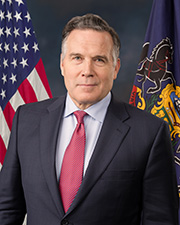
Sen. David McCormick
Sponsored bills
Maddy summaryThis bill amends the Natural Gas Act to give the Federal Energy Regulatory Commission (FERC) exclusive authority to approve or deny applications for LNG terminals (including those for export or import). It requires FERC to deem such projects "consistent with the public interest" when making decisions. The bill also clarifies that the President retains existing authority under laws like the International Emergency Economic Powers Act to block LNG exports to countries designated as "state sponsors of terrorism." This directly affects LNG terminal developers and FERC, streamlining approval processes while preserving presidential sanctions powers.
Maddy summaryThis bill requires the Department of Veterans Affairs (VA) to cover hyperbaric oxygen therapy (HBOT) as a treatment option for veterans diagnosed with traumatic brain injury (TBI) or post-traumatic stress disorder (PTSD) who have already tried at least two other evidence-based treatments. It directly affects veterans with these conditions who are at high risk of suicide or self-harm, as specified in the bill's findings. The key provision mandates that the VA provide HBOT under VA health care programs without requiring prescription drugs, opioids, or invasive procedures. This policy change expands access to a non-drug treatment option for eligible veterans, focusing on proven alternatives for TBI and PTSD management.
Maddy summaryThe ACRE Act of 2025 excludes interest income from certain rural and agricultural loans from taxable income for specific lenders. It directly affects qualified lenders (like banks, farm credit institutions, and insurance companies) and borrowers securing loans for rural property, including single-family homes in rural areas or agricultural land. Key provisions allow lenders to not count interest on qualifying loans as taxable income, provided the loans are secured by eligible rural/agricultural property, don’t exceed $750,000 for single-family homes, and avoid "foreign adversary entities" (like China, Russia, or Iran). The bill also requires a Treasury report on the policy’s impact after five years.
Maddy summaryThis bill increases tax benefits for working families by expanding child care tax credits. It raises the employer-provided child care credit from 25% to 50% of qualified expenses (with the maximum credit increasing from $150,000 to $500,000), and adds a new refundable household care credit allowing up to 50% of eligible expenses (capped at $5,000 for one child or $8,000 for two+ children). Small businesses receive enhanced benefits, with a 60% credit rate and higher maximum ($600,000) for qualifying employers. The changes directly affect working parents, caregivers, and small businesses that provide or support child care.
Maddy summarySCONRES 8 is a Senate concurrent resolution supporting the Local Radio Freedom Act. It urges Congress not to impose a new fee or charge on local radio stations for playing music over the air, or on businesses like bars and restaurants that play radio broadcasts publicly. The resolution argues that such a fee would disrupt the current system where radio stations provide free promotional support to the music industry and essential local services like emergency weather updates. It claims the existing model has fostered a thriving music and broadcasting sector without harming small businesses or consumers. This resolution does not create law but expresses congressional support for maintaining the current fee-free system.
Maddy summaryThis bill imposes U.S. sanctions on foreign individuals and entities involved in organ harvesting within China, as stated in its policy to address "state-sponsored organ harvesting" linked to Falun Gong persecution. Key mechanisms include requiring the President to create and update a list of sanctioned persons within 180 days, blocking their U.S. property, banning visas, and revoking existing visas for listed individuals. Exceptions cover humanitarian aid (e.g., food, medicine) and national security activities. It also mandates a report within one year on China’s organ transplant practices, including whether Falun Gong persecution constitutes an atrocity under existing law. The sanctions authority expires after five years.
Maddy summaryThis bill establishes a federal task force to address U.S. reliance on countries like China for critical minerals essential to technology, renewable energy, defense, and infrastructure. The task force, composed of federal agency representatives and stakeholders, will assess supply chain risks, recommend domestic mining and processing solutions, and reduce dependence on "covered countries" (including China). It must report to Congress within two years with findings and strategies, including recommendations for domestic production, workforce development, and international partnerships. The task force operates without new funding and requires consultation with states, tribes, and industry throughout its work.
Maddy summaryThis bill amends federal education law to prohibit federally funded athletic programs from allowing individuals assigned male at birth to participate in sports designated for women or girls. It defines "sex" for this purpose as biological sex at birth, based on reproductive anatomy and genetics. The law directly affects schools, colleges, and sports organizations receiving federal funding. Violations would constitute a breach of Title IX, requiring programs to exclude individuals whose sex is male from women's or girls' athletic teams.
Maddy summaryThis bill prohibits the slaughter of horses, ponies, and other equines for human consumption by amending existing federal law. It directly affects businesses or individuals currently involved in slaughtering equines for food, making such activity illegal under the Agriculture Improvement Act of 2018. The key change updates a provision that previously banned slaughtering dogs and cats to now include equines, expanding the existing prohibition. This is a concrete policy change that bans a specific practice under federal law.