Maddy summarySRES 729 is a Senate resolution designating the week beginning November 7, 2022, as "National Pregnancy Center Week." It recognizes community-supported pregnancy centers across the United States for providing services like counseling, pregnancy testing, ultrasounds, and material resources to individuals facing pregnancy decisions. The resolution does not create new laws or allocate funds but formally acknowledges these centers' work through symbolic recognition. It highlights their role in serving over 2 million people annually, though the resolution itself has no binding policy effect.
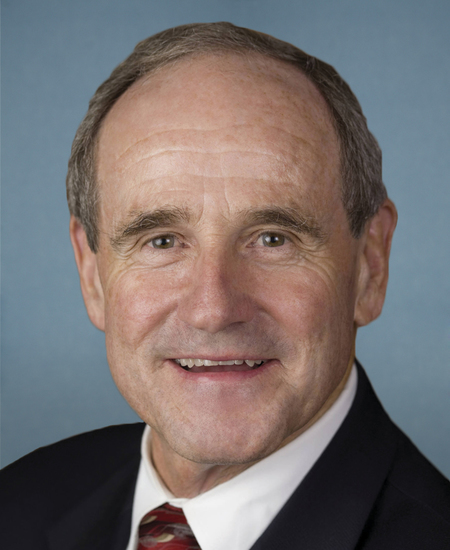
Sen. James E. Risch
Sponsored bills
Economic and Commercial Opportunities and Networks Act of 2022 or the ECON Act This bill addresses economic issues in foreign relations and intellectual property (IP) infringement. The bill expands the criminal offense of trade secrets theft to include the unauthorized modifying or developing of a product in a way that would not be possible without another party's trade secret. This offense shall apply to non-U.S. conduct if the offender attempts to import the product into the United States. Furthermore, the President may impose sanctions against a foreign person (individual or entity) that has committed a significant theft of IP belonging to a U.S. person. The President must also establish or designate a multiagency committee to (1) review petitions alleging such acts of IP theft, and (2) recommend whether to impose sanctions for the alleged theft. The bill also prohibits foreign state-owned entities in international commerce from engaging in predatory pricing, defined in the bill as setting prices for a good below the average variable cost in a manner that may foreseeably harm competition. An injured party may sue in federal court. In deciding such cases, the court may consider the economic support and government subsidies provided by the entity's foreign state owner. Furthermore, the Department of State must establish a pilot program to create economic defense response teams to provide targeted support for countries facing an urgent or specific coercive economic threat from a U.S. adversary. The State Department must establish another pilot program to assist developing partner countries with identifying trade barriers and facilitating trade.
Global Food Security Reauthorization Act of 2022 This bill reauthorizes through FY2028 activities to implement the Global Food Security Strategy, a whole-of-government strategy to promote global food security, resilience, and nutrition. The bill also modifies aspects of the strategy, such as requiring the strategy to seek to improve the efficiency and resilience of agricultural production. The bill also reauthorizes through FY2028 activities related to the Emergency Food Security Program, an international market-based assistance program.
Combating Violent and Dangerous Crime Act This bill revises various statutes with respect to violent crimes and establishes new criminal offenses. For example, the bill (1) increases the statutory maximum penalty for carjacking, and (2) establishes enhanced criminal penalties for certain federal drug offenses involving the manufacture or distribution of candy-flavored controlled substances or similar products for minors.
Food and Energy Security Act This bill provides requirements for specified federal financial agencies when regulating activity that could impact the extension of capital or investments to agricultural- or energy-related businesses. Specifically, an agency must analyze the economic impact of any such regulation. If the analysis estimates that the regulation would increase prices, and if the consumer price index exceeds a certain level, the agency is prohibited from implementing the regulation.
Transparency and Honesty in Energy Regulations Act of 2022 This bill prohibits specified federal entities (e.g., the Department of Energy) from considering the social cost of carbon, methane, nitrous oxide, or greenhouse gas as part of any cost-benefit analysis required under any law or specified Executive Orders. In addition, such social costs must not be considered by such entities (1) in rulemaking, (2) in the issuance of guidance, (3) in taking other agency action, (4) or as a justification for any rulemaking, guidance document, or agency action.
Peace Corps Reauthorization Act of 2022 This bill reauthorizes the Peace Corps program through FY2027 and addresses other issues related to the program. For example, the bill (1) increases the readjustment allowances for returning Peace Corps volunteers; (2) provides statutory authority to an executive order that provides returning volunteers with noncompetitive eligibility for federal employment purposes (i.e., eligibility to be noncompetitively appointed to a competitive federal position); and (3) requires the Peace Corps to take all reasonable measures to prevent and address reprisal or retaliation against a volunteer by any person with supervisory authority over the volunteer, such as a Peace Corps officer.
Secure Embassy Construction and Counterterrorism Act of 2022 This bill modifies various requirements pertaining to the security of U.S. diplomatic facilities. For example, each U.S. diplomatic mission must have an emergency action plan that addresses a range of threats. Currently, the plan is only required by statute to address the threat of large explosive attacks from vehicles.
This resolution remembers former Prime Minister of Japan Shinzo Abe and his work to strengthen the alliance between the United States and Japan. It also extends condolences to his family and the people of Japan.
Maddy summarySRES 686 is a ceremonial Senate resolution designating July 23, 2022, as "National Day of the American Cowboy." It recognizes the cultural significance of cowboys and cowgirls in American history, highlighting their contributions to Western heritage, ranching economies, and community values. The resolution encourages all U.S. citizens to observe the day with appropriate activities but does not create new laws, funding, or obligations. This is a symbolic gesture with no direct impact on specific individuals or policies.