Maddy summaryThe Specialty CROP Act of 2023 amends an existing law to require the U.S. Department of Agriculture and the Trade Representative to submit an annual report to Congress on barriers affecting U.S. specialty crop exports (like fruits, vegetables, and nuts). The report must identify foreign trade barriers - including tariffs, quotas, and health/safety standards - and estimate their economic impact on U.S. exports. It also details U.S. actions taken to address these barriers, such as World Trade Organization disputes or negotiations. This affects U.S. specialty crop exporters indirectly by providing Congress with data to inform trade policy decisions.
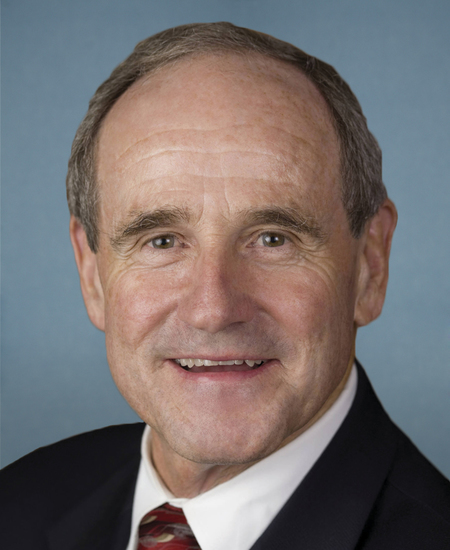
Sen. James E. Risch
Sponsored bills
Maddy summarySenate Joint Resolution 49 seeks congressional disapproval of a National Labor Relations Board (NLRB) rule that would have established a new standard for determining when two or more companies are considered "joint employers" under labor law. The rule, published in October 2023, would have affected businesses with complex employment structures, such as franchisors and contractors, by altering how joint employer liability is assessed for wage, hour, and union representation matters. If passed, the resolution would block the rule from taking effect, preserving the previous standard for joint employer determinations. The bill was introduced by Senators Cassidy, Manchin, Braun, McConnell, Marshall, Cramer, Capito, and Paul and referred to the Health, Education, Labor, and Pensions Committee.
Maddy summarySRES 459 is a ceremonial Senate resolution recognizing November 2023 as National Native American Heritage Month and the Friday after Thanksgiving as Native American Heritage Day, as specified in the 2009 Native American Heritage Day Act. It does not create new laws or funding but formally acknowledges Native Americans' contributions to U.S. history, culture, and society through "appropriate programs and activities." The resolution highlights historical context, including Native American cultural preservation, military service, and influences on U.S. governance, without imposing obligations on any entity. It directly affects the general public by encouraging observance during November 2023. This is a symbolic gesture, not a policy change.
Maddy summarySCONRES 7 is a Senate concurrent resolution condemning Russia’s detention of Vladimir Kara-Murza, a Russian opposition leader jailed for criticizing Vladimir Putin’s regime, the invasion of Ukraine, and advocating for democracy. It calls for his immediate release, urges Russia to free all political prisoners, and expresses solidarity with advocates for democratic values in Russia. The resolution specifically references Kara-Murza’s history of poisoning attempts, his arrest for "spreading false information" after speaking out, and his recent high treason charges. It does not create new laws or impose sanctions but formally expresses congressional opposition to his unjust detention.
Maddy summaryThis joint resolution approves the 2023 agreements that amend the U.S. compacts with the Federated States of Micronesia, the Republic of the Marshall Islands, and Palau, which govern their political and economic relationship. It authorizes continued U.S. assistance including funding for health care services, education programs, and economic development initiatives in these nations. The bill establishes new oversight mechanisms requiring regular reporting to Congress on the implementation of these agreements. It also updates procedures for managing funds and ensures that U.S. assistance remains separate from the nations' foreign debt obligations.
Maddy summaryThe CEASE Act imposes U.S. sanctions on foreign entities or individuals that provide significant material support to military or intelligence facilities operated by China in Cuba. Sanctions include blocking assets and denying U.S. entry, with exceptions for goods imports and UN-related activities. It requires the Secretary of State to submit annual reports detailing China’s military and intelligence cooperation with Cuba, including facility usage and progress toward ending China’s access. Sanctions would terminate 30 days after the President certifies that China has closed all such facilities in Cuba. The law targets foreign actors enabling China’s intelligence operations in Cuba, without directly affecting Cuban civilians.
Maddy summaryThe REPAIR Act of 2023 streamlines federal project authorization reviews by establishing a 30-day deadline for judicial challenges, limiting review to cases with "direct and tangible harm" (physical injury or uncompensated economic loss), and requiring a mediation process overseen by the Federal Permitting Improvement Steering Council to resolve court decisions that vacate or remand authorizations. It mandates agencies to reauthorize projects within 15 days after mediation concludes, creates a public database tracking cases exceeding 90 days of judicial review, and amends the National Environmental Policy Act to limit standing for environmental review challenges. This legislation primarily affects project sponsors seeking federal project approvals, agencies issuing authorizations, and those challenging authorizations in court. The bill aims to reduce delays in project development by streamlining the legal review process for federal authorizations. It does not create new rights of action but establishes clearer timelines and procedures for existing judicial review processes.
Maddy summarySJRES 47 is a joint resolution seeking congressional disapproval of a Department of Justice rule about home confinement for federal prisoners under the CARES Act. The rule, published in April 2023, would have established guidelines allowing the Justice Department to use home confinement as an alternative to prison for certain inmates during the pandemic. If passed, this resolution would cancel the rule, preventing it from taking effect. It follows the standard process under Chapter 8 of Title 5, U.S. Code, for Congress to reject agency regulations.
This concurrent resolution expresses the sense of Congress that a carbon tax would be detrimental to families and businesses and would severely harm the economic and national security of the country.
Maddy summarySJRES 42 is a resolution seeking congressional disapproval of a Food and Nutrition Service (FNS) rule that updated how discrimination complaints are processed in federal food assistance programs (like SNAP). The rule applied the Supreme Court's Bostock v. Clayton County decision - which prohibits workplace discrimination based on sexual orientation or gender identity - to the handling of program discrimination complaints. If passed, this resolution would block the FNS rule from taking effect, preventing it from changing existing complaint procedures. The measure uses the Congressional Review Act process to overturn the rule without altering program benefits or eligibility.