Protecting Individuals with Down Syndrome Act This bill creates new federal crimes related to the performance of an abortion on an unborn child who has Down syndrome. It subjects a violator to criminal penalties—a fine, a prison term of up to five years, or both. It also authorizes civil remedies, including damages and injunctive relief. A woman who undergoes such an abortion may not be prosecuted or held civilly liable.
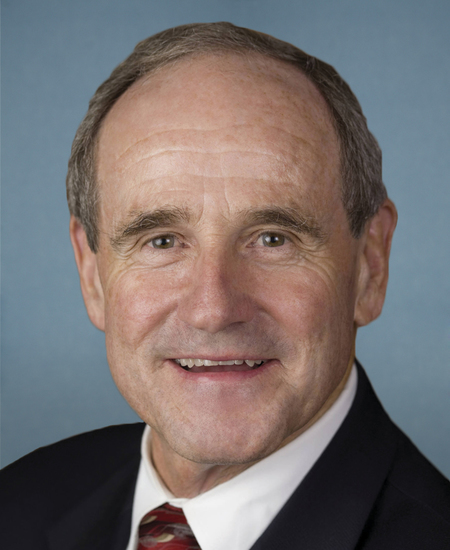
Sen. James E. Risch
Sponsored bills
Maddy summaryThis bill prohibits federal funding (directly or indirectly) for colleges and universities that host or are affiliated with campus health clinics providing abortion drugs or abortions to students or staff. Institutions must submit annual reports certifying no such services are offered to remain eligible for federal funds. The law also prevents states from penalizing schools for complying with this funding restriction. It specifically defines "abortion drugs" and "school-based service sites" (excluding hospitals) to clarify coverage.
Maddy summaryThis bill allows ranchers with grazing permits or leases to temporarily use vacant public grazing land when their usual land becomes unusable due to disasters like droughts, wildfires, or extreme weather. The Secretary of Agriculture or Interior can make this temporary access available, subject to conditions ensuring it doesn’t alter the rancher’s original grazing rights or future allocations. Key provisions require the Secretary to consider ecological conditions, coordinate across agencies, and establish guidelines within one year to streamline this process. The temporary use is limited to the duration needed for the original land to recover, and it does not affect the rancher’s permanent access or terms to their original allotment.
Maddy summaryS 213, the Main Street Tax Certainty Act, makes the qualified business income deduction permanent for small business owners. It directly affects pass-through business owners (like sole proprietors and small partnerships) who currently benefit from this tax break. The bill removes the temporary expiration of Section 199A of the tax code, providing long-term certainty for these taxpayers by ensuring they can continue deducting up to 20% of their qualified business income.
Maddy summaryThis bill modifies tax code provisions to benefit energy producers. It allows oil and gas companies to deduct intangible drilling and development costs more favorably when calculating taxable income, by disregarding depreciation and depletion expenses already reflected on their financial statements. The change applies to taxable years beginning after December 31, 2025. This directly affects domestic energy producers who incur these specific drilling costs.
Maddy summaryS 227, the PEACE Act of 2025, prohibits the use of federal education funds for curriculum, teaching, or counseling that promotes or compels specific "divisive concepts" related to race. It directly affects schools receiving federal funding under the Elementary and Secondary Education Act by banning the use of those funds for materials teaching ideas like "one race is inherently superior," that "the United States is fundamentally racist," or that individuals bear responsibility for past racial actions based solely on their race. The bill defines prohibited concepts to include race stereotyping (assigning traits to races), race scapegoating (blaming a race for problems), and claims that meritocracy is racist. This amendment to the Elementary and Secondary Education Act would require schools to avoid these specific topics when using federal education funds. The law focuses on restricting the use of federal money for certain instructional content, not on banning all discussions of race or history.
Maddy summaryThis bill requires states receiving Medicaid funds for family planning services to submit standardized abortion data to the CDC annually. States must report specific details like maternal age, race, ethnicity, procedure type, gestational age, and whether a child survived the procedure. Data must be submitted by December 31 each year, and states providing false information could lose Medicaid funding for a year. The goal is to create consistent national abortion statistics, addressing current gaps where many states don’t report data reliably.
Maddy summaryThis bill requires federal agencies managing the Federal Columbia River Power System (FCRPS) to operate it according to the 2020 environmental review's "reasonable and prudent alternative." It allows limited changes to that review only for public safety, grid reliability, or if specific requirements are no longer needed, while prohibiting any new restrictions on hydroelectric power generation or Snake River navigation in Washington, Oregon, or Idaho without new federal law. The bill preserves routine operations and maintenance but mandates that structural changes or studies affecting power generation or navigation must be explicitly authorized by future legislation. It directly affects how federal agencies manage dams and river access across the Pacific Northwest.
Maddy summaryS 181 requires most federal agencies to submit zero-based budgets every six years, analyzing current operations, exploring alternatives, and ranking programs by importance. These budgets must cover the next fiscal year and the following four years, submitted to the Office of Management and Budget and congressional budget committees. Agencies (excluding Defense and the National Nuclear Security Administration) must also recommend specific program cuts totaling at least a 2% reduction in non-defense discretionary spending from the prior year. The bill directly affects how federal agencies plan and justify their funding, aiming to improve budget efficiency through systematic review.
Maddy summaryS 184, the CURD Act, defines "natural cheese" in federal food labeling regulations to clarify what products can legally use that term. It directly affects cheese manufacturers who label products as "natural cheese" and consumers who rely on that labeling for purchasing decisions. The bill adds a specific definition to the Federal Food, Drug, and Cosmetic Act, requiring that "natural cheese" must be made by coagulating milk proteins without the addition of certain processed cheese ingredients listed in the definition. Products like pasteurized process cheese, cheese spreads, and cold pack cheeses are explicitly excluded from the "natural cheese" category under this new standard.