

Maddy summaryS 1289 authorizes the U.S. Mint to produce and sell commemorative $5 gold and $1 silver coins to mark the 25th anniversary of the September 11, 2001, terrorist attacks. The bill specifies coin specifications (e.g., 90% gold/silver content, design requirements including "Never Forget"), sets a one-year issuance window (January 1, 2027-2028), and requires surcharges of $35 per gold coin and $10 per silver coin. These surcharges will be paid directly to the National September 11 Memorial and Museum to support its operations and maintenance, with coins sold at a price covering face value, surcharge, and production costs. The legislation does not impose new regulations or affect public policy but focuses on commemoration and funding for the museum.
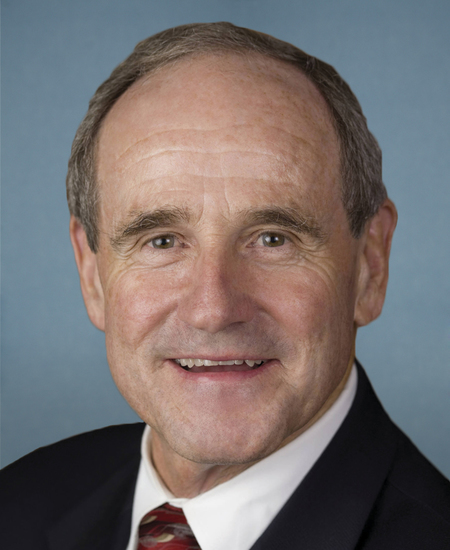
Sen. James E. Risch
Sponsored bills
Maddy summaryThe BOP SCAN Mail Act requires the Bureau of Prisons to implement digital mail scanning at all federal correctional facilities to detect and prevent synthetic drugs like fentanyl from entering prisons through inmate mail. Within 180 days of enactment, the BOP Director must evaluate scanning technology and submit a strategy to Congress for achieving 100% mail scanning, including providing inmates digital mail copies within 24 hours and physical copies within 30 days if no drugs are detected. The strategy must cover equipment, training, a 2025-2027 budget, and annual progress reports on drug detection and program efficiency. This directly affects 122 federal prisons, their 38,000 employees, and over 150,000 inmates by addressing a 600% rise in drug-related overdoses linked to mail-sent contraband.
Defending Education Transparency and Ending Rogue Regimes Engaging in Nefarious Transactions Act or the DETERRENT Act This bill expands oversight and disclosure requirements related to foreign sources and institutions of higher education (IHEs). Specifically, the bill requires an IHE to annually disclose to the Department of Education (ED) any year in which the IHE receives a gift from a foreign country of concern (e.g., China or Russia) or foreign entity of concern of any dollar amount; receives a gift or contract from a foreign source (other than a foreign country of concern or foreign entity of concern) that is valued at $50,000 or more, considered alone or in combination with all other gifts or contracts within a calendar year (current disclosure threshold is $250,000 or more), or which has an undetermined monetary value; enters into a contract with a foreign country of concern or foreign entity of concern after receiving a waiver for such contract; or is substantially controlled by a foreign source. Additionally, the bill prohibits IHEs from entering into contracts with a foreign country of concern or with a foreign entity of concern without obtaining a waiver, and requires certain IHEs to disclose gifts or contracts between covered individuals (e.g., researchers) and foreign sources. The bill requires ED to investigate possible violations of this bill and outlines the various penalties for each violation. Penalties may include losing eligibility for federal student financial aid.
Maddy summaryThis bill extends temporary work visas for religious workers (like pastors or missionaries) who face long delays in obtaining permanent residency due to annual visa caps. It allows them to keep their temporary status while waiting for a final decision on their permanent residency application, rather than having to leave the U.S. after five years. The bill also permits these workers to change employers under certain conditions and exempts them from a mandatory one-year foreign residence requirement if they were forced to leave due to the five-year visa limit. These changes directly affect religious workers with pending permanent residency applications stuck in visa backlogs.
Maddy summaryThis bill amends the National Labor Relations Act to explicitly include Indian Tribes and their enterprises operating on tribal lands under federal labor law. It defines "employer" to cover tribal governments and tribal-owned businesses on Indian lands, directly affecting tribal governments and their workplaces. Key provisions add specific definitions for "Indian Tribe," "Indian," and "Indian lands" to clarify which entities and locations fall under the law. This change brings tribal employers on reservation or trust lands under the same federal labor protections as other employers, expanding the scope of the National Labor Relations Act.
Maddy summaryThis bill clarifies rules for using existing water infrastructure to recharge aquifers. It allows states, tribes, public entities, or non-profits to use pre-existing rights-of-way, easements, or permits (like canals built before 1976) for aquifer recharge without new federal permits, provided they give 30 days' notice to the Bureau of Land Management. Non-profits using these existing resources are exempt from paying extra rent to the federal government, but for-profit entities or uses are not. The bill also waives certain environmental regulations (like the Clean Water Act) for these specific recharge activities and permits modifying existing infrastructure.
Maddy summaryThe Rural Housing Service Reform Act of 2025 establishes a permanent housing preservation and revitalization program to maintain affordable multifamily housing projects financed under sections 514, 515, and 516 of the Housing Act of 1949, authorizing $200 million annually for fiscal years 2026-2030 to support loan restructuring, rental assistance renewal, and technical assistance for owners. The bill creates a $50 million annual set-aside for Native community development financial institutions to increase homeownership opportunities for Indian Tribes, Alaska Native communities, and Native Hawaiian communities. Additionally, it modifies Section 504 loans to reserve 60% for very low-income applicants and increases the loan cap from $7,500 to $15,000, while adjusting rural housing voucher processes to allow more frequent recalculation based on changing household circumstances.
Maddy summarySRES 153 is a ceremonial Senate resolution designating March 27, 2025, as "National Women in Agriculture Day." It recognizes the contributions of women in U.S. agriculture, citing that women operate over 1.2 million farms (36% of total sales, $222 billion in 2022) and work across diverse roles from farming to education and advocacy. The resolution encourages public acknowledgment of women’s impact on the agricultural workforce and food systems, urging support for women entering the field, leadership opportunities, and global food security. As a non-binding resolution, it does not create new laws or funding but formally honors this group during National Women’s History Month and National Ag Week.
Maddy summaryThe Sanctioning Russia Act of 2025 establishes a framework for imposing comprehensive sanctions on Russia if the President determines Russia is engaging in actions that undermine peace with Ukraine, such as refusing to negotiate a peace agreement, violating peace agreements, or planning another military invasion. If such a determination is made, the bill mandates blocking property of Russian officials and entities, prohibiting transactions with Russian financial institutions, increasing tariffs on Russian goods to at least 500% ad valorem, banning energy exports to Russia, and prohibiting purchases of Russian sovereign debt. It also imposes sanctions on countries that purchase Russian oil, uranium, or petroleum products, with duties of at least 500% on such goods. The bill requires the President to make determinations every 90 days and allows for termination of sanctions if Russia ceases harmful actions and enters a peace agreement with Ukraine, with immediate reimposition if Russia resumes those actions.
Maddy summarySRES 148 is a ceremonial resolution passed by the U.S. Senate to honor the late Senator Alan K. Simpson of Wyoming, who died in 2022. The resolution expresses the Senate's "profound sorrow and deep regret" over his passing and formally requests the Secretary of the Senate to transmit an enrolled copy to his family. It also directs the Senate to adjourn as a mark of respect during its final session following the resolution's adoption. This resolution has no policy impact or direct effect on constituents - it solely serves as a formal tribute to Simpson's legacy.