

Maddy summaryThis Senate resolution (SRES 86) expresses the Senate's official position on a longstanding diplomatic issue. It clarifies that United Nations General Assembly Resolution 2758 (1971), which determined China's UN seat representation, does not endorse China's "One China Principle" (claiming Taiwan is part of China) or address Taiwan's political status. The resolution reaffirms the U.S. "One China Policy" does not accept China's sovereignty claim over Taiwan and opposes China's misuse of Resolution 2758 to isolate Taiwan from international organizations like the WHO or UN agencies. It specifically supports Taiwan's meaningful participation in international forums and opposes China's coercion of other nations to sever ties with Taiwan. The resolution is non-binding but aims to correct factual misrepresentations used to limit Taiwan's global engagement.
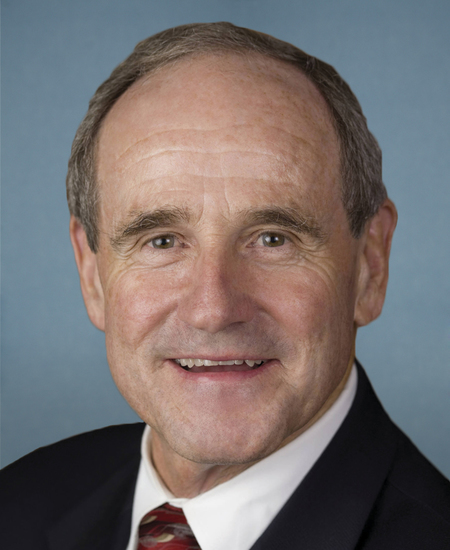
Sen. James E. Risch
Sponsored bills
Break Up Suspicious Transactions of Fentanyl Act or the BUST FENTANYL Act This bill revives a requirement for the President to identify foreign opioid traffickers and extends opioid trafficking sanctions to new categories of foreign persons (individuals and entities) whose actions support such trafficking. Specifically, the bill revives through 2030 a requirement that the President annually submit a report to Congress identifying foreign opioid traffickers. (For those listed in the report, the President must select certain sanctions to impose on them, such as bans on loans, foreign exchange transactions, and property transactions.) The bill also specifies that such reports must prioritize the identification of Chinese nationals and entities involved in the shipment of fentanyl, fentanyl-related chemicals, and fentanyl manufacturing equipment to Mexico or any other country involved in the production of fentanyl trafficked to the United States. The bill extends such foreign opioid trafficker sanctions to additional categories of foreign persons, including those that have knowingly (1) engaged in significant activities or financial transactions that materially contributed to opioid trafficking; or (2) provided financial, material, or technological support for such activities or transactions. The bill also authorizes the President to impose these sanctions on foreign government entities, including government owned or controlled financial institutions, that are involved in activities that contribute to opioid trafficking. Additionally, the President may impose property-blocking sanctions on senior officials of these foreign government entities who knowingly facilitate such activities.
Maddy summaryThe MEGOBARI Act requires the U.S. Secretary of State to suspend the U.S.-Georgia Strategic Partnership Commission until Georgia demonstrates progress toward democratic reforms and advancing its EU/NATO aspirations. It authorizes sanctions - including visa bans and property blocks - against Georgian officials (including parliament members and senior government leaders) who obstruct Euro-Atlantic integration or engage in corruption undermining Georgia’s sovereignty. The bill mandates a U.S. strategy for Georgia relations within 90 days and a report on Russian intelligence influence in Georgia within 180 days. These measures directly target Georgian government officials and political actors, with sanctions applying to those deemed to block democratic progress or Georgia’s Euro-Atlantic path.
Maddy summaryThe Combating Organized Retail Crime Act amends federal law to strengthen legal tools for addressing organized retail crime, including theft from stores, online, and supply chains. It establishes a new Organized Retail and Supply Chain Crime Coordination Center within the Department of Homeland Security to coordinate Federal, State, local, and tribal law enforcement efforts. The Center will share information, assist with investigations, track crime trends, and provide training to combat these crimes. The bill expands legal definitions to include organized retail crime as a specific category and requires annual reports on the Center's activities. The Center will operate for 7 years before sunset.
Maddy summaryThis bill amends the U.S. Housing Act of 1937 to exclude certain veterans' disability benefits from income calculations for housing assistance. Specifically, it excludes disability benefits received under Chapter 11 or 15 of Title 38 (veterans' benefits) when determining eligibility for the Section 8 supported housing program and other housing assistance. It directly affects disabled veterans receiving these specific benefits by making them less likely to be disqualified from housing programs due to their disability income. The change applies to income eligibility determinations under HUD-administered housing assistance programs, not to the definition of adjusted income itself.
Maddy summaryThis bill requires states that use federal Medicaid funds to pay abortion providers to submit detailed annual reports to the federal government. The reports must include specific payment amounts, purposes, comparisons to prior years, the number of abortions performed, gestational age, and abortion method for each provider. States must also publish these reports online, and the federal government must compile and publish a summary for Congress. The law directly affects states administering Medicaid who fund abortions, mandating transparency about these payments using plain language definitions of "abortion" and "abortion provider."
Maddy summaryS 1336, the "Jobs in the Woods Act," creates a federal grant program to support forestry workforce training in underserved rural communities. It provides funding for eligible entities (like nonprofits, tribes, local governments, and colleges) to develop training programs in areas meeting specific criteria: nonmetropolitan, low-income, small-population communities with reliable broadband access. Grants range from $500,000 to $2 million per award for up to 4 years, with priority given to programs addressing aging forestry workforces and youth migration, and partnerships with schools. The program is authorized to receive $10 million annually from 2025 through 2029.
Maddy summaryThe REPAIR Act of 2025 creates new rules for challenging environmental project approvals required under federal law. It sets a 120-day deadline for filing challenges to project approvals and limits courts to remanding approvals (sending them back for review) rather than vacating them, unless there's an immediate threat to health or the environment. The bill establishes a mediation process where project sponsors and federal agencies must work with the Federal Permitting Improvement Steering Council to fix approval issues within 60 days. It also requires a public database tracking cases not resolved within 90 days of filing.
Maddy summaryThis resolution (SRES 159) is a ceremonial Senate measure honoring the late Senator John Bennett Johnston, Jr. (1932-2024), who represented Louisiana in the U.S. Senate from 1972 to 1997. It commemorates his career, including his work on energy policy, flood control, and Louisiana conservation efforts, and requests the Senate adjourn in his memory while sending condolences to his family. As a non-binding resolution, it has no policy impact or direct effect on any individuals or laws.
Maddy summarySenate Joint Resolution 45 seeks to block an Environmental Protection Agency (EPA) rule that would have allowed California to enforce its Advanced Clean Cars II vehicle emission standards. The resolution uses the congressional disapproval process under federal law to declare the EPA rule invalid, preventing California from implementing its stricter pollution controls for cars and trucks. If passed, this resolution would stop the rule from taking effect, meaning California could not override federal vehicle emission standards with its own requirements. The bill directly affects California's ability to set state-level environmental regulations for motor vehicles and the EPA's regulatory authority.