Maddy summaryThis resolution designates June as "Life Month" each year, recognizing the inherent dignity of all human life. It urges Congress to acknowledge that every life is a sacred gift and to commend organizations and individuals supporting pregnant mothers and families. The resolution does not create new laws or policies but serves as a symbolic statement affirming life as a fundamental right.
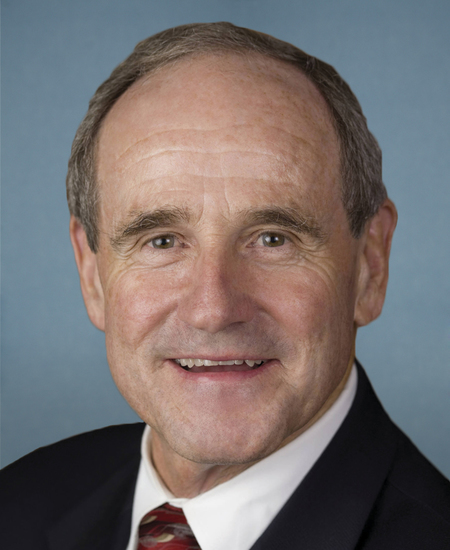
Sen. James E. Risch
Sponsored bills
Maddy summaryS 1934, the Securing Energy Supply Chains Act, creates a federal "Energy Non-Procurement List" identifying foreign entities deemed harmful to U.S. national security. The Secretary of Energy must establish this list within 90 days, prioritizing companies involved in critical materials or batteries, and include entities on existing U.S. sanctions lists. Federal agencies are prohibited from entering new contracts with contractors using goods/services from listed entities after one year, with limited exceptions requiring monthly reporting and annual congressional reports. The bill also mandates a study to harmonize overlapping government lists of restricted entities, aiming to clarify procurement restrictions across federal agencies.
Maddy summaryThis resolution (SRES 255) is a ceremonial Senate measure honoring former U.S. Senator Christopher "Kit" Bond of Missouri, who died on May 13, 2025. It recognizes his 40+ years of public service, including his roles as Missouri Governor (1973-1977, 1981-1985) and U.S. Senator (1987-2011). The resolution directs the Senate to adjourn briefly as a mark of respect and transmit a copy to his family. It has no policy impact or direct effect on constituents, as it is purely commemorative.
Maddy summarySRES 250 is a symbolic Senate resolution designating May 2025 as National Foster Care Month. It recognizes the challenges faced by the approximately 368,530 children in foster care in the U.S. and encourages Congress to develop policies improving their lives. The resolution does not create new laws or funding; it solely raises awareness and acknowledges foster parents, workers, and youth. It highlights issues like prolonged care (average 22.6 months), educational instability, and the need for better support for youth aging out (18,538 in 2022). As a procedural resolution, it has no binding effect on policy changes.
Maddy summarySRES 253 is a ceremonial Senate resolution congratulating Pope Leo XIV on his election as Pope, recognizing him as the first U.S. citizen elected to the papacy. The resolution highlights his global role in promoting peace, justice, and interfaith dialogue, and expresses hope for continued strong U.S.-Holy See relations based on shared values. It does not create policy changes or affect any specific group, as it is a symbolic gesture of goodwill. The resolution was introduced by multiple senators and unanimously adopted by the Senate on May 22, 2025.
Maddy summaryThis resolution recognizes May as Jewish American Heritage Month to celebrate Jewish Americans' contributions to U.S. society, culture, and history. It calls on elected officials, civil society leaders, and educational institutions to condemn antisemitism, educate the public about Jewish heritage, and ensure the safety of Jewish communities. The resolution cites rising antisemitic incidents - documented by the ADL as a 344% increase over five years - and emphasizes countering hate through awareness and inclusion. It does not create new laws but urges proactive measures to protect Jewish Americans, particularly following the post-October 7, 2023, surge in antisemitism.
Maddy summaryThe ETAP Act of 2025 establishes a new Energy Threat Analysis Program within the Department of Energy to enhance security for the U.S. energy sector. The program creates an Energy Threat Analysis Center (physical and virtual) to monitor threats, analyze risks, and share actionable security information between government agencies (like DHS and NSA) and energy companies through existing groups like the Electricity Information Sharing and Analysis Center. It requires annual reporting to Congress, authorizes $50 million for fiscal years 2025-2029, and terminates after 10 years. The bill directly affects energy infrastructure operators, federal agencies coordinating on energy security, and the Electricity Information Sharing and Analysis Center by mandating new threat-sharing protocols and collaboration mechanisms.
Maddy summarySRES 238 is a non-binding Senate resolution congratulating charter school students, parents, teachers, and leaders for their contributions to education during the 26th Annual National Charter Schools Week (May 11-17, 2025). It formally recognizes charter schools as public schools that provide diverse educational options, citing their role in improving student achievement and closing achievement gaps, particularly for disadvantaged students. The resolution has no policy impact - it solely expresses support through symbolic recognition and encourages public observance during the designated week. It directly affects the charter school community nationwide, as acknowledged in the resolution’s text.
Maddy summaryThis bill expands benefits for public safety officers (like police and firefighters) who develop certain cancers linked to their work. It creates a presumption that specific cancers - such as lung, bladder, or mesothelioma - were caused by job-related exposure to carcinogens, if the officer served at least 5 years, was diagnosed within 15 years of leaving active duty, and the cancer caused death or permanent disability. The list of covered cancers will be updated every 3 years based on medical evidence from agencies like the National Institute for Occupational Safety and Health. Claims must be filed within 3 years of the bill’s enactment, applying to cases involving deaths or disabilities occurring after January 1, 2020.
Maddy summaryThis bill prohibits federal health plans (like the Federal Employees Health Benefits program) from covering gender-affirming care for individuals under 18 years old. It defines gender-affirming care broadly as medical interventions for gender dysphoria, including hormone therapy, puberty blockers, and surgeries, but includes specific exceptions for medically necessary treatments like precocious puberty, disorders of sexual development, and injuries requiring immediate care. The bill allows ongoing hormone therapy for minors already receiving it as of the effective date to continue for up to one year under a physician-supervised reduction plan. It applies only to federal health plans, not private insurance or other programs.