

Maddy summaryHR 3707, the NSF and USDA Interagency Research Act, requires the U.S. Department of Agriculture (USDA) and the National Science Foundation (NSF) to coordinate research efforts through formal agreements. It directs them to jointly fund collaborative projects focused on agricultural challenges, food security, rural economic development, and emerging technologies like AI and precision agriculture. The bill establishes mechanisms for awarding grants to universities, community colleges, and nonprofits to create centers for agricultural research and workforce development, while mandating annual reports to Congress on coordination progress. This legislation directly affects USDA, NSF, and institutions seeking federal research funding in agricultural science.
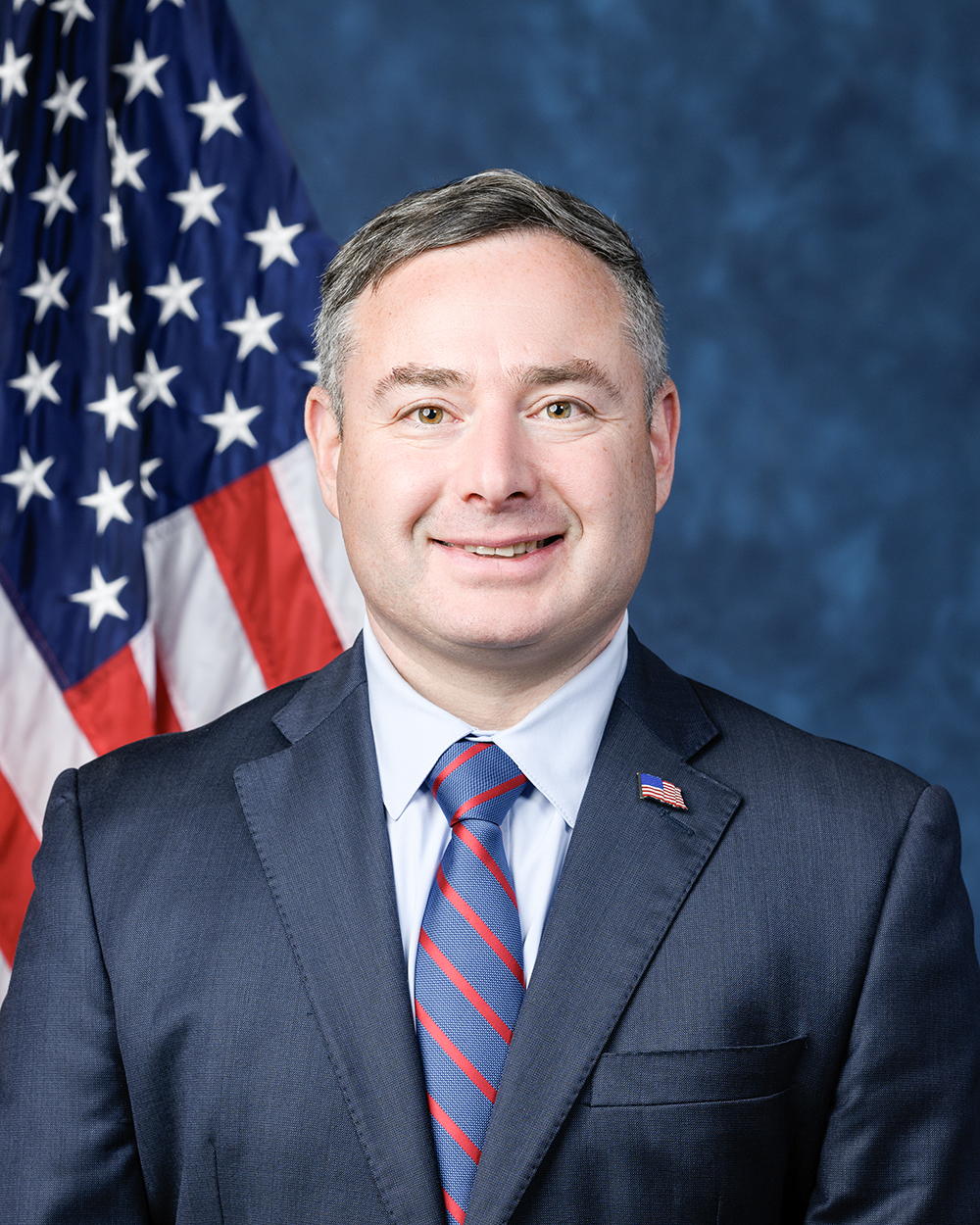
Rep. Eugene Simon Vindman
Sponsored bills
Maddy summaryThis resolution (HR 3737) expresses congressional findings about the 1989 Tiananmen Square protests and their suppression, citing Chinese government actions including censorship, restrictions on education, and suppression of commemorative events. It states U.S. policy to mark the anniversary, address Chinese censorship, support individuals jailed for commemorating the events (like Jimmy Lai), and use existing sanctions authorities to hold accountable officials involved in censorship or transnational repression. The bill also directs the Librarian of Congress to collaborate with organizations on exhibits showcasing the protests' history and survivors' stories. It does not create new laws but references existing U.S. sanctions authorities (like Section 7031(c) of the 2024 Appropriations Act) to address the cited issues.
Maddy summaryThis bill requires the Securities and Exchange Commission (SEC) to create rules allowing covered financial entities (like investment companies, brokers, and advisers) to deliver required regulatory documents - such as prospectuses, annual reports, and proxy statements - electronically to investors. It mandates specific transition steps: initial paper delivery for investors preferring it, a 180-day shift to electronic delivery, and annual paper reminders for two years after transition to maintain opt-out options. The rules must ensure documents are readable, securely delivered, and include clear mechanisms for investors to switch back to paper at any time. The SEC must finalize these rules within one year of the bill’s enactment, while existing document delivery requirements remain unchanged.
Maddy summaryHR 3680, the "No Corporate Crooks Act," prohibits individuals convicted of specific serious financial crimes from serving in the U.S. executive branch. It directly affects corporate executives (like CEOs) who have been finally convicted of offenses including bribery, fraud, embezzlement, tax evasion, or wage theft. The bill makes such individuals ineligible for appointment to any executive branch position. The key provision is a mandatory ineligibility requirement triggered by a final conviction for any listed covered crime.
Maddy summaryThe SAFE Sunscreen Standards Act (HR 3686) requires the FDA to update its approval process for sunscreen ingredients by establishing new standards that allow real-world evidence and non-animal testing methods to demonstrate safety and effectiveness. It directs the FDA to incorporate historical safety data from previously approved ingredients into pending applications and issue guidance on non-animal testing within 180 days. The bill also mandates annual reports to Congress on the implementation of these standards and the FDA’s progress in adopting alternative testing methods. This legislation aims to modernize a regulatory system that has not approved new sunscreen ingredients since 1999, potentially accelerating access to safer, more effective products.
Maddy summaryHR 3663, the Bridge Protection Act, requires owners of bridges built before 1996 over navigable water to conduct vessel collision vulnerability assessments using a specific method. If assessments show high risk, owners must develop and implement a risk reduction plan within one year; failure to do so after October 1, 2026, makes them ineligible for federal bridge grants (unless granted an extension). The bill also establishes an interdisciplinary bridge safety team to oversee compliance and maintain a national vulnerability database, and creates a $500 million competitive grant program (2026-2030) to fund assessments and physical improvements for these older bridges. This directly affects state and local bridge owners managing pre-1996 structures.
Maddy summaryHR 3634, the Interactive Federal Review Act, requires the U.S. Department of Transportation to encourage highway projects receiving federal grants (like INFRA, RAISE, or Mega program funds) to use digital platforms and 3D models for environmental reviews under the National Environmental Policy Act (NEPA). It mandates the DOT to publish guidance within 90 days, select at least 10 projects to test these tools, and prioritize grant applications that plan to use them for public engagement and environmental analysis. The bill also requires reports to Congress within 180 days detailing efficiency metrics and examples of digital workflows, plus public examples of digital environmental documents within a year. This aims to speed up reviews and improve public understanding of project impacts, directly affecting federally funded highway projects.
Maddy summaryThis non-binding resolution (HRES 456) expresses congressional support for designating May 2025 as "Progressive Supranuclear Palsy Awareness Month." It directly affects individuals living with progressive supranuclear palsy (PSP), a rare neurodegenerative brain disorder impacting movement, cognition, and daily functioning, along with their families and caregivers. The resolution aims to raise public awareness, encourage research funding, and support organizations working to improve care and find treatments for PSP. It does not create new laws or funding but formally recognizes the need for greater attention to this condition.
Maddy summaryHR 3598, the Deescalation Drone Pilot Program Act of 2025, establishes a federal pilot program to test nonlethal drones for law enforcement during active shooter events. The program, managed by the FAA, will review nonlethal devices (like sound emitters or cameras) for drones, develop training and safety protocols, and assess effectiveness in indoor scenarios to increase officer safety. It requires drones to be manufactured in the U.S. and mandates a report to Congress within 3 months of the pilot's conclusion, followed by rulemaking to create a formal approval process for law enforcement use. The bill directly affects Federal, State, local, and Tribal law enforcement agencies responding to active shooter events as defined by the legislation.
Maddy summaryHR 3597, the Protecting Circuit Boards and Substrates Act, creates two main incentives to boost domestic production of printed circuit boards and integrated circuit substrates. It provides a 25% tax credit for businesses purchasing US-manufactured circuit boards and substrates, and establishes a federal financial assistance program offering up to $300 million per project (with larger amounts possible with presidential approval) for manufacturing or research and development facilities in the United States. The program prioritizes small businesses, minority-owned businesses, veteran-owned businesses, and projects that expand domestic production capacity or relocate manufacturing from foreign-controlled areas. Recipients must use funds for specific covered incentives like facility construction, equipment, or workforce training programs, with strict clawback provisions for delays or inappropriate technology sharing with foreign entities of concern. The program requires coordination with multiple federal agencies and includes annual reviews by the Government Accountability Office to track outcomes.