Maddy summaryThis bill reauthorizes the existing program providing support and treatment services for law enforcement officers experiencing mental health crises. It extends the funding authorization period from 2020-2024 to 2025-2029 under the Omnibus Crime Control and Safe Streets Act of 1968. The bill directly affects law enforcement officers who access these crisis support services through participating state and local programs. It makes no new policy changes but ensures the current program continues operating without interruption for five additional years.
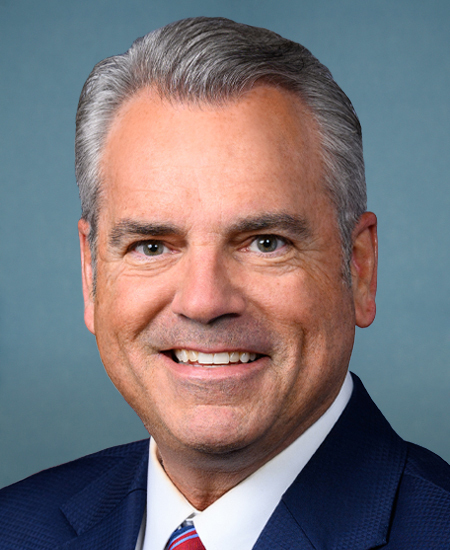
Rep. Mark Alford
Sponsored bills
Maddy summaryHR 2808, the Homebuyers Privacy Protection Act, restricts how consumer reporting agencies share credit reports during mortgage applications. It prevents agencies from sending these reports to third parties unless the request is tied to a firm credit offer and the recipient has either the homebuyer’s explicit written consent or is directly involved in the mortgage (like the lender, loan servicer, or the homebuyer’s bank holding an active account). This directly affects homebuyers applying for residential mortgages by limiting unsolicited sharing of their credit information. The law amends the Fair Credit Reporting Act to strengthen privacy protections around mortgage-related credit data.
Maddy summary# Summary of Proposed FEMA Reform Legislation (FEMA Act of 2025) This comprehensive legislative document proposes significant reforms to the Robert T. Stafford Disaster Relief and Emergency Assistance Act, with four main sections addressing: ## 1. Disaster Assistance Reforms - **Expanded eligibility** for assistance, including clarifying that absence of a fixed address doesn't disqualify individuals from sheltering assistance - **Improved rental assistance** with consideration of local post-disaster rent increases - **Direct assistance** for those unable to use financial assistance, with no requirement to show other assistance can cover costs (except insurance) - **Enhanced notices** for applicants, including documentation of denial decisions - **Clarification of displacement assistance** eligibility, stating insurance shouldn't be considered a duplication of benefits ## 2. Mitigation Program Enhancements - **Preapproved project mitigation plans** requiring states to develop plans with peer review processes - **Improved allocation of funds** with formulas prioritizing vulnerable communities, high-risk areas, and rural/economically distressed communities - **Resilient buildings** requirements for housing retrofits using the latest building codes - **Streamlined application processes** for hazard mitigation funds across multiple programs - **Study on mitigation benefits** to evaluate cost savings and effectiveness ## 3. Transparency and Accountability Measures - **Public dashboards** for both individual assistance (431) and public assistance (432) showing application status, approvals, denials, and funding - **Transparency requirements** for disaster declarations with detailed justifications for approvals/denials - **GAO studies** on numerous topics including: - Identity theft in disaster assistance (409) - Insurance utilization for public assistance facilities (410) - Wildfire management plans (411) - Effectiveness of alerting systems (412) - Cost savings of repair/rebuilding reforms (415) - **Prohibition on political discrimination** in assistance distribution ## 4. Workforce and Operational Improvements - **Study on workforce retention** in noncontiguous communities - **Pilot program** for preliminary damage assessments in remote communities - **Fast-moving disasters working group** to develop best practices for rapid response The legislation focuses on improving efficiency, transparency, and effectiveness of disaster relief programs while prioritizing vulnerable populations and communities with higher risk of disasters. It also emphasizes data-driven decision making through required studies and reports to continuously improve disaster management policies.
Maddy summaryThis bill prohibits the U.S. Department of Agriculture (USDA) from using race-based or sex-based criteria when making decisions about 10 specific farm programs. It applies to programs including pandemic aid for farmers, crop insurance, conservation programs like the Conservation Reserve Program, farm loans, and rural development grants. The law requires USDA to administer these programs based on merit, fairness, and equal opportunity for all applicants. It directly affects farmers, ranchers, and agricultural businesses applying for these federal programs.
Maddy summaryHR 4924, the Rails to Trails Landowner Rights Act, requires states and trail groups to notify landowners and local governments before converting abandoned railroad corridors into trails. It mandates that trail sponsors obtain written landowner approval, pay fair market value compensation for property impacts (including lost development and infrastructure costs), and maintain the right-of-way in perpetuity. The bill also requires a 90-day public comment period, a cost-benefit analysis of safety, economic, and environmental impacts, and creates an online portal for transparency. These changes directly affect landowners adjacent to former rail corridors and trail sponsors seeking interim trail use.
Maddy summaryHR 4945, the GO Ag Act, creates a $5 million grant program to fund new agricultural education programs in secondary schools. It provides competitive grants (max $100,000 per school) for schools to develop new programs focused on agriculture, including curriculum, equipment, and work-based learning. To qualify, schools must show programs are new, align with regional employer needs, and include sustainable funding beyond the grant. Grantees must track student progress (including special populations) and submit annual reports on program effectiveness through 2028.
Maddy summaryThe Biomanufacturing and Jobs Act of 2025 aims to strengthen the U.S. biobased products industry by increasing federal procurement of products made from renewable agricultural resources like corn and soybeans. It establishes new definitions for biobased terms, creates a Biobased Task Force within the Department of Agriculture to coordinate research and promotion, and requires federal agencies to update procurement systems to identify biobased products and train staff on their purchase. The bill mandates annual reporting on procurement progress, creates a labeling system for biobased products, and requires the Department of Agriculture to conduct public education on biobased products. This legislation directly affects farmers, biobased manufacturers, and federal procurement agencies, with the goal of supporting rural economic development.
Maddy summaryHR 4710, the No Surprises Act Enforcement Act, increases penalties for health insurance plans and issuers that violate balance billing protections, which prevent surprise medical bills. The bill raises fines from $100 to $10,000 per violation for specific balance billing rule violations and adds a new penalty of three times the difference between initial payment and out-of-network rates for late payments after Independent Dispute Resolution decisions. It requires health plans and nonparticipating providers to make timely payments within 30 days of a payment determination, with interest accruing on late payments. The bill also establishes new transparency reporting requirements for the Secretary to submit regular reports to Congress about audits, enforcement actions, and penalties. These provisions directly affect health insurance issuers, group health plans, and nonparticipating healthcare providers.
Maddy summaryThis bill establishes a federal right for livestock producers to sell meat and dairy products across state lines without facing conflicting state regulations. It prevents states from imposing production standards (like animal welfare rules) on products not raised within that state, ensuring a uniform national market for covered livestock products. The law specifically covers animals raised for meat or dairy (including milk products), but excludes egg production. This aims to eliminate barriers to interstate commerce for these products while aligning with U.S. trade obligations.
Maddy summaryHR 4620 amends federal law to include rioting as a form of racketeering activity under Title 18, United States Code. This change would allow prosecutors to charge individuals who organize or participate in riots as part of a larger criminal enterprise under federal racketeering laws. The bill specifically targets coordinated riot activities linked to organized crime, not isolated or spontaneous protests.