

Maddy summaryThis House resolution expresses support for designating October as "National Promotoras Month" to recognize the contributions of community health workers, often called promotoras, who serve as trusted messengers in underserved and marginalized communities. The bill highlights how these workers help bridge gaps between healthcare systems and populations in rural areas, Tribal nations, and immigrant communities by providing culturally appropriate education and support for chronic diseases and maternal health. It calls on the government to strengthen this workforce through sustainable funding, equitable compensation, and professional development, while encouraging collaboration between federal agencies and local organizations to expand their programs.
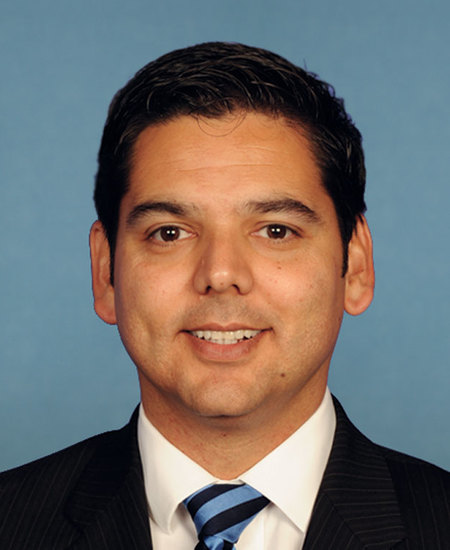
Rep. Raul Ruiz
Sponsored bills
Maddy summaryThis House resolution expresses support for designating the week beginning September 14, 2026, as National Hispanic-Serving Institutions Week. It recognizes these colleges and universities, which enroll at least 25 percent Hispanic students, for their role in providing higher education access to low-income and underserved populations. The bill highlights that these institutions serve a significant portion of the nation's undergraduate students and contribute to economic mobility. It calls on the public and interested groups to observe the week with ceremonies and activities during Hispanic Heritage Month.
Maddy summaryThis House resolution formally recognizes the role of Latino communities in outdoor recreation and conservation efforts that protect U.S. natural resources. It highlights how these groups lead activities such as hiking, community cleanups, and environmental justice initiatives on public lands. The bill specifically supports the designation of September 12 through September 20, 2026, as Latino Conservation Week to celebrate this engagement. As a commemorative measure, it does not create new laws or funding but serves to affirm the importance of inclusive access to nature and the cultural contributions of Latino populations to environmental stewardship.
Maddy summaryThe Equity in Research Act directs the National Science Foundation to create a grant program that provides financial assistance to specific institutions of higher education for improving their research capabilities. These grants, ranging from $1 million to $5 million per institution, can be used to upgrade building infrastructure, purchase materials and equipment, and cover personnel costs related to research activities. The bill targets a defined group of schools, including Historically Black Colleges and Universities, Hispanic-serving institutions, Tribal colleges, and various other minority-serving and land-grant universities. To fund this initiative, the legislation authorizes $50 million in appropriations for fiscal year 2027 and each subsequent year.
Maddy summaryThe Community Health Worker Access Act would add community health services to Medicare Part B starting in 2027, allowing beneficiaries to receive these services without paying a deductible and with costs covered at 100 percent of the lesser of the actual charge or a government-set fee schedule. The bill defines eligible services as preventive care and support for social determinants of health, such as transportation assistance, case management, and culturally specific outreach, provided by qualified community health agencies under the supervision of licensed medical providers. Additionally, it gives states an optional pathway to cover similar services through Medicaid, offering a 6 percentage point increase in federal matching funds to help offset state costs for these workforce-supported programs.
Maddy summaryThe BRACE Act updates federal regulations to improve how lithium-ion batteries are managed and recycled in the United States. It requires facilities that store these batteries before recycling them to follow stricter safety and record-keeping rules similar to those for large industrial waste handlers. Additionally, the bill modernizes existing laws by replacing outdated references with current environmental protection standards. These changes directly impact businesses and organizations involved in the collection, storage, and recycling of lithium-ion batteries.
Maddy summaryHR 2004, titled "Tyler’s Law," requires the Secretary of Health and Human Services to study how often hospital emergency departments test for fentanyl during overdose cases (beyond standard drug tests), including associated costs, patient benefits/risks, and impacts on privacy and patient-physician relationships. The study must be completed within one year of the bill's enactment. Based on the study results, the Secretary must issue guidance within six months on whether emergency departments should routinely test for fentanyl, how to inform clinicians about test contents, and how such testing may affect future overdose risks and health outcomes. This bill directly affects hospital emergency departments and patients experiencing overdoses by shaping future testing protocols.
Maddy summaryThis bill requires all new passenger vehicles manufactured for sale in the U.S. to include AM radio as standard equipment (not an optional add-on) by 2027-2028, depending on manufacturer size. It mandates that AM radio receivers must be easily accessible to drivers and allows compliance through digital AM broadcast technology. During a transition period, manufacturers must clearly label vehicles without AM radio but cannot charge extra for this feature. The bill also mandates a GAO study on AM radio's role in emergency alerts and includes a 10-year sunset provision for the rule. It preempts state laws regarding AM radio access in vehicles.