Issue · Labor & Employment

Labor & Employment

Every labor & employment bill, vote, and legislator stance in Illinois, automatically classified by Maddy, our AI policy reader.

Total bills
461
104th Regular Session
Top supporter
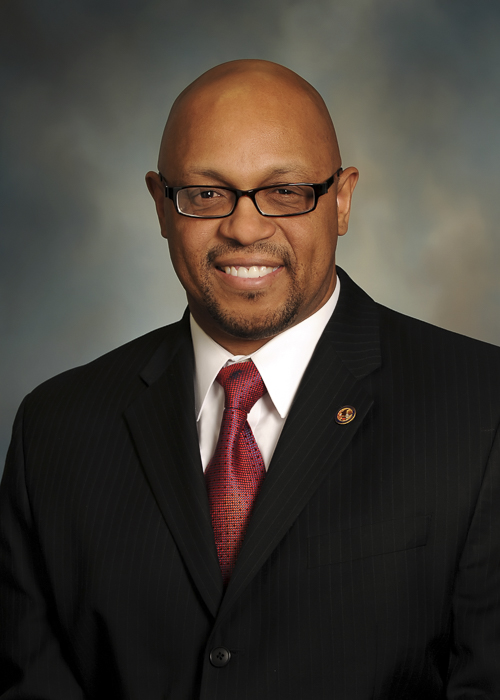
Don Harmon
100% support rate
Top opponent
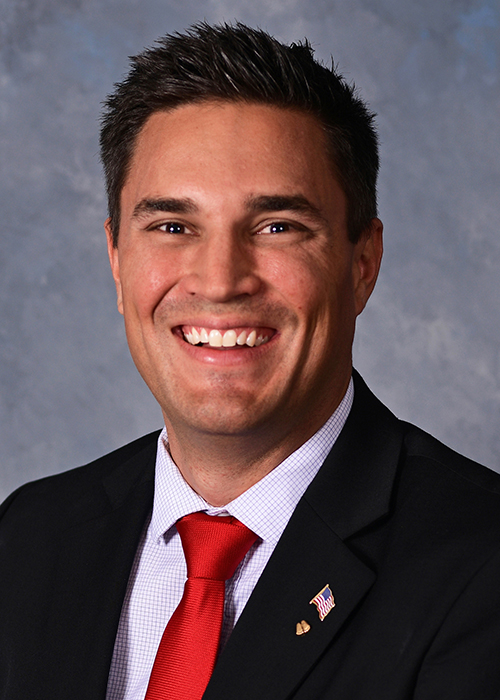
Dennis Tipsword
4% support rate
Ranked legislators
10
5 support · 5 oppose
Key legislators

Who's moving labor & employment in Illinois

Legislators moving labor & employment in Illinois
Legislator Party Stance Support rate Votes
Don Harmon
Don Harmon Senate · District 39
D
Strong +
100% 40
Carol Ammons
Carol Ammons House · District 103
D
Strong +
97% 102
Thaddeus Jones
Thaddeus Jones House · District 29
D
Strong +
97% 155
Eva-Dina Delgado
Eva-Dina Delgado House · District 3
D
Strong +
96% 170
Maurice West
Maurice West House · District 67
D
Strong +
96% 204
Dennis Tipsword
Dennis Tipsword House · District 105
R
Strong −
4% 159
Adam Niemerg
Adam Niemerg House · District 102
R
Strong −
5% 189
Dave Severin
Dave Severin House · District 116
R
Strong −
5% 179
Kyle Moore
Kyle Moore House · District 99
R
Strong −
5% 206
Tom Weber
Tom Weber House · District 64
R
Strong −
5% 244
Showing 161–170 of 461 bills

All labor & employment bills

passed · Illinois · House May 28, 2026

HR 635: 4-DAY WORK WEEK-SUPPORT

Urges the State of Illinois to make needed investments in Illinois workplaces to decrease burnout, increase workplace happiness, and recognize that a portion of the productivity gains the United States has seen should result in less work for all. Urges pilot programs to be established to promote, incentivize, and support the use of a 4-day workweek by qualifying employers and to study the benefits and effects of a 4-day workweek on participating employees and employers and to promote and support the use of a 4-day workweek for employees of the State of Illinois.
in committee · Illinois · House May 28, 2026

HB 4662: AGING-IN-HOME SERVICES-RATES

Amends the Illinois Act on the Aging. Provides that, subject to federal approval, on and after January 1, 2027, rates for in-home services shall be increased to $33.92 to sustain a minimum wage of $20.75 per hour for direct service workers. Requires rates in subsequent State fiscal years to be no lower than the rates put into effect upon federal approval. Provides that in order for a provider of in-home services to be eligible to receive the $33.92 rate, the provider must pay a minimum wage of $20.75 per hour to all direct service workers employed by the provider. Requires providers of in-home services to certify to the Department on Aging that they remain in compliance with the mandated wage increase for direct service workers. Requires each provider of in-home services to submit cost reports to the Department consistent with a specified administrative rule in order to be eligible for the $33.92 rate for in-home services. Provides that fringe benefits shall not be reduced in relation to the described rate increases. Requires the Department, beginning January 1, 2027, to ensure that each in-home service provider spends a minimum of 79% of the total payments the provider receives for home care aide services it furnishes under the Community Care Program on total compensation for direct service workers who furnish those services. Requires annual direct service worker cost reports from providers; and requires the Department to amend existing rules on financial reporting and minimum direct service worker costs to reflect the increase in the direct service worker spending requirement from 77% to 79%.
Sub-Topics Minimum Wage
in committee · Illinois · Senate May 22, 2026

SB 2744: INC TX-EMPLOYMENT DISABILITIES

Amends the Illinois Income Tax Act. Provides that a taxpayer who employs a person with a developmental disability or a severe mental illness, as certified by the Department of Human Services, during the taxable year is entitled to an income tax credit in an amount equal to 25% of the wages paid by the taxpayer to the person with a developmental disability or severe mental illness, but not to exceed $6,000 in wages paid during the taxable year to any single qualified employee. Effective immediately.
Sub-Topics Income Tax Tax Credits
in committee · Illinois · House Mar 27, 2026

HB 4432: SCH CD-SEXUAL HARASS POLICY

Amends the School Code. Requires a school district's policy on sexual harassment to include a method for reporting instances of sexual harassment. Provides that the policy may not require that a report be made in a particular manner for a complaint to be considered formal or official for the purposes of initiating an investigation. Provides that under the policy, a school district employee who is found to have engaged in sexual harassment shall be subject to disciplinary action up to and including termination.
in committee · Illinois · Senate Jun 1, 2026

SB 2906: TRANSPORT NETWORK LABOR

Creates the Transportation Network Driver Labor Relations Act. Defines "transportation network driver" as an individual who operates a motor vehicle that: (i) is owned, leased, or otherwise authorized for use by the individual; (ii) is not a taxicab or for-hire public passenger vehicle; (iii) is used to provide transportation network company services; and (iv) operates under the license of a transportation network company. Provides that transportation network drivers have the right of self-organization, to form, join, or assist transportation network driver organizations, and to bargain collectively. Sets forth provisions concerning unfair work practices; the prevention of unfair work practices; the designation of bargaining representatives; administrative fees; bargaining, impasse resolution procedures, and final determinations by the Department of Labor; applicability of other labor standards; rulemaking; and public records. Amends the Freedom of Information Act and the Labor Dispute Act to make conforming changes. Effective immediately.
in committee · Illinois · Senate Apr 14, 2026

SB 2937: PEN CD-CTPF-STATE CONTRIBUTION

Amends the Chicago Teacher Article of the Illinois Pension Code. Provides that beginning in State fiscal year 2027, the State (instead of the Chicago Board of Education) shall contribute for each of fiscal years 2027 through 2059, a minimum contribution to the Fund in an amount determined by the Fund to be sufficient to bring the total assets of the Fund up to 90% of the total actuarial liabilities of the Fund by the end of fiscal year 2059. Provides that, in making these determinations, the required contribution shall be calculated each year as a level percentage of the applicable employee payrolls over the years remaining to and including fiscal year 2059 and shall be determined under the projected unit credit actuarial cost method. Amends the School Code to make a conforming change in provisions concerning evidence-based funding. Effective immediately.
Sub-Topics Pensions Teachers
in committee · Illinois · Senate May 22, 2026

SB 2967: MENSTRUAL HEALTH-PAID LEAVE

Creates the Menstrual Health Workplace Equity Act. Provides that an employee who experiences a menstrual health condition may use up to 40 hours of paid leave per year that the employee is entitled to under the Paid Leave for All Workers Act for menstrual health reasons. Provides that, if the paid leave the employee is entitled to is insufficient to cover the employee's needs, the employee may request an additional 40 hours of paid menstrual leave per year or request a hybrid work option. Sets forth provisions concerning employer responsibilities and enforcement by the Department of Labor. Effective immediately.
in committee · Illinois · Senate Mar 27, 2026

SB 3079: WORKPLACE ACCOUNTABILITY ACT

Creates the Workplace Accountability in Labor Act. Provides that the Department of Labor may post to a list on its website the name of any person found to be in violation of any State wage, benefit, or tax law and against whom a final order has been issued. Provides that a person placed on the list shall be prohibited from contracting with any public body until the liability for violations of State wage, benefit, and tax laws has been resolved to the satisfaction of the Director of Labor. Sets forth additional procedures concerning a person's placement on the list.
in committee · Illinois · Senate May 22, 2026

SB 2894: DHFS-DHS-DIRECT SUPPORT WAGE

Amends the Mental Health and Developmental Disabilities Administrative Act. Requires the Department of Human Services to establish reimbursement rates that build toward livable wages for frontline personnel in residential and day programs and service coordination agencies serving persons with intellectual or developmental disabilities. Provides that for community-based providers serving persons with intellectual or developmental disabilities, subject to federal approval of any relevant Waiver Amendment, the rates taking effect for services delivered on or after January 1, 2027 shall include an increase in the rate methodology sufficient to provide a $1.20 per hour wage rate increase for all direct support professionals and all other frontline personnel who are not subject to the Bureau of Labor Statistics' average wage increases and who work in residential and community day services settings. Prohibits community-based providers from using the rate increases for operational or administrative expenses. Requires rate increases that are sufficient to provide wages for all residential non-executive direct care staff. Amends the Medical Assistance Article of the Illinois Public Aid Code. Provides that the rates for ID/DD and MC/DD facilities for services delivered on or after January 1, 2027 shall include a $1.20 per hour wage increase for all direct support professionals and other frontline personnel who are not subject to the Bureau of Labor Statistics' average wage increases. Provides that changes to the rate methodologies are subject to federal approval. Grants emergency rulemaking authority to the Departments of Human Services and Healthcare and Family Services to implement the rate increases. Effective immediately.
in committee · Illinois · House Mar 27, 2026

HB 4490: OPERATING ROOM SAFETY ACT

Creates the Operating Room Patient Safety Act. Provides that each surgical technologist hired or contracted by a health care facility on or after January 1, 2028 shall meet specified educational, certification, or experiential requirements. Provides that health care facilities located in a Health Professional Shortage Area or Medically Underserved Area, as determined by the federal government, shall be exempt as provided but shall have a hiring preference for surgical technologists who graduated from nationally accredited surgical technology programs and are certified through the National Board of Surgical Technology and Surgical Assisting or the National Center for Competency Testing. Provides that nothing in the Act prohibits a person licensed in the State under any other Act from engaging in the practice for which the person is licensed, including, but not limited to, a physician licensed to practice medicine in all its branches, a physician assistant, an advanced practice registered nurse, or a nurse performing surgery-related tasks within the scope of the nurse's license or registration; or a student or intern from performing surgical technology services under direct supervision, as defined in the Registered Surgical Assistant and Registered Surgical Technologist Title Protection Act.
Showing 161 to 170 of 461 bills
Previous 1 16 17 18 47 Next