Issue · Criminal Justice

Criminal Justice (Violent Crime)

Every criminal justice bill, vote, and legislator stance in Illinois, automatically classified by Maddy, our AI policy reader.

Total bills
29
104th Regular Session
Top supporter
Bill Cunningham
100% support rate
Top opponent
Jil Tracy
0% support rate
Ranked legislators
10
5 support · 5 oppose
Key legislators

Who's moving violent crime in Illinois

Legislators moving violent crime in Illinois
Legislator Party Stance Support rate Votes
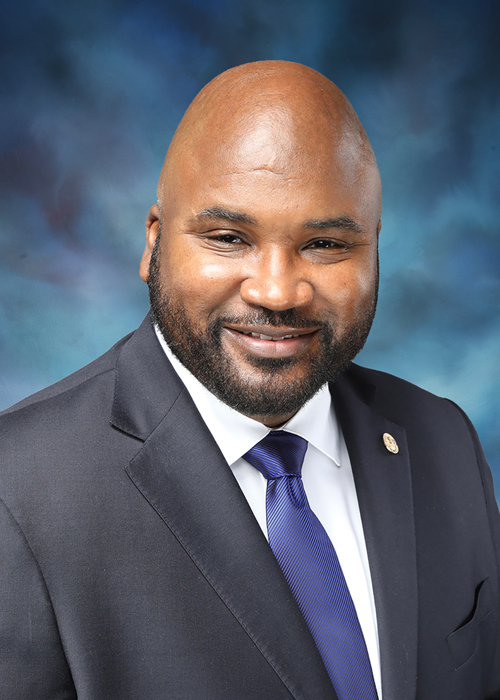
Bill Cunningham
Bill Cunningham Senate · District 18
D
Strong +
100% 5
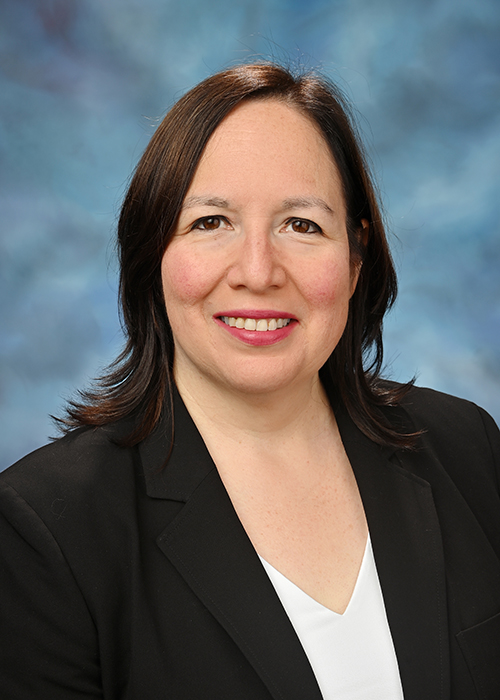
Cristina Castro
Cristina Castro Senate · District 22
D
Strong +
100% 5
Elgie Sims
Elgie Sims Senate · District 17
D
Strong +
100% 5
Laura Murphy
Laura Murphy Senate · District 28
D
Strong +
100% 5
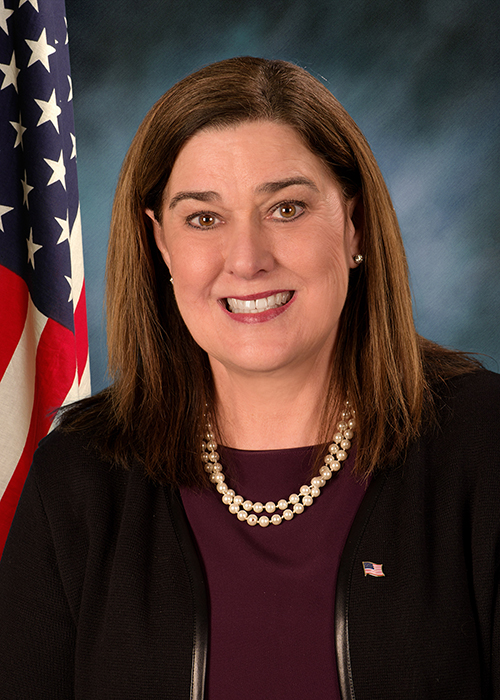
Linda Holmes
Linda Holmes Senate · District 42
D
Strong +
100% 5
Jil Tracy
Jil Tracy Senate · District 50
R
Strong −
0% 7
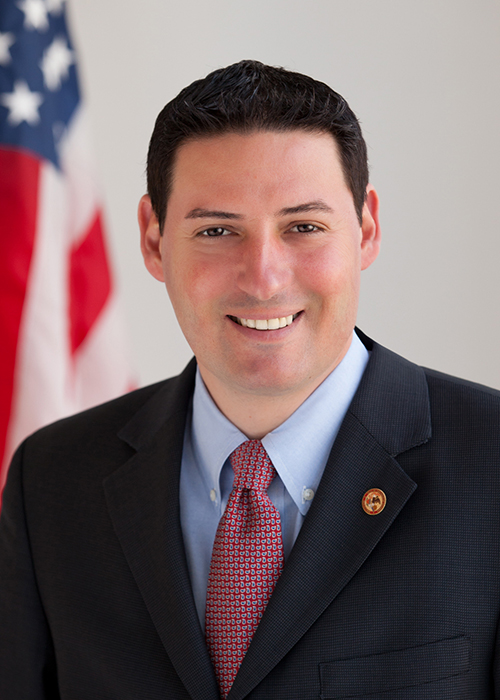
John Cabello
John Cabello House · District 90
R
Strong −
0% 5
John Curran
John Curran Senate · District 41
R
Strong −
0% 5
Patrick Windhorst
Patrick Windhorst House · District 117
R
Strong −
0% 5
Dave Severin
Dave Severin House · District 116
R
Strong −
0% 4
Showing 1–10 of 29 bills

All criminal justice bills

in committee · Illinois · House Mar 27, 2026

HB 5293: FAILURE TO REPORT GROOMING

Amends the Department of Public Health Powers and Duties Law of the Civil Administrative Code of Illinois. Provides that the Department of Public Health shall conduct a Grooming Awareness Public Educational and Outreach Program, which is a public education and outreach program concerning the grooming of children, including, but not limited to, grooming behaviors and how to recognize, prevent, and report grooming behaviors. Provides that the Department of Public Health may work with other organizations to help conduct the Program which may include, but is not limited to, the Illinois Coalition Against Sexual Assault (ICASA) or the Chicago Alliance Against Sexual Exploitation (CAASE). Provides that the Department of Public Health may adopt rules that are necessary to conduct the Program. Amends the Criminal Code of 2012. Creates the offense of failure to report grooming of a child. Provides that a person 18 years of age or older commits the offense when he or she personally observes the grooming between a person whom he or she knows is 18 years of age or older and a person he or she knows is a child under 17 years of age, and knowingly fails to report the grooming to law enforcement. Provides that the offense does not apply to a person who makes timely and reasonable efforts to stop the sex offense or unlawful sexual conduct by reporting the grooming or sexual conduct in conformance with the Abused and Neglected Child Reporting Act or by reporting the sex offense or causing a report to be made, to medical or law enforcement authorities or anyone who is a mandated reporter under the Abused and Neglected Child Reporting Act. Provides that a person who commits failure to report grooming of a child is guilty of a Class A misdemeanor for the first violation and a Class 4 felony for a second or subsequent violation. Provides that nothing in the provision shall be construed to allow prosecution of a person who personally observes the act of grooming and assists with an investigation and any subsequent prosecution of the offender.
in committee · Illinois · Senate Feb 4, 2026

SB 3345: CRIM CD-DOMESTIC ASSAULT

Amends the Criminal Code of 2012. Creates the offense of domestic assault. Provides that a person commits the offense when, without lawful authority, he or she knowingly engages in conduct that places any family or household member in reasonable apprehension of great bodily harm, or permanent disability or disfigurement. Provides that if the defendant is arrested for domestic assault, upon release of the defendant from custody pending trial, the court, at the preliminary examination, shall order that the defendant refrain from contact or communication with the victim of the domestic assault and refrain from entering or remaining at the victim's residence for a minimum of 72 consecutive hours. Provides that domestic assault is a Class A misdemeanor. Defines "family or household member".
signed · Illinois · House Jul 31, 2026

HB 4842: FIRST RESPONDER-STRESS SERVICE

Amends the First Responders Suicide Prevention Act. Provides that confidentiality protections under the Act apply regardless of whether the peer support person is employed by, or affiliated with, the same agency as the first responder receiving support. Provides that, except in specified circumstances, all communications, records, notes, reports, or information disclosed during, or in connection with, a critical incident stress management session is confidential and may not be disclosed by any CISM practitioner. Provides that a CISM practitioner may not be compelled to testify or disclose any communication, record, note, report, or information disclosed during, or in connection with, a critical incident stress management session in any administrative, civil, or criminal proceeding. Provides that the confidentiality protections under the provisions apply whether or not the CISM practitioner is affiliated with the same agency as the individual receiving services. Provides that any communication described in the provisions is subject to subpoena for good cause shown. Provides that the confidentiality protections under the provisions do not apply to (1) any threat of suicide or homicide made by a participant in a peer support counseling session or any information conveyed in a peer support counseling session related to a threat of suicide or homicide; (2) any information mandated by law or agency policy to be reported, including, but not limited to, domestic violence, child abuse or neglect, or elder abuse or neglect; (3) any admission of criminal conduct; or (4) an admission or act of refusal to perform duties to protect others or the employee of the emergency services provider or law enforcement agency. Defines "CISM practitioner" and "CISM services".
in committee · Illinois · House Feb 17, 2026

HB 4600: HEALTH CARE AT HOME-PROTECTION

Provides that the Act may be referred to as the Health Care at Home Workforce Protection Act. Amends the Criminal Code of 2012. Provides for enhancement of assault or battery to aggravated assault or aggravated battery under certain circumstances if the person knows that the individual assaulted or battered is a health care at home provider or the health care at home provider's family or household members. Creates the offense of threatening a health care at home provider. Provides that a person commits the offense when: (1) that person knowingly delivers or conveys, directly or indirectly, to a health care at home provider by any means a communication containing a threat that would place that person or a member of his or her immediate family in reasonable apprehension of immediate or future bodily harm, sexual assault, confinement, or restraint; (2) at the time of the threat, the person knows or should have known that the victim is a health care at home provider or is an immediate family member of a health care at home provider; (3) the threat was conveyed because of an action taken by the health care at home provider acting in his or her employment or volunteer capacity or because of the victim's professional or employment status; (4) there is no consent by the person threatened; and (5) the threat contains specific facts indicative of a unique threat to the health care at home provider or his or her immediate family and not a generalized threat of harm. Provides that threatening a health care at home provider is a Class 4 felony for a first offense and a Class 3 felony for a second or subsequent offense. Defines "health care at home provider".
Sub-Topics Violent Crime
signed · Illinois · House Jul 24, 2026

HB 4394: SEXUAL ASSAULT VICTM INTERVIEW

Amends the Sexual Assault Incident Procedure Act. Provides that a law enforcement officer shall inform a victim of sexual assault or sexual abuse of the right to request that any interview or statement be conducted in the presence of a law enforcement officer of a particular sex or gender, if one is reasonably available. Provides that if a law enforcement officer of the requested sex or gender is not reasonably available, the interview or statement shall proceed without unnecessary delay.
in committee · Illinois · Senate Apr 15, 2026

SB 2915: PREVENTING SEXUAL ASSAULT

Creates the Judicial Sexual Assault Training Act. Requires the Administrative Office of the Illinois Courts to develop and implement a sexual assault continuing education program for judges and relevant court personnel. Provides issues to be included in the program. Requires the program to be included in the New Judge Seminar curriculum and be a mandatory program at the biennial Judicial Education Conference. Requires the Administrative Office of the Illinois Courts to make a record of a judge's completion of the program after the New Judge Seminar and the Judicial Education Conference and make that record available to the public upon request.
in committee · Illinois · Senate Apr 24, 2026

SB 1781: DEATHS DOMESTIC VIOL VICTIM

Amends the Illinois State Police Law of the Civil Administrative Code of Illinois and the Illinois Police Training Act. Provides that State police officers and local police officers shall receive training in homicide investigations in which the victims were suspected of being subject to domestic abuse. Amends the Counties Code. Provides that every coroner, whenever, as soon as he or she knows or is informed that the dead body of any person is found, or lying within his or her county, whose death is suspected of being a death, if the circumstances surrounding the death is known or suspected as due to suicide and affords a reasonable basis to suspect that the death was caused by or related to the domestic violence of another, in consultation with a board-certified forensic pathologist certified by the American Board of Pathology, shall go to the place where the dead body is and take charge of the same and shall make a preliminary investigation into the circumstances of the death. Amends the Code of Criminal Procedure of 1963. Adds the Investigation of Homicides of Decedents with Identifiable History of Being Victimized by Domestic Violence Article to the Code. Provides that prior to making any findings as to the manner and cause of death of a deceased individual with an identifiable history of being victimized by domestic violence, and with the presence of 3 or more specified factors, law enforcement investigators shall interview family members, such as parents, siblings, or other close friends or relatives of the decedent with relevant information regarding that history of domestic violence. Lists those factors that law enforcement investigators must consider in those investigations. Provides that sworn law enforcement personnel investigating a death if it has been determined that the decedent has an identifiable history of being victimized by domestic violence shall be current in their training related to domestic violence incidents, including training required pursuant to the Illinois State Police Law of the Civil Administrative Code of Illinois or the Illinois Police Training Act. Defines terms. Amends the Autopsy Act to make conforming changes.
passed both · Illinois · Senate Oct 9, 2025

SB 1784: JUV CT-COMMITMENT-AGE

Amends the Juvenile Court Act of 1987. Provides that a minor found to be guilty may be committed to the Department of Juvenile Justice if the minor is at least 14 (rather than 13) years and under 20 years of age, provided that the commitment to the Department of Juvenile Justice shall be made only if the minor was found guilty of a felony offense or first degree murder. Provides that when a minor of the age of at least 14 (rather than 13) years is adjudged delinquent for the offense of first degree murder, the court shall declare the minor a ward of the court and order the minor committed to the Department of Juvenile Justice until the minor's 21st birthday, without the possibility of aftercare release, furlough, or nonemergency authorized absence for a period of 5 years from the date the minor was committed to the Department of Juvenile Justice. Amends the Juvenile Court Act of 1987. Provides that on or after July 1, 2026 and before July 1, 2027, any minor 12 years of age or older arrested pursuant to the Act if there is probable cause to believe that the minor is a delinquent minor and that secure custody is a matter of immediate and urgent necessity, in light of a serious threat to the physical safety of a person or persons in the community or in order to secure the presence of the minor at the next hearing, as evidenced by a demonstrable record of willful failure to appear at a scheduled court hearing within the past 12 months, may be kept or detained in an authorized detention facility. Provides that on or after July 1, 2027, minors age 12 years of age and under 13 years of age and charged with first degree murder, aggravated criminal sexual assault, aggravated battery in which a firearm was used in the offense, or aggravated vehicular hijacking, may be kept or detained in an authorized detention facility. Provides that no minor under 13 (rather than under 12) years of age shall be detained in a county jail or a municipal lockup for more than 6 hours. Provides that instead of detention, minors under the age of 13 who are in conflict with the law may be held accountable through a petition under the Minors Requiring Authoritative Intervention Article of the Act, or may be held accountable through a community mediation program.
in committee · Illinois · Senate May 6, 2026

SB 86: CD CORR-PAROLE-25 YRS

Amends the Unified Code of Corrections. Provides that a committed person who has attained the age of 55 years and served at least 25 consecutive years of incarceration, excluding any person sentenced to natural life imprisonment for a Class X felony violation of criminal sexual assault, aggravated criminal sexual assault, or predatory criminal sexual assault of a child, shall be eligible to submit a petition to the Prisoner Review Board seeking parole. Specifies factors that the Board must consider as shown by the petition or as shown at the hearing. Provides that victims and victims' families shall be notified in a timely manner and be provided the opportunity to participate at the parole hearing concerning the petitioner's application for parole under this provision in accordance with the Rights of Crime Victims and Witnesses Act, the Open Parole Hearings Act, and this provision. Provides that Prisoner Review Board hearings under this provision shall be conducted by a panel of at least 3 members of the Board and a majority vote of the panel is required to grant the petition and release the petitioner on parole. Provides that the Board shall render its decision within a reasonable time after the hearing. Provides that when the panel votes to deny parole, a rationale shall be prepared by at least one member of the panel that states the basis for the denial, including the primary factors considered. Provides that in its decision, the Board shall set the person's time for parole or if it denies parole, it shall provide for a rehearing no later than 3 years after denial of parole. Provides that this provision applies retroactively to all persons serving any sentence that was or is imposed before, on, or after the effective date of the amendatory Act, and the period of incarceration for eligibility of each such person to submit a petition for parole is based on all previous consecutive years of incarceration served by that person before, on, and after the effective date of the amendatory Act.
in committee · Illinois · House Feb 4, 2025

HB 2439: CD CORR-ELEC MONITOR-ELIGIBIL

Amends the Unified Code of Corrections. Provides that, in addition to the other requirements for eligibility for an electronic monitoring or home detention program, a person serving a sentence for conviction of an offense that is a Class X or Class 1 felony, other than for predatory criminal sexual assault of a child, aggravated criminal sexual assault, criminal sexual assault, aggravated criminal sexual abuse, or felony criminal sexual abuse, may be placed in an electronic monitoring or home detention program for a period not to exceed the last 18 (rather than 12 months) of incarceration, provided that the person is 50 (rather than 55) years of age or older.
Sub-Topics Violent Crime
Showing 1 to 10 of 29 bills
1 2 3 Next