Issue · Criminal Justice

Criminal Justice (Violent Crime)

Every criminal justice bill, vote, and legislator stance in Illinois, automatically classified by Maddy, our AI policy reader.

Total bills
44
104th Regular Session
Top supporter
Bill Cunningham
100% support rate
Top opponent
Jil Tracy
0% support rate
Ranked legislators
10
5 support · 5 oppose
Key legislators

Who's moving violent crime in Illinois

Legislators moving violent crime in Illinois
Legislator Party Stance Support rate Votes
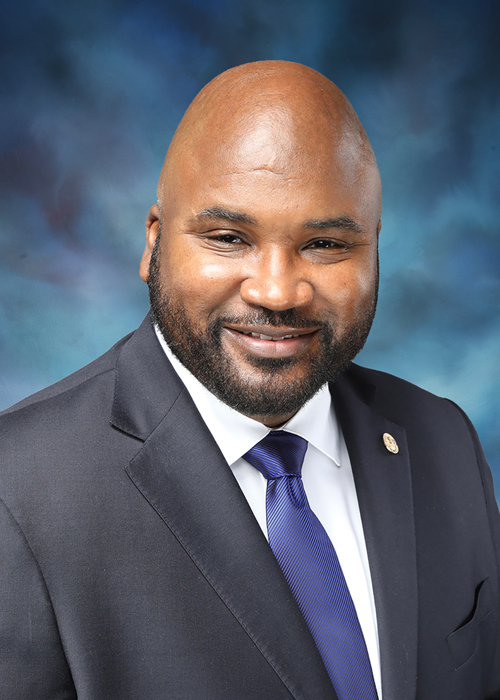
Bill Cunningham
Bill Cunningham Senate · District 18
D
Strong +
100% 5
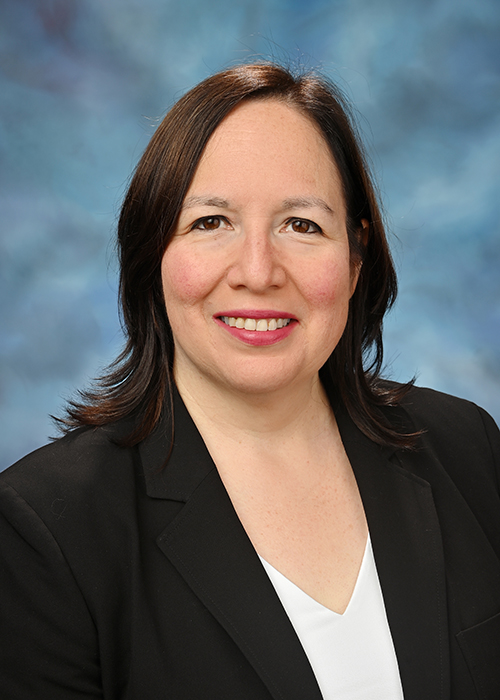
Cristina Castro
Cristina Castro Senate · District 22
D
Strong +
100% 5
Elgie Sims
Elgie Sims Senate · District 17
D
Strong +
100% 5
Laura Murphy
Laura Murphy Senate · District 28
D
Strong +
100% 5
Linda Holmes
Linda Holmes Senate · District 42
D
Strong +
100% 5
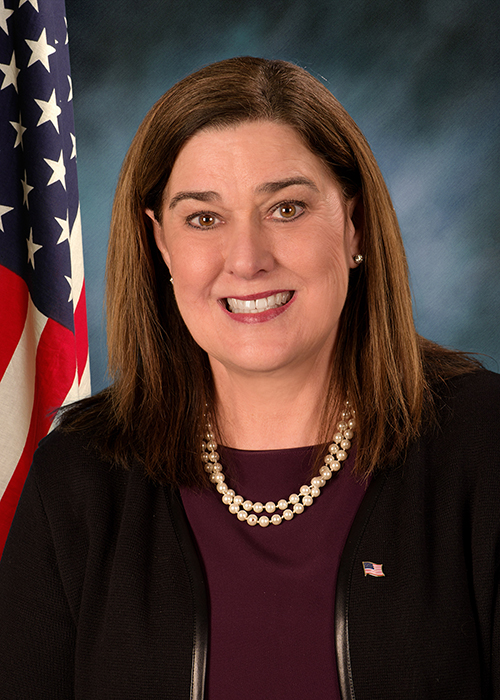
Jil Tracy
Jil Tracy Senate · District 50
R
Strong −
0% 7
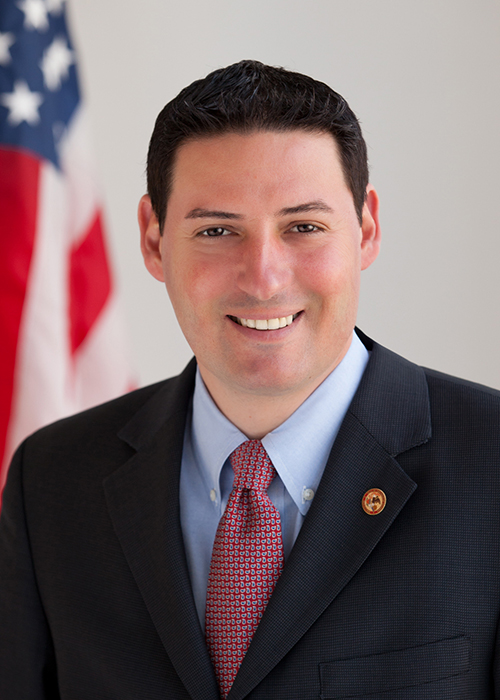
John Cabello
John Cabello House · District 90
R
Strong −
0% 5
John Curran
John Curran Senate · District 41
R
Strong −
0% 5
Patrick Windhorst
Patrick Windhorst House · District 117
R
Strong −
0% 5
Dave Severin
Dave Severin House · District 116
R
Strong −
0% 4
Showing 1–10 of 44 bills

All criminal justice bills

in committee · Illinois · House Mar 27, 2026

HB 5293: FAILURE TO REPORT GROOMING

Amends the Department of Public Health Powers and Duties Law of the Civil Administrative Code of Illinois. Provides that the Department of Public Health shall conduct a Grooming Awareness Public Educational and Outreach Program, which is a public education and outreach program concerning the grooming of children, including, but not limited to, grooming behaviors and how to recognize, prevent, and report grooming behaviors. Provides that the Department of Public Health may work with other organizations to help conduct the Program which may include, but is not limited to, the Illinois Coalition Against Sexual Assault (ICASA) or the Chicago Alliance Against Sexual Exploitation (CAASE). Provides that the Department of Public Health may adopt rules that are necessary to conduct the Program. Amends the Criminal Code of 2012. Creates the offense of failure to report grooming of a child. Provides that a person 18 years of age or older commits the offense when he or she personally observes the grooming between a person whom he or she knows is 18 years of age or older and a person he or she knows is a child under 17 years of age, and knowingly fails to report the grooming to law enforcement. Provides that the offense does not apply to a person who makes timely and reasonable efforts to stop the sex offense or unlawful sexual conduct by reporting the grooming or sexual conduct in conformance with the Abused and Neglected Child Reporting Act or by reporting the sex offense or causing a report to be made, to medical or law enforcement authorities or anyone who is a mandated reporter under the Abused and Neglected Child Reporting Act. Provides that a person who commits failure to report grooming of a child is guilty of a Class A misdemeanor for the first violation and a Class 4 felony for a second or subsequent violation. Provides that nothing in the provision shall be construed to allow prosecution of a person who personally observes the act of grooming and assists with an investigation and any subsequent prosecution of the offender.
in committee · Illinois · Senate Feb 6, 2026

SB 3892: CD COR-RESTORE DEATH PENALTY

Amends the State Finance Act. Changes the name of the Death Penalty Abolition Fund to the Death Penalty Restoration Fund. Amends the Criminal Code of 2012. Permits the imposition of the death penalty for first degree murder, criminal sexual assault, aggravated criminal sexual assault, predatory criminal sexual assault of a child, criminal sexual abuse, with the exception of certain offenses committed by persons under 17 years of age and those in which the victim is at least 13 years of age and under 17 years of age and the defendant is less than 5 years older than the victim, or aggravated criminal sexual abuse. Amends the Code of Criminal Procedure of 1963. Eliminates the provision that abolished the death penalty on July 1, 2011. Amends the Unified Code of Corrections to make conforming changes.
Sub-Topics Violent Crime
in committee · Illinois · Senate Feb 4, 2026

SB 3442: MOTOR VEH-DEATH-GREAT BOD HARM

Amends the Criminal Code of 2012. Provides that a person who kills an individual without lawful justification commits first degree murder if, in performing the acts which cause the death he or she commits both aggravated driving under the influence and speeding 26 or more miles per hour over the speed limit, and such acts are the proximate cause of the death of the individual. Provides that the penalty for reckless homicide in which the defendant was operating a motor vehicle and committed aggravated driving under the influence resulting in the death of an individual is a Class 2 felony, for which a person, if sentenced to a term of imprisonment, shall be sentenced to a term of not less than 6 years and not more than 28 years. Provides that in cases involving reckless homicide in which the defendant was operating a motor vehicle at a speed 100 or more miles per hour over the maximum speed limit resulting in the death of an individual, the penalty is a Class 2 felony, for which a person, if sentenced to a term of imprisonment, shall be sentenced to a term of not less than 6 years and not more than 28 years. Provides that the penalty for aggravated battery caused by the defendant operating a motor vehicle at a speed 100 or more miles per hour over the maximum speed limit in which the defendant caused great bodily harm to an individual is a Class 2 felony for which the person shall be sentenced to a term of imprisonment of a minimum of 3 years and a maximum of 20 years. Contains a severability clause. Effective immediately.
Sub-Topics Violent Crime
in committee · Illinois · Senate Feb 4, 2026

SB 3345: CRIM CD-DOMESTIC ASSAULT

Amends the Criminal Code of 2012. Creates the offense of domestic assault. Provides that a person commits the offense when, without lawful authority, he or she knowingly engages in conduct that places any family or household member in reasonable apprehension of great bodily harm, or permanent disability or disfigurement. Provides that if the defendant is arrested for domestic assault, upon release of the defendant from custody pending trial, the court, at the preliminary examination, shall order that the defendant refrain from contact or communication with the victim of the domestic assault and refrain from entering or remaining at the victim's residence for a minimum of 72 consecutive hours. Provides that domestic assault is a Class A misdemeanor. Defines "family or household member".
signed · Illinois · House Jul 31, 2026

HB 4842: FIRST RESPONDER-STRESS SERVICE

Amends the First Responders Suicide Prevention Act. Provides that confidentiality protections under the Act apply regardless of whether the peer support person is employed by, or affiliated with, the same agency as the first responder receiving support. Provides that, except in specified circumstances, all communications, records, notes, reports, or information disclosed during, or in connection with, a critical incident stress management session is confidential and may not be disclosed by any CISM practitioner. Provides that a CISM practitioner may not be compelled to testify or disclose any communication, record, note, report, or information disclosed during, or in connection with, a critical incident stress management session in any administrative, civil, or criminal proceeding. Provides that the confidentiality protections under the provisions apply whether or not the CISM practitioner is affiliated with the same agency as the individual receiving services. Provides that any communication described in the provisions is subject to subpoena for good cause shown. Provides that the confidentiality protections under the provisions do not apply to (1) any threat of suicide or homicide made by a participant in a peer support counseling session or any information conveyed in a peer support counseling session related to a threat of suicide or homicide; (2) any information mandated by law or agency policy to be reported, including, but not limited to, domestic violence, child abuse or neglect, or elder abuse or neglect; (3) any admission of criminal conduct; or (4) an admission or act of refusal to perform duties to protect others or the employee of the emergency services provider or law enforcement agency. Defines "CISM practitioner" and "CISM services".
in committee · Illinois · House Feb 17, 2026

HB 4600: HEALTH CARE AT HOME-PROTECTION

Provides that the Act may be referred to as the Health Care at Home Workforce Protection Act. Amends the Criminal Code of 2012. Provides for enhancement of assault or battery to aggravated assault or aggravated battery under certain circumstances if the person knows that the individual assaulted or battered is a health care at home provider or the health care at home provider's family or household members. Creates the offense of threatening a health care at home provider. Provides that a person commits the offense when: (1) that person knowingly delivers or conveys, directly or indirectly, to a health care at home provider by any means a communication containing a threat that would place that person or a member of his or her immediate family in reasonable apprehension of immediate or future bodily harm, sexual assault, confinement, or restraint; (2) at the time of the threat, the person knows or should have known that the victim is a health care at home provider or is an immediate family member of a health care at home provider; (3) the threat was conveyed because of an action taken by the health care at home provider acting in his or her employment or volunteer capacity or because of the victim's professional or employment status; (4) there is no consent by the person threatened; and (5) the threat contains specific facts indicative of a unique threat to the health care at home provider or his or her immediate family and not a generalized threat of harm. Provides that threatening a health care at home provider is a Class 4 felony for a first offense and a Class 3 felony for a second or subsequent offense. Defines "health care at home provider".
Sub-Topics Violent Crime
in committee · Illinois · House Feb 3, 2026

HB 4628: CRIM CD-THREATENING ANOTHER

Amends the Criminal Code of 2012. Provides that a person commits threatening another person when that person knowingly delivers or conveys, directly or indirectly, to another person by any means, whether verbal, written, or through social media, a communication containing: (1) a threat that would place another person or a member of his or her immediate family in reasonable apprehension of immediate or future bodily harm, death, sexual assault, confinement, or restraint; or (2) a threat that would place another person or a member of his or her immediate family in reasonable apprehension that damage will occur to property in the custody, care, or control of the person or his or her immediate family. Provides that threatening another person is a Class 3 felony for a first offense and a Class 2 felony for a second or subsequent offense. Defines "immediate family" and "social media".
Sub-Topics Violent Crime
signed · Illinois · House Jul 24, 2026

HB 4394: SEXUAL ASSAULT VICTM INTERVIEW

Amends the Sexual Assault Incident Procedure Act. Provides that a law enforcement officer shall inform a victim of sexual assault or sexual abuse of the right to request that any interview or statement be conducted in the presence of a law enforcement officer of a particular sex or gender, if one is reasonably available. Provides that if a law enforcement officer of the requested sex or gender is not reasonably available, the interview or statement shall proceed without unnecessary delay.
in committee · Illinois · Senate Apr 15, 2026

SB 2915: PREVENTING SEXUAL ASSAULT

Creates the Judicial Sexual Assault Training Act. Requires the Administrative Office of the Illinois Courts to develop and implement a sexual assault continuing education program for judges and relevant court personnel. Provides issues to be included in the program. Requires the program to be included in the New Judge Seminar curriculum and be a mandatory program at the biennial Judicial Education Conference. Requires the Administrative Office of the Illinois Courts to make a record of a judge's completion of the program after the New Judge Seminar and the Judicial Education Conference and make that record available to the public upon request.
in committee · Illinois · House Feb 5, 2025

HB 1042: SEX OFFENDER REG-E MONITORING

Amends the Sex Offender Registration Act. Provides that a person shall be required to wear an approved electronic monitoring device for the first 5 years of the person's period of registration if the person is: (1) a sex offender convicted of an offense that would qualify the person as a sexual predator; or (2) required to register as a sex offender and: (A) was convicted of criminal sexual assault, aggravated criminal sexual assault, predatory criminal sexual assault of a child, criminal sexual abuse, aggravated criminal sexual abuse, or ritualized abuse of a child, when the victim was under 18 years of age at the time of the commission of the offense; and (B) used force or the threat of force in the commission of the offense. Provides that if the person fails to register or violates laws that regulate sex offenders, the person shall be required to wear the approved electronic monitoring device for an additional 3 years. Provides that the Illinois State Police and the law enforcement agency having jurisdiction shall monitor the person required to wear an approved electronic monitoring device to ensure compliance with this provision.
Sub-Topics Policing Violent Crime
Showing 1 to 10 of 44 bills
1 2 3 5 Next