

Maddy summaryThe Food for Thought Act of 2026 establishes a competitive grant program administered by the Department of Agriculture to provide free meals and snacks to low-income college students at eligible institutions, including community colleges, historically Black colleges and universities, and other minority-serving schools. To qualify, an institution must have at least 20 percent of its undergraduate students eligible for Federal Pell Grants, and grants are awarded for a maximum duration of two years with funds restricted to meal preparation, outreach, and limited equipment purchases. Recipients are required to prioritize students who receive Pell Grants or report food insecurity, while also evaluating institutional policies that may create barriers to enrollment and referring students to other federal benefit programs like SNAP. The bill authorizes appropriations for fiscal years 2027 through 2032 and mandates that the Secretary of Agriculture submit reports to Congress on the program's impact on student retention and completion rates.
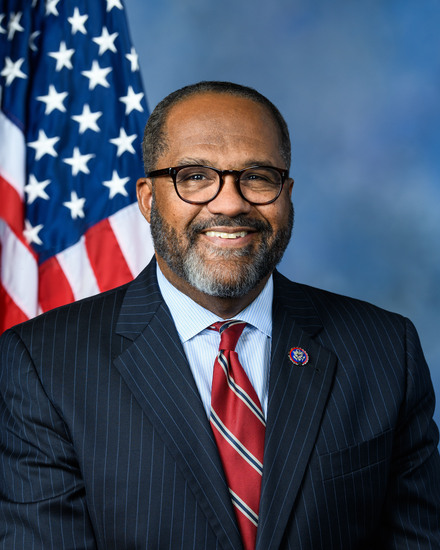
Rep. Troy A. Carter
Sponsored bills
Maddy summaryThe 9-8-8 Implementation Act of 2026 expands federal funding and mandates insurance coverage for behavioral health crisis services, directly affecting individuals experiencing mental health or substance use emergencies as well as the providers who serve them. The bill authorizes grants to upgrade local lifeline call centers, build new crisis stabilization facilities, and train a larger workforce of behavioral health professionals. It requires Medicare, Medicaid, private group health plans, TRICARE, and other federal insurance programs to cover crisis response services with financial terms no more restrictive than standard medical care. Additionally, the legislation establishes a federal panel to develop training protocols for 9-1-1 dispatchers to better connect callers to appropriate crisis care rather than law enforcement responses.
Maddy summaryHR 7294, the "AI for Secure Networks Act," requires the Secretary of Commerce to conduct a study on how artificial intelligence (AI) technology impacts telecommunications network security. The study must examine AI's potential to improve security through real-time threat detection, network resiliency, and energy efficiency, as well as its use with Open RAN and virtualized security technologies, while also assessing associated risks. The Secretary must consult with the Federal Communications Commission and industry stakeholders and submit a report with findings and potential recommendations to Congress within one year of the bill's enactment. This bill does not create new regulations or directly affect businesses or consumers; it is a procedural step to gather information about AI's role in securing telecom networks.
Maddy summaryHR 6152, the Foreign Robocall Elimination Act, establishes an interagency task force to address foreign robocalls entering the United States. The task force, composed of the FCC, FTC, DOJ, and private sector representatives, will study the origins, impacts, and potential solutions to foreign robocalls and must submit a report to Congress within 360 days. The bill also modifies existing law to require FCC notices about robocall mitigation every three years instead of annually, and introduces a bond requirement for providers using the Robocall Mitigation Database. This legislation affects telecommunications providers, federal agencies, and all U.S. telephone users who receive unwanted calls. The bill aims to improve coordination between U.S. agencies and foreign countries in combating illegal robocalls through concrete policy changes.
Maddy summaryHR 5967 establishes a federal task force led by the FTC and DOJ to combat scams. The task force, including agencies like the FBI, SEC, and Social Security Administration, will develop a national strategy using existing tools such as the Consumer Sentinel Network and Internet Crime Complaint Center. Key actions include public education, coordination with industry (like banks and social media platforms), and enforcement using current laws against fraud and money laundering. The task force must report to Congress within one year and dissolve after 10 years.
Maddy summaryHR 5109 requires the Transportation Security Administration (TSA) to create guidelines helping individuals in federal, state, and local prisons prepare for and apply for Transportation Worker Identification Credential (TWIC) cards *before* their release. The bill directs TSA to develop specific procedures for prison staff to assist inmates in pre-applying for TWIC cards and navigating appeals or waivers if initially denied. This aims to streamline access to TWIC cards - required for many port and maritime jobs - allowing returning citizens to secure employment faster after release. The bill cites that 525,000 jobs in Louisiana alone depend on TWIC access, and faster credential acquisition supports reintegration efforts.
Maddy summaryHR 2713, the MAIN Event Ticketing Act, requires ticket-issuing websites to implement stronger security measures to prevent automated bots from bypassing purchase limits and circumventing online ticketing rules. It directly affects ticket sellers (like major platforms) and their third-party service providers, mandating they establish technical safeguards, report security breaches within 30 days, and address circumvention incidents. Key provisions include requiring access controls to enforce purchase limits, creating a public complaint website for consumers, and imposing civil penalties of up to $10,000 per day for violations. The bill strengthens enforcement by the Federal Trade Commission, which will issue compliance guidance and oversee civil actions for non-compliance.
Maddy summaryThis bill requires all new passenger vehicles manufactured for sale in the U.S. to include AM radio as standard equipment (not an optional add-on) by 2027-2028, depending on manufacturer size. It mandates that AM radio receivers must be easily accessible to drivers and allows compliance through digital AM broadcast technology. During a transition period, manufacturers must clearly label vehicles without AM radio but cannot charge extra for this feature. The bill also mandates a GAO study on AM radio's role in emergency alerts and includes a 10-year sunset provision for the rule. It preempts state laws regarding AM radio access in vehicles.
Maddy summaryH.J. Res. 216 proposes a constitutional amendment to eliminate the exception in the Thirteenth Amendment that currently permits slavery and involuntary servitude as punishment for a crime. The resolution would amend the Constitution to explicitly state that neither slavery nor involuntary servitude may be imposed on anyone as a penalty for criminal conduct. This change would directly affect incarcerated individuals by prohibiting forced labor practices within the criminal justice system, while clarifying that voluntary work programs and community service alternatives remain permissible.
Maddy summaryThe CHC REBASE Act of 2026 amends the Medicare program to adjust payment rates for Federally Qualified Health Centers (FQHCs) so that they cover 100 percent of estimated reasonable costs by 2028, effectively removing previous financial caps on these services. To support this change, the bill requires the Secretary of Health and Human Services to convene a working group with stakeholders from health centers, physicians, and CMS to review payment methodologies and recommend further modifications. Additionally, the legislation ensures that telehealth services provided by FQHCs and rural health clinics are paid at standard rates starting in 2027, treating associated costs as allowable expenses. The bill also mandates new guidance for Medicare Advantage plans to streamline "wraparound" payments to FQHCs and requires a Government Accountability Office report on how well these centers are included in insurance provider networks for underserved populations.