

Maddy summaryThis bill amends the tax code to expand the advanced manufacturing production credit for critical minerals. It designates copper as an "applicable critical mineral," making its production eligible for this tax credit. Additionally, the bill allows companies to include the costs of extracting ore that is subsequently refined into an applicable critical mineral when calculating the credit. These extraction costs are eligible only if the ore is from the United States, or, if foreign, is a type not commercially extracted in the U.S. and not from a "foreign country of concern." These changes primarily affect mining and manufacturing companies involved in critical mineral supply chains, applying to minerals produced or costs incurred after December 31, 2025.
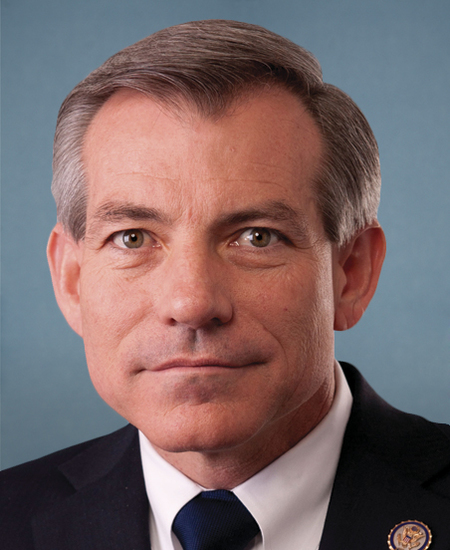
Rep. David Schweikert
Sponsored bills
Maddy summaryThe GRACIE Act of 2026 provides federal grants to state child welfare agencies to help them record and keep all interviews related to child abuse and neglect investigations. Under this bill, states receiving funding must create or update rules requiring electronic recording of these interviews and store the recordings securely for at least five years. The funds can only be used for costs directly tied to conducting and retaining these recordings, including audio or video capture. States must also establish access controls that limit who can view the recordings while allowing caregivers to request copies in certain legal situations. The program is authorized for six years, with up to $30 million available annually from 2026 through 2031.
Maddy summaryThis bill, titled the Fair Treatment of Religious Organizations Act of 2026, establishes rules for how religious organizations are treated under federal tax law and financial assistance programs. It directs the IRS to determine whether an organization's purpose is religious without considering its specific beliefs about marriage, sexuality, or gender identity, even if those beliefs conflict with current laws. The legislation also prohibits federal agencies from discriminating against religious employers that receive federal funding if those employers hire staff based on their religious standards. These protections apply to religious corporations, associations, educational institutions, and societies, ensuring they can maintain employment practices aligned with their faith when receiving government support.
Maddy summaryThis bill, titled the Clean Water for All Life Act, would amend federal criminal law to prohibit chemical abortions unless a healthcare provider is physically present during the procedure. It directly affects individuals who prescribe, administer, or assist with chemical abortion drugs like mifepristone and misoprostol by making it a federal crime to provide these services without a physical exam and the provider's presence. The law requires that patients receive a catch kit and red bag medical waste container with disposal instructions, and it defines an unborn child as beginning at fertilization. Violations could result in up to five years in prison and a $50,000 fine for each occurrence. The bill does not address other forms of abortion or change existing state laws.
Maddy summaryHRES 1110 is a non-binding House resolution expressing the U.S. House of Representatives' disapproval of the slaughter of dogs and cats for human consumption and urging Japan to enact a nationwide ban. It references the U.S. 2018 ban on this practice (under the Agriculture Improvement Act) and notes similar bans in South Korea, Taiwan, and cities like Shenzhen and Jakarta. The resolution affirms shared U.S.-Japan values on animal welfare, encourages bilateral cooperation on animal rights, and clarifies it does not interfere with protected cultural or religious practices. As a symbolic diplomatic statement, it has no legal force but aims to influence Japan’s policies on animal welfare.
Debt-to-GDP Transparency and Stabilization Act This bill requires the President's annual budget and congressional budget resolutions to include (1) the ratio of the public debt to the estimated gross domestic product (GDP), and (2) the ratio of the surplus or deficit to the estimated GDP.
Maddy summaryThis bill, titled the Combating Deceptive Practices in Assistance Programs Act of 2026, modifies Medicaid eligibility requirements for personal care services. It directly affects individuals seeking assistance with daily living activities under the Medicaid program. The key provision adds a specific eligibility criterion requiring applicants to be unable to perform at least three activities of daily living as defined in the Internal Revenue Code. These changes would take effect for medical assistance provided on or after January 12, 2027.
Maddy summaryThis bill, the Tribal Tax and Investment Reform Act of 2026, treats federally recognized Indian tribes and Alaska Native entities as states for specific tax purposes, allowing them to issue tax-exempt bonds and maintain employee pension plans under the same rules as state governments. It creates a new $175 million annual tax credit allocation for investments in tribal areas, expands existing employment tax credits, and clarifies how tribal general welfare benefits and trust funds are treated for federal assistance programs. The legislation also establishes uniform fiduciary standards for tribal pension plans, provides technical assistance for tribal area investments, and ensures tribal areas qualify for certain affordable housing tax incentives.
This bill designates the facility of the United States Postal Service located at 101 North Colorado Street in Chandler, Arizona, as the "Mayor Coy Payne Memorial Post Office Building".
Law-Enforcement Innovate to De-Escalate Act This bill removes less-than-lethal projectile devices (e.g., certain TASERs) from regulation under the Gun Control Act. The term less-than-lethal projectile device means a device that (1) is not designed or intended to expel (and may not be readily converted to discharge) commonly used ammunition or projectiles exceeding a velocity of 500 feet per second; (2) is designed and intended to be used in a manner not likely to cause death or serious bodily injury; and (3) does not accept (and cannot be readily modified to accept) an ammunition feeding device. The bill also requires the Bureau of Alcohol, Tobacco, Firearms and Explosives to determine whether a device satisfies the definition of a less-than-lethal projectile device within 90 days of a request.