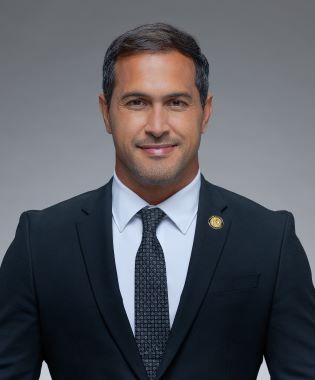
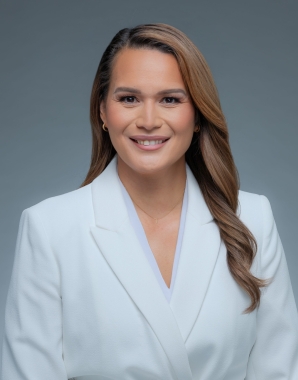
This Senate Resolution asks the Governor's Senior Advisor for Mental Health and the Justice System to create a plan for increasing bed availability at the Hawaii State Hospital for mentally ill criminal defendants and individuals recently released from the facility. The request stems from concerns that the hospital is currently at full capacity, with most patients being evaluated for fitness to stand trial, which limits options for those needing treatment within the criminal justice system. The resolution directs the advisor to develop a strategy for creating shelter placements for these specific populations and to submit a report with findings and potential new legislation to the Legislature by early 2027. This measure does not authorize funding or mandate immediate policy changes but serves as a formal request for planning and coordination among state agencies.
Prohibits operators of smart household security devices from sharing user data with law enforcement agencies unless the user consents, the law enforcement agency obtains a judicial warrant, or there is an emergency situation involving a clear and present danger of imminent death or great bodily harm. Prohibits operators from requiring users to consent to the sharing of data with law enforcement agencies as a condition of using a smart household security device. Allows the Department of the Attorney General to bring a civil action against operators who violate certain requirements. (CD1)
Allows a retirant to be employed without reenrollment in the Employees' Retirement System and without loss or interruption of retirement benefits if the retirant is employed as a school resource officer identified by the Department of Law Enforcement or other law enforcement agency as a labor shortage or difficult-to-fill position and stationed at a public school, subject to certain conditions. Establishes criteria for various agencies to use in identifying labor shortage or difficult-to-fill positions. Requires the director of human resources of the appropriate state jurisdiction or the human resources management chief executive of each county to include in their annual reports to the Legislature, details on the employment of retirants as school resource officers. (CD1)
HB 2061 appropriates state funds to establish a gun buyback program, requiring at least two buyback events in every county each year. The bill directly affects residents who may participate in these events to exchange firearms for cash. Key provisions include dedicated funding allocation for program operations and mandatory event scheduling across all counties. This policy change creates a structured, statewide initiative for firearm buybacks without altering gun ownership laws.
Requires the posting of informational placards on sex trafficking and resources available to victims, in public buildings and at other specified locations. Requires the Department of Human Services to develop and make available a model placard. Requires the Department of Education to train teachers, school administrators, and other school personnel on the dynamics of sex trafficking and strategies for prevention and response. Requires and appropriates moneys for the Department of the Attorney General to develop and implement public education and outreach events on the dynamics of sex trafficking and the importance of community involvement in prevention and response efforts.
Requires the State's youth and adult correctional facilities to provide free and accessible voice communication services for incarcerated persons in state correctional facilities. Prohibits any state agency from deriving revenue or financial benefit from the provision of communication services to persons confined in state correctional facilities. Requires the Public Utilities Commission to establish service quality standards and rules for the free voice communication services. Requires a report to the Legislature. Appropriates funds. Effective 7/1/3000. (HD1)
Requires the State's youth and adult correctional facilities to provide free and accessible voice communication services for incarcerated persons in state correctional facilities. Prohibits any state agency from deriving revenue or financial benefit from the provision of communication services to persons confined in state correctional facilities. Requires the Public Utilities Commission to establish service quality standards and rules for the free voice communication services. Requires a report to the Legislature. Appropriates funds.
SB 3040 replaces the Gun Violence and Violent Crimes Commission with a new Office of Gun Violence Prevention and allocates state funding for its operations. The bill establishes a dedicated state office to coordinate gun violence prevention strategies, though specific programs or initiatives are not detailed in the abstract. It directly affects state government by creating this new entity and directing resources toward prevention efforts. The bill is currently pending committee review, with a public hearing scheduled for February 11, 2026.
By 1/1/2028, requires the Department of Human Services, upon obtaining a federal waiver, to establish a pre-release Supplemental Nutrition Assistance Program (SNAP) application process for inmates nearing release. Allows all individuals convicted of an offense involving the possession, use, or distribution of a controlled substance to apply for SNAP benefits, regardless of treatment status. (CD1)
HB 1387 lowers the legal blood alcohol concentration (BAC) limit for driving under the influence of any intoxicant (including alcohol or drugs). It directly affects drivers operating vehicles by making it illegal to drive with a BAC above the new, lower threshold. The bill establishes a specific BAC limit (not specified in the abstract) that will replace the current standard, effective July 1, 3000. This is a concrete policy change to strengthen DUI enforcement, not a procedural or commemorative measure.