

Maddy summaryThe Child Care Modernization Act of 2025 amends the Child Care and Development Block Grant Act to improve access to high-quality child care for working parents. It requires states to develop plans with input from parents, providers, and employers, and to set payment rates that cover providers' full costs including staff salaries and benefits. The bill creates a new grant program to expand child care supply through facilities improvements and support for providers serving priority populations like homeless children, rural communities, and children with disabilities. It clarifies eligibility requirements, including income limits for families and definitions for "eligible child" and "eligible activity." The act aims to increase the number of low-income children in high-quality child care settings while supporting the child care workforce.
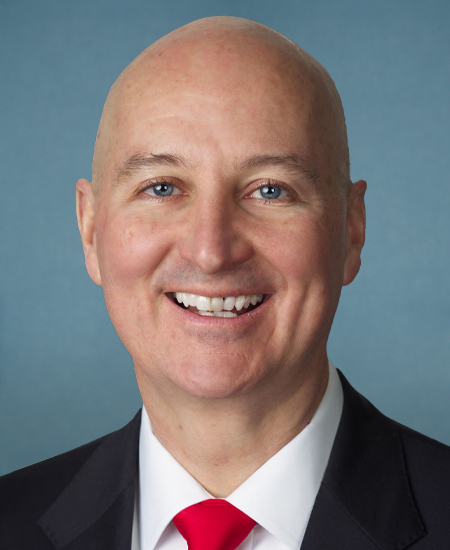
Sen. Pete Ricketts
Sponsored bills
Maddy summaryThis bill, the Conscience Protection Act of 2025, strengthens protections for healthcare providers and organizations that refuse to participate in certain medical procedures (including abortion, assisted suicide, and sterilization) based on religious, moral, or ethical beliefs. It creates a private right of action allowing affected entities to seek legal remedies when their conscience rights are violated, addressing a gap in current law where victims could not defend their rights in court. The bill amends the Public Health Service Act to prohibit discrimination against such healthcare entities and establishes clearer enforcement mechanisms through the Department of Health and Human Services, including administrative investigations and civil actions. It directly affects healthcare providers, hospitals, insurers, and other health-related organizations operating under federal funding. The bill aims to address inconsistent enforcement of existing conscience protections like the Weldon Amendment, which has been challenged in cases such as California's abortion coverage mandate.
Maddy summaryThis bill, titled the Stop Insider Trading Act, would restrict Members of Congress and their spouses and dependents from purchasing stocks in publicly traded companies. It requires these individuals to provide advance public notice at least seven days before selling any covered investments, with the notice filed with the Clerk of the House or Secretary of the Senate. The law includes exceptions for certain occupational transactions and reinvested dividends, and establishes penalties including fees and mandatory sales for violations.
Maddy summaryThis bill requires the Department of Veterans Affairs (VA) to improve coordination when veterans receive care from community providers. It directs the VA's Under Secretary for Health to develop guidance for VA medical centers on obtaining final medical documentation after community care referrals, set performance goals for this documentation, and mandate core training for community care providers. The bill also requires the VA to monitor provider training completion and ensure clear communication about training requirements. Finally, it mandates regular reports to Congress on implementation progress, starting 120 days after enactment.
Maddy summaryThis bill requires VA-employed physicians or nurse practitioners to sign a veteran's death certificate within 48 hours of learning of their death (for natural causes), addressing delays that have lasted up to eight weeks. It directly affects veterans' families and survivors who face blocked burial arrangements and delayed access to benefits due to these certification delays. The bill also mandates annual VA reports to Congress on compliance, including the percentage of timely certifications and reasons for delays. Key provisions focus on setting a clear 48-hour deadline for VA providers and creating transparency through mandatory reporting. It does not override state medical certification laws or require VA staff to violate their licensing requirements.
Maddy summaryThe Love Lives On Act of 2025 modifies veterans' and military survivors' benefit rules to prevent remarriage from automatically ending eligibility. It directly affects surviving spouses of veterans or military members who remarried, ensuring they retain access to key benefits. Key provisions include: (1) preventing termination of veterans' dependency compensation (under 38 U.S.C. §1311/1562) due to remarriage; (2) stopping termination of military Survivor Benefit Plan annuities solely for remarriage, with specific rules for those who remarried before age 55; and (3) expanding TRICARE coverage to include remarried widows/widowers whose subsequent marriage ended (via death, divorce, or annulment). These changes restore or maintain benefits that were previously lost upon remarriage.
Maddy summaryThis resolution formally recognizes 2026 as the International Year of Rangelands and Pastoralists, acknowledging the ecological and economic importance of these lands to the United States. The bill highlights that rangelands cover a significant portion of U.S. territory and support domestic production of food, fiber, and energy while providing critical ecosystem services like carbon storage and wildfire risk reduction. It encourages federal agencies, universities, and organizations to engage in education, research, and outreach activities related to sustainable rangeland management during the designated year. The measure does not create new laws or funding but serves to raise awareness and promote collaboration among stakeholders involved in rangeland stewardship.
Maddy summaryThis bill would allow federal law enforcement officers, including retired officers, to purchase firearms that have been retired from federal service. It requires the General Services Administrator to create a program where officers can buy these surplus weapons within six months of retirement, provided they are in good standing with their agency. The firearms would be sold at salvage value, which reflects their age and condition, and the program must be established within one year of the bill's enactment. The legislation defines eligible officers and firearms using existing legal definitions while excluding certain machineguns that were not lawfully possessed before specific federal restrictions took effect.
Maddy summaryThis bill establishes a sanctions framework that would impose economic penalties on the Chinese government and Communist Party if they threaten Taiwan's security. It requires the President to identify threats and then blocks property, restricts financial transactions, and prohibits investments in sanctioned Chinese entities. The legislation also allows for increased import duties on Chinese goods and bans the trading of Chinese securities on U.S. exchanges. Key provisions include targeting Chinese officials, state-owned banks, and companies that support China's military-industrial capacity, while providing the President authority to waive sanctions for national security reasons.
Living Donor Protection Act of 2025 This bill prohibits life insurance, disability insurance, and long-term insurance carriers from denying or otherwise restricting coverage for living organ donors. Specifically, carriers may not deny, cancel, vary premiums, or otherwise impose conditions on policies based on an individual's status as a living organ donor. The bill also expressly specifies that recovery from organ-donation surgery constitutes a serious health condition that entitles eligible employees to job-protected medical leave. In addition, the Department of Health and Human Services must update educational materials on living organ donation to include information about the benefits and risks of living organ donation and the impact of donation on insurance access, particularly with respect to the bill's changes.