Maddy summaryThe Federal Death Penalty Prohibition Act bans the imposition of the death penalty for any federal crime committed on or after the date the law takes effect. It directly affects individuals currently facing or serving federal death sentences by requiring that all such cases be resentenced to a penalty other than death. This legislation removes the death penalty as a sentencing option for federal offenses and mandates a review for those already sentenced to die before the bill becomes law.
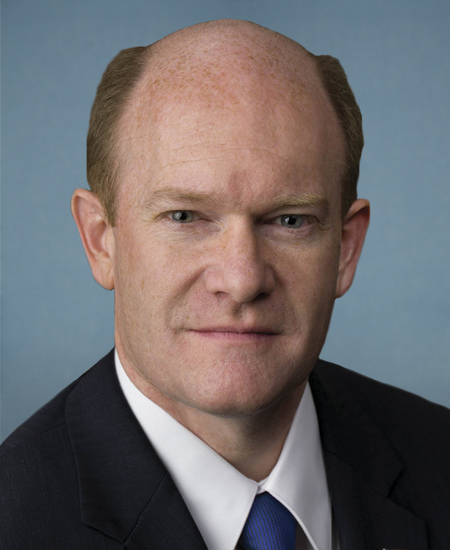
Sen. Christopher A. Coons
Sponsored bills
Maddy summaryThis joint resolution seeks to reject a specific rule issued by the Department of Education concerning the William D. Ford Federal Direct Loan Program. If passed, it would nullify the rule and prevent it from taking effect, directly impacting federal student loan policies. The measure uses a congressional disapproval process under Title 5 of the United States Code to override the department's regulatory decision. It does not create new policies but instead stops an existing proposed regulation from being implemented.
Maddy summaryThis bill prohibits the enforcement of contractual clauses that prevent victims of sexual abuse of minors from disclosing their abuse or related facts. It directly affects survivors of child sexual abuse, alleged perpetrators, and any parties to agreements containing such nondisclosure provisions. The law declares these clauses void and unenforceable under public policy, applies retroactively to agreements made before or after enactment, and preempts state laws that would allow enforcement of prohibited clauses. The bill also preserves the ability to settle cases while still allowing disclosure of abuse-related information.
Maddy summaryThis resolution honors the life and legacy of John Seymour, a late U.S. Senator from California, by formally acknowledging his public service and contributions. The document details his career highlights, including his roles as Mayor of Anaheim, his work in securing the relocation of the Los Angeles Rams, and his legislative achievements such as passing a major transportation bill. It also lists his committee assignments and advocacy for issues like special education, women's rights, and environmental protection. Finally, the resolution requests that the Senate Secretary communicate this tribute to the House of Representatives and send a copy to Seymour's family.
Maddy summaryThe GAME Act of 2026 prohibits large digital advertising platforms from showing targeted ads for sports gambling to anyone under 18 years old. This ban takes effect one year after the law is passed and applies to major social media sites, search engines, and ad networks that have over 100 million monthly users. The Federal Trade Commission is responsible for enforcing the rule, with repeated violations potentially leading to criminal fines of up to $100,000 per ad instance. The legislation defines specific types of data used for targeting, such as precise location tracking and unique device identifiers, while excluding simple context-based ads or those requested directly by users.
Maddy summaryThis bill, titled the Restoring Overtime Pay Act of 2026, raises the minimum salary required for employees to be exempt from federal overtime pay rules, directly affecting workers classified as executive, administrative, or professional staff. It establishes a specific salary schedule that starts at $45,000 per week and increases annually to $75,000 by 2029, after which the threshold will automatically adjust to match the 55th percentile of national earnings for full-time salaried workers. Additionally, the legislation modifies the criteria for determining job duties, requiring that at least 20 percent of an employee's time be spent on executive or administrative tasks rather than the previous 40 percent standard. The law also mandates that the Bureau of Labor Statistics regularly publish earnings data and requires the Department of Labor to provide public notice before implementing any updated salary thresholds.
Maddy summaryThis Senate resolution designates the week of May 10 through May 16, 2026, as "National Police Week" to honor law enforcement officers across the United States. The measure formally recognizes the service and sacrifices of federal, state, local, and tribal police officers, including those who have died in the line of duty during 2025 and early 2026. By invoking existing federal authority, the bill encourages the public and government agencies to observe this week by acknowledging the essential mission of police work and supporting officer safety. The resolution also expresses condolences to the families of officers who have made the ultimate sacrifice and reaffirms support for communities served by law enforcement.
Maddy summaryThis Senate resolution designates May 16, 2026, as "Kids to Parks Day" to encourage families to visit national, state, and local parks. The bill aims to promote outdoor recreation, environmental stewardship, and healthy lifestyles for young people across rural, suburban, and urban communities. By officially recognizing this date, the Senate encourages Americans to take part in safe, active family trips to public lands.
Maddy summaryThis Senate resolution expresses the non-binding opinion that federal laws regarding medication abortion should rely on scientific evidence rather than political influence. It specifically calls for the FDA to maintain its approval of mifepristone, a drug proven safe and effective over 25 years, and to allow patients to access it through telemedicine or mail-order pharmacies. The measure highlights that current restrictions disproportionately harm marginalized communities, including people of color, low-income individuals, and those in rural areas. By stating these points, the resolution aims to encourage policymakers to ensure equitable and transparent access to abortion care based on medical consensus.
Maddy summaryThe IGNITE HBCU Excellence Act establishes a competitive grant program administered by the Department of Education to provide long-term funding for infrastructure improvements at Historically Black Colleges and Universities. These grants are intended to support projects such as modernizing campus facilities, upgrading technology and broadband systems, enhancing safety measures, and acquiring research equipment, with a specific focus on addressing deferred maintenance and health risks. Priority for funding is given to institutions that demonstrate the greatest need due to facility conditions or financial limitations, as well as those serving high percentages of low-income students. The legislation also includes requirements for recipients to submit detailed plans, engage in community partnerships, and use a portion of funds for administrative costs, while prohibiting the use of money for routine maintenance or athletic facilities.