

Maddy summaryHR 5688, the Non-Domiciled CDL Integrity Act, changes rules for issuing commercial driver's licenses (CDLs) to people who don't live in the state where the license is issued. It allows states to issue CDLs to foreign nationals with lawful U.S. immigration status and work-related visas (valid for up to one year or until their stay ends), requiring states to verify status before issuing and keep records for two years. For residents of U.S. territories like Puerto Rico, it requires proof of U.S. citizenship or permanent residency before issuing CDLs, with similar verification and record-keeping rules. The bill directly affects commercial drivers from foreign countries and U.S. territories seeking CDLs in states where they are not residents.
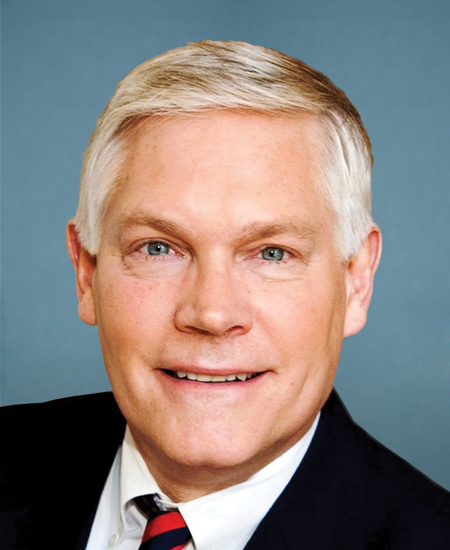
Rep. Pete Sessions
Sponsored bills
Maddy summaryThis bill, known as the FAIR Act, would allow the U.S. Food and Drug Administration to approve certain medicines and permit clinical trials for life-threatening diseases more quickly by recognizing approvals from trusted international regulatory authorities. It directly affects drug manufacturers, patients with serious illnesses, and U.S. healthcare providers by creating a new pathway where medicines already approved by agencies like the European Medicines Agency or Health Canada could receive reciprocal marketing approval in the United States. The legislation establishes a 30-day timeline for FDA review of these reciprocal requests and includes provisions for clinical trials authorized abroad, while maintaining safety oversight through withdrawal mechanisms if adverse events occur. The bill specifies that only products intended for immediately life-threatening conditions would qualify under this streamlined process.
Enhanced Iran Sanctions Act of 2025 This bill imposes sanctions on certain foreign persons (individuals and entities) that are involved in Iran's petroleum sector as well as certain associated persons. The bill also requires or authorizes actions to facilitate the enforcement of sanctions on Iran. Specifically, the bill requires the President to impose visa- and property-blocking sanctions on any foreign person that, after the bill's enactment, knowingly engages in any transaction related to the processing, export, or sale of oil, condensates, gas, liquefied natural gas, or other petrochemical products in whole or in part from Iran. The President must also impose sanctions on certain foreign persons associated with a sanctioned individual or entity. For example, the President must sanction the subsidiaries and corporate officers of a sanctioned business. The bill provides certain exceptions to these sanctions, including specifying that sanctions do not apply to the importation of goods or to conducting or facilitating transactions for humanitarian assistance. The Department of State must establish an interagency working group that shall seek to establish a multilateral contact group to coordinate international efforts to enforce sanctions on Iran. The bill expands the State Department rewards program to authorize a reward payment to any individual who furnishes information leading to the identification of a person (1) subject to sanctions under this bill, or (2) that has attempted or is attempting to evade sanctions under this bill.
Maddy summaryThis bill establishes a federal program to create at least two bioindustrial technology maturation facilities by 2030, which will serve as shared research and testing centers for developing biotechnology products that enhance energy security. These facilities will provide precommercial-scale testing, pilot production, and workforce training for companies and researchers working with biological systems to manufacture materials and products, with locations chosen to support diverse regional needs and supply chains. The legislation defines key terms related to biomanufacturing and waste streams, mandates collaboration with industry and academic partners, and authorizes $225.5 million in funding from 2026 through 2030 to support these efforts.
Maddy summaryHR 7678, the Gun Owner Registration Information Protection Act, prohibits federal funding for state or local databases that track lawfully owned firearms or their owners. The bill allows federal funding for databases recording lost or stolen firearms but bans it for databases listing legal gun ownership. This means states cannot use federal money to create or maintain systems that compile information about legally owned guns. The bill directly affects state and local governments that rely on federal funds for firearm ownership databases.
Maddy summaryThis bill updates administrative procedures for the Public Safety Officers' Benefits Program to speed up claim processing and expand disability coverage. It requires the Bureau of Justice Assistance to notify claimants about missing information within 90 days and issue interim payments if claims aren't resolved within 270 days, while also mandating annual audits of backlogged claims. The legislation adds benefits for permanent partial disabilities that prevent officers from working in their previous capacity and creates a faster approval process for claims supported by World Trade Center health certifications.
Maddy summaryThis bill requires the Federal Reserve, Office of the Comptroller of the Currency, and FDIC to provide detailed annual reports on their interactions with international financial regulatory forums. The reports must include information about the forums they participate in, their funding sources, how their work aligns with U.S. interests, and the positions taken by U.S. representatives. The bill specifically targets five major international financial regulatory bodies including the Basel Committee on Banking Supervision and Financial Stability Board. These reporting requirements will be added to the agencies' existing annual reports to Congress. The legislation aims to increase transparency about U.S. financial regulatory engagement with international bodies.
Maddy summaryHR 6552, the Bank-Fintech Partnership Enhancement Act, mandates a study by the Federal Reserve, Comptroller of the Currency, and FDIC into how partnerships between banks and financial technology companies support new banking formations and community bank health. The study must examine specific benefits like reduced time-to-market for products, lower compliance costs, and improved technological capabilities, then identify potential legal or regulatory changes to foster such partnerships. The regulators must submit a report to Congress within six months of the bill's enactment. This is a procedural bill focused on research, not direct policy changes affecting businesses or consumers.
Maddy summaryThe TIER Act of 2025 adjusts financial regulatory thresholds to account for economic growth. It raises key asset thresholds for large banks and financial institutions - from $250 billion to $370 billion in most cases (e.g., in the Federal Reserve Act and Financial Stability Act). The bill also establishes a new mechanism requiring periodic, automatic adjustments to these thresholds every five years based on U.S. GDP growth, starting in 2031. These changes directly affect large bank holding companies and financial firms subject to federal oversight under current regulations. The adjustments aim to keep regulatory standards aligned with the evolving size of the economy.
Maddy summaryHR 6554, the Community Bank Representation Act, creates a new "Community Bank Member" position on the Federal Reserve Board of Governors. This member must have primary experience in community banking and is tasked with developing policy recommendations and overseeing regulation for banks with less than $17 billion in assets. The bill also requires the Federal Reserve to annually adjust this $17 billion threshold using changes in nominal U.S. GDP. The new member must report semi-annually to relevant congressional committees on the Federal Reserve's regulatory efforts for community banks.