

Maddy summaryThis bill reauthorizes and expands the Radiation Exposure Compensation Act, extending the program's funding through 2043 and allowing new claims to be filed until 2042. It increases compensation amounts for downwinders and Manhattan Project waste claimants from $100,000 or $50,000 to $150,000, respectively, and introduces a provision for reimbursing documented out-of-pocket medical expenses not covered by insurance. The legislation broadens eligibility by adding new geographic areas in states such as Colorado, Montana, Washington, Illinois, and Ohio, as well as the territory of Guam, while also permitting the use of third-party affidavits to verify employment history or physical presence in affected zones. Additionally, it establishes a discretionary process for the President to designate new groups of radiation-exposed individuals for compensation and mandates several health studies regarding the long-term effects of nuclear testing on specific populations.
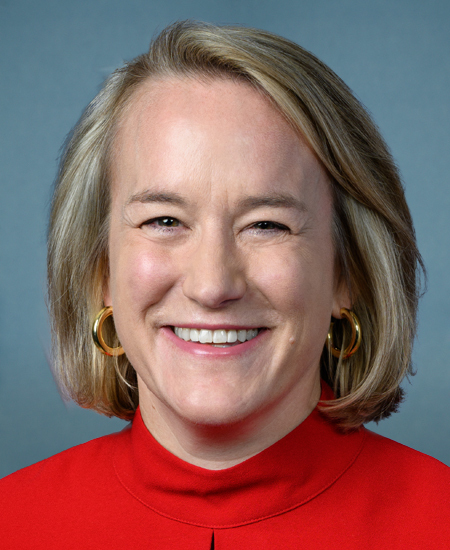
Rep. Nikki Budzinski
Sponsored bills
Maddy summaryThis resolution designates the week of August 2 through August 8, 2026, as "National Farmers Market Week" to recognize the importance of local food markets. It highlights how these markets support farmers' incomes, connect urban and rural communities, and promote sustainable farming practices. The measure serves as a symbolic gesture to celebrate the role farmers markets play in strengthening local economies and improving public access to fresh food.
Maddy summaryThis resolution condemns a 2026 Department of Justice opinion that challenges the legal requirement to place people with disabilities in community settings rather than institutions. It directly affects individuals with disabilities who rely on federal protections to live independently and avoid segregation in facilities like nursing homes or psychiatric hospitals. The text affirms that the 1999 Supreme Court ruling in Olmstead v. L.C. mandates that states offer community-based services when appropriate and calls on the Justice Department to rescind its opinion. Additionally, it urges Congress to reverse recent cuts to Medicaid funding that support home and community-based services for people with disabilities.
Maddy summaryThis resolution expresses support for designating July as Disability Pride Month to honor the contributions of the approximately 70 million American adults and over 3 million children with disabilities. The bill calls on individuals, interest groups, and organizations across the United States to observe the month with celebrations and activities that promote inclusion. Additionally, it urges everyone to actively work against the exclusion and discrimination that people with disabilities often face. While the measure does not create new laws or funding, it serves as an official statement of recognition and encouragement for community engagement during this time.
Maddy summaryThe Young Farmer Success Act expands student loan forgiveness to include individuals working full-time as employees or managers on farms and ranches. To qualify, these agricultural operations must generate at least $35,000 in gross revenue from selling agricultural products in 2026, with the required income increasing annually based on inflation adjustments. This change directly affects young people seeking loan relief who are currently employed in the farming and ranching sectors but were previously ineligible for this specific provision.
Maddy summaryThe Head Start Expansion and Improvement Act of 2026 broadens eligibility for early childhood education services by including recipients of various public assistance programs, such as food stamps and Medicaid, in the definition of qualifying families. The bill authorizes $36 billion annually from fiscal years 2027 through 2032 to support these expanded operations and creates a separate grant program providing $1 billion per year until 2030 for agencies to repair or upgrade aging facilities with safety hazards. Additionally, the legislation establishes a loan forgiveness program that cancels federal student loans for childcare workers who complete three years of full-time service in Head Start or Early Head Start programs. Finally, it authorizes $6.8 billion annually through 2032 to provide salary supplements to Head Start employees, with funding allocated based on local wage gaps and cost-of-living factors.
Maddy summaryThis bill establishes federal protections and funding to expand access to in vitro fertilization and intrauterine insemination for individuals, military service members, and veterans. It requires most private health plans, Medicaid programs, and Medicare to cover these fertility treatments without imposing higher cost-sharing than other medical services. Additionally, the legislation mandates that the Department of Defense and the Department of Veterans Affairs provide specific fertility preservation and treatment benefits to uniformed service members and eligible veterans. The bill also includes preemption clauses that override state laws restricting these procedures and prohibits discrimination based on marital status, sex, or sexual orientation in the provision of care.
Maddy summaryThis bill reauthorizes and expands the Accelerating Access to Critical Therapies for ALS Act through 2031, extending funding for research into treatments for amyotrophic lateral sclerosis. It requires drug manufacturers to share interim clinical trial data with the FDA to better assess the progress of investigational drugs and clarifies that phase 3 clinical trial definitions include combined phase 2/3 trials and planned trials not yet enrolling participants. The legislation also mandates the FDA to publish an updated five-year action plan for ALS and other rare neurodegenerative diseases, including resource needs and coordination strategies with broader disease communities. Additionally, the bill requires the Government Accountability Office to submit a report on the program's implementation four years after enactment.
Maddy summaryThis bill directs the Comptroller General to conduct a comprehensive review of indoor air quality, ventilation, and heating systems across all federal buildings and facilities. The assessment will examine how agencies monitor these systems, the frequency of identified problems, the qualifications of workers performing related maintenance, and the effectiveness of current oversight measures. Within 12 months of enactment, the Comptroller General must submit a report to Congress detailing findings and recommendations. If the report identifies significant deficiencies, affected federal agencies are required to submit corrective action plans to Congress within six months of the report's release.
Maddy summaryThis bill expands federal election laws to prevent foreign nationals from influencing U.S. elections by tightening restrictions on domestic companies with significant foreign ownership or control. It requires businesses that are at least 50% owned by foreign individuals, or those with specific foreign influence, to file a sworn certification proving they are not foreign-controlled before making any political donations or spending money on election activities. Additionally, the law clarifies that these rules apply to state and local ballot initiatives and mandates that corporate political action funds certify their managers and board members are U.S. citizens or permanent residents. The legislation also prohibits recipients of funds from these businesses from using the money for further political contributions unless they receive and verify the required compliance certification.