

Maddy summaryThe Defense AI Reliability and Reporting Act requires the Secretary of Defense to establish a centralized program for tracking and fixing problems with artificial intelligence systems used by the military. This program will collect reports on incidents where AI systems cause harm, fail to follow commands, or operate outside approved limits, as well as reports on security weaknesses in these systems. To encourage transparency, the bill protects service members, employees, and contractors from retaliation when they report issues in good faith. For serious problems that affect the entire department, the military must create a corrective action plan and verify that fixes are working before continuing to use the affected systems. Finally, the Department of Defense must submit an annual report to Congress detailing the number of incidents, trends in AI failures, and any cases where AI systems resulted in injury or death.
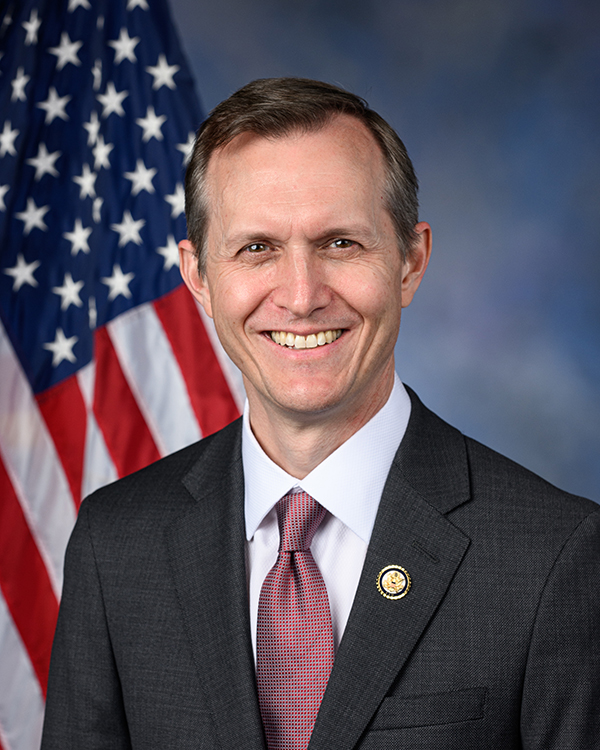
Rep. George Whitesides
Sponsored bills
Maddy summaryThe Self-Improving AI Monitoring Act amends the National Institute of Standards and Technology Act to require NIST to assess trends in AI capabilities, specifically focusing on systems that can autonomously conduct research or develop other AI. The bill mandates that before entering into pre-deployment evaluation agreements with developers of frontier AI systems, NIST must ensure these agreements include specific disclosure requirements. Developers would be required to provide information on the extent to which AI was used to build the new system, including metrics and estimates of how much development occurred without human review. Additionally, any such evaluations must explicitly test the system's ability to autonomously facilitate or conduct AI research and development.
Maddy summaryThe Stop Predator Dumping Act requires states with civil commitment laws for sexually violent predators to adopt specific rules for placing individuals upon their conditional release. These rules mandate that no two released individuals live within 10 miles of each other and prohibit placing a new individual in a county area that already has fewer such residents than another area in the same county. Additionally, the bill caps the number of placements in any single district of large counties at 25 percent of the total for that county. The Attorney General is directed to conduct a study on current placement patterns and distribute best practices for equitable distribution, with federal grants available to help states implement these new guidelines.
Maddy summaryThe No Insider Trading on National Security Act of 2026 requires the Department of Defense Inspector General to submit a report to Congress by January 1, 2027. This report must detail all complaints regarding insider trading in prediction and energy markets that occurred during Operation Epic Fury. The document will identify whether the accused were military personnel, civilian employees, or contractors, and outline the outcomes of any investigations. Additionally, the Inspector General must assess security risks associated with these activities and provide recommendations for future safeguards to prevent similar incidents.
Maddy summaryThe Military Readiness Through Resilient Lands Act amends the Sikes Act to require the Department of Defense to develop standardized metrics for assessing natural resources on military installations, with a focus on mission readiness, climate resilience, and community safety. The bill mandates the use of advanced technologies, such as remote sensing and artificial intelligence, to collect data on biodiversity, water quality, wildfire risk, and other ecosystem services. Military leaders must use this data to set measurable goals for maintaining or improving environmental conditions and to regularly update their integrated natural resources management plans. Additionally, the Secretary of Defense is required to submit reports to Congress every five years detailing progress in implementing these metrics and how they streamline environmental permitting processes.
Maddy summaryThe Wildfire Response and Readiness Act establishes a national prescribed fire program that requires federal agencies to increase the acreage of controlled burns on public lands by 10 percent annually for a decade. It creates a ten-year national wildfire plan to coordinate landscape-scale forest restoration, reforestation, and watershed protection efforts across federal, state, tribal, and private boundaries. The bill also authorizes new funding for community resilience, including grants for home hardening, satellite monitoring technology, and a joint office dedicated to fire environment data and prediction. Additionally, it modernizes the firefighting workforce by establishing training academies, expanding civilian conservation centers, and providing liability protections for non-federal partners conducting prescribed fires.
Maddy summaryThe Understanding AI in the Classroom Act directs the National Science Foundation to hold workshops within 18 months of enactment to study how artificial intelligence impacts children's learning, development, and trust in technology. These workshops will involve researchers, educators, school leaders, and parent groups to examine specific concerns such as attention spans, emotional growth, and potential biases affecting different age groups. Following the workshops, the National Science Foundation must produce a public report detailing any identified gaps in current knowledge about AI's effects on students. This legislation focuses on gathering data and understanding risks rather than immediately restricting or mandating the use of AI in schools.
Maddy summaryThe Lowering Energy Costs through Grid Modernization Act encourages utilities to upgrade power lines by replacing old conductors with more efficient ones that carry more electricity and generate less heat. To support these upgrades, the bill allows for faster federal environmental reviews and makes it easier to secure permits for projects that fit within existing land rights. Additionally, the legislation expands a federal tax credit to include these high-performance transmission upgrades, offering a higher credit rate for smaller projects or those meeting specific domestic content requirements.
Maddy summaryThis bill designates the United States Postal Service facility at 4640 Cass Street in San Diego, California, as the Mary Wilding Memorial Post Office Building. It directly affects the specific postal location by changing its official name to honor Mary Wilding. The key provision ensures that all future legal documents, maps, and records referring to this building will use the new memorial name. This is a commemorative measure that updates official records rather than changing operational policies or funding.
Maddy summaryThis bill creates a legal exemption from antitrust laws for companies and organizations that share information or coordinate actions to protect against security risks posed by artificial intelligence. Specifically, it allows these entities to exchange data or agree to temporarily delay the release or deployment of AI systems if they believe such steps are necessary to prevent threats like weaponization, attacks on critical infrastructure, or unauthorized access. To qualify for this protection, the organizations must act in good faith, use the shared information solely for security purposes, and submit a written notice to the Department of Justice before implementing any coordinated delays. The law also ensures that details submitted to the government remain confidential and allows the Attorney General to seek court orders against companies that fail to prove their actions were legitimate security measures.