

Maddy summaryThis bill, known as the Ratepayer Protection Act, modifies federal energy laws to ensure that large industrial customers pay for the specific infrastructure upgrades needed to serve their high electricity demands. It directly affects non-residential facilities with a peak power usage of 100 megawatts or more, requiring utilities to charge these customers the full incremental cost of any necessary generation, transmission, or distribution improvements. Under the new rules, large customers must also provide financial guarantees or contributions before such upgrades are made, ensuring utilities can recover costs even if the customer leaves the contract early. State regulators have two years to implement these standards, though the bill exempts utilities in states that have already enacted similar measures or are actively considering them.
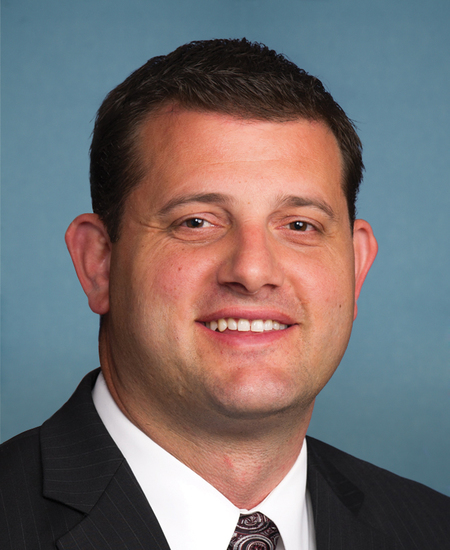
Rep. David G. Valadao
Sponsored bills
Maddy summaryThis bill expands public recreational access to Yosemite's Hetch Hetchy Reservoir and Lake Eleanor Basin areas. It increases annual funding for park improvements from $30,000 to $2 million (adjusted for inflation), prohibits recouping costs from water/power customers, and adds wildfire mitigation to maintenance projects. The bill explicitly permits activities like swimming, non-motorized watercraft, camping above high-water marks, and picnicking, while requiring the National Park Service to report on equitable access funding. The report must analyze whether original recreational access intentions were followed and propose adjustments to San Francisco's water/power pricing or fees to cover maintenance costs.
Maddy summaryThe Rooting Out Mislabeled Agriculture Act directs the Department of Agriculture to create and maintain a database of isotopic signatures for processing tomatoes, modeled after an existing system used to detect cotton grown with forced labor in China. This scientific fingerprinting technique analyzes specific ratios of elements like hydrogen and carbon to identify the geographic origin of tomato products sold as paste or mixed into other foods. The bill requires the agency to conduct research on improving these testing methods and coordinate with U.S. Customs and Border Protection to apply the data during import inspections. Additionally, the Secretary of Agriculture must submit a report to Congress within two years detailing the database's establishment, research results, and recommendations for further action.
Maddy summaryThe SBA Spanish Resource Report Act requires the Small Business Administration administrator to submit a detailed report to Congress within 180 days of enactment. This report must inventory existing Spanish-language resources and services, including websites, application materials, and customer support, as well as those provided by partner organizations like small business development centers. The document also mandates an analysis of usage data, associated costs for translation and outreach, and operational considerations for delivering these services. While the bill requires a public report and a subsequent briefing to congressional committees, it explicitly states that this action does not force the agency to create, expand, or cut any specific Spanish-language programs.
Maddy summaryHR 5267, the American Franchise Act, clarifies when franchisors can be considered joint employers of franchisee employees under federal labor laws. It defines "substantial direct and immediate control" over essential employment terms like wages, benefits, hours, hiring, and discipline - requiring franchisors to actively set these terms to be deemed joint employers. The bill explicitly excludes routine brand standards, training, or minimal safety requirements from constituting such control. This directly affects franchisors and franchisees by limiting joint employer liability to cases where franchisors exert significant, ongoing influence over core employment decisions. The law applies prospectively to new cases after enactment, not past disputes.
Maddy summaryThis bill amends the Fair Labor Standards Act to clarify that direct sellers and qualified real estate agents (as defined under IRS rules) are not considered "employees" under federal labor law. It directly affects these workers by excluding them from FLSA protections like minimum wage and overtime pay. The key provision inserts a new definition into the law, changing how these professions are classified for labor rights purposes. This is a technical definitional change, not a new policy or program.
Maddy summaryThe 9-8-8 Crisis Response Act expands federal funding for mental health crisis response and broadens Medicaid coverage to include regional lifeline call centers and crisis stabilization facilities. The bill increases the annual budget for the Mental Health Crisis Response Partnership Pilot Program from $10 million to $100 million for fiscal years 2027 through 2029. It also allows states to use Medicaid funds to pay for these new services, with the federal government covering 85 percent of the costs. To qualify, crisis stabilization facilities must provide 24-hour care without rejecting patients based on their ability to pay or other factors, and they must maintain an average patient stay of less than 150 hours.
Maddy summaryThe National Flood Impact Reduction and Resilience Act of 2026 establishes a new federal program designed to reduce flood-related losses to life and property through coordinated research, data sharing, and the promotion of resilient construction practices. The bill creates an Interagency Coordinating Committee chaired by the Chief of the Army Corps of Engineers to oversee planning, manage budgets, and ensure cooperation among agencies such as FEMA, NOAA, and the USGS. This committee will work with a non-federal advisory group to develop standards, publish flood vulnerability maps, and provide technical assistance to local governments and building owners. The legislation aims to integrate engineering, natural science, and social science research to improve flood forecasting and encourage the adoption of nature-based features and innovative design methods across the country.
National Law Enforcement Officers Remembrance, Support and Community Outreach Act. [ sic ] This bill temporarily directs the Department of the Interior to award a grant to the National Law Enforcement Officers Memorial Fund for the expenses associated with operating and enhancing the community outreach, public education, and officer safety and wellness programs of the National Law Enforcement Museum.
Maddy summaryThe Earn to Learn Act establishes a federal demonstration grant program that provides low-income students with matched savings accounts to help pay for postsecondary education. Under this mechanism, states or nonprofit organizations receive grants to match student contributions at a rate of $8 for every $100 deposited, while also providing financial literacy training and success coaching. The bill explicitly ensures that participation in the program does not reduce a student's eligibility for Federal Pell Grants or other federal student aid. It authorizes $100 million annually for five years to fund these grants, which are capped at $10 million per recipient, and requires the Department of Education to report on the program's impact on savings rates and educational retention.