

Maddy summaryHR 4611 (EACH Act of 2025) requires all federally funded health programs - including Medicaid, Medicare, military health plans, and the Indian Health Service - to cover abortion services without restrictions, repealing the Hyde Amendment's long-standing ban on federal funding for most abortions. This directly affects millions of people enrolled in these programs, particularly low-income women, women of color (including 25% of Black women and 22% of Hispanic women on Medicaid), and young people. The bill mandates coverage in all federally administered health plans and prohibits state or private insurers from restricting abortion coverage in health insurance. It aims to eliminate current federal and state barriers that deny abortion access to people who rely on government health programs.
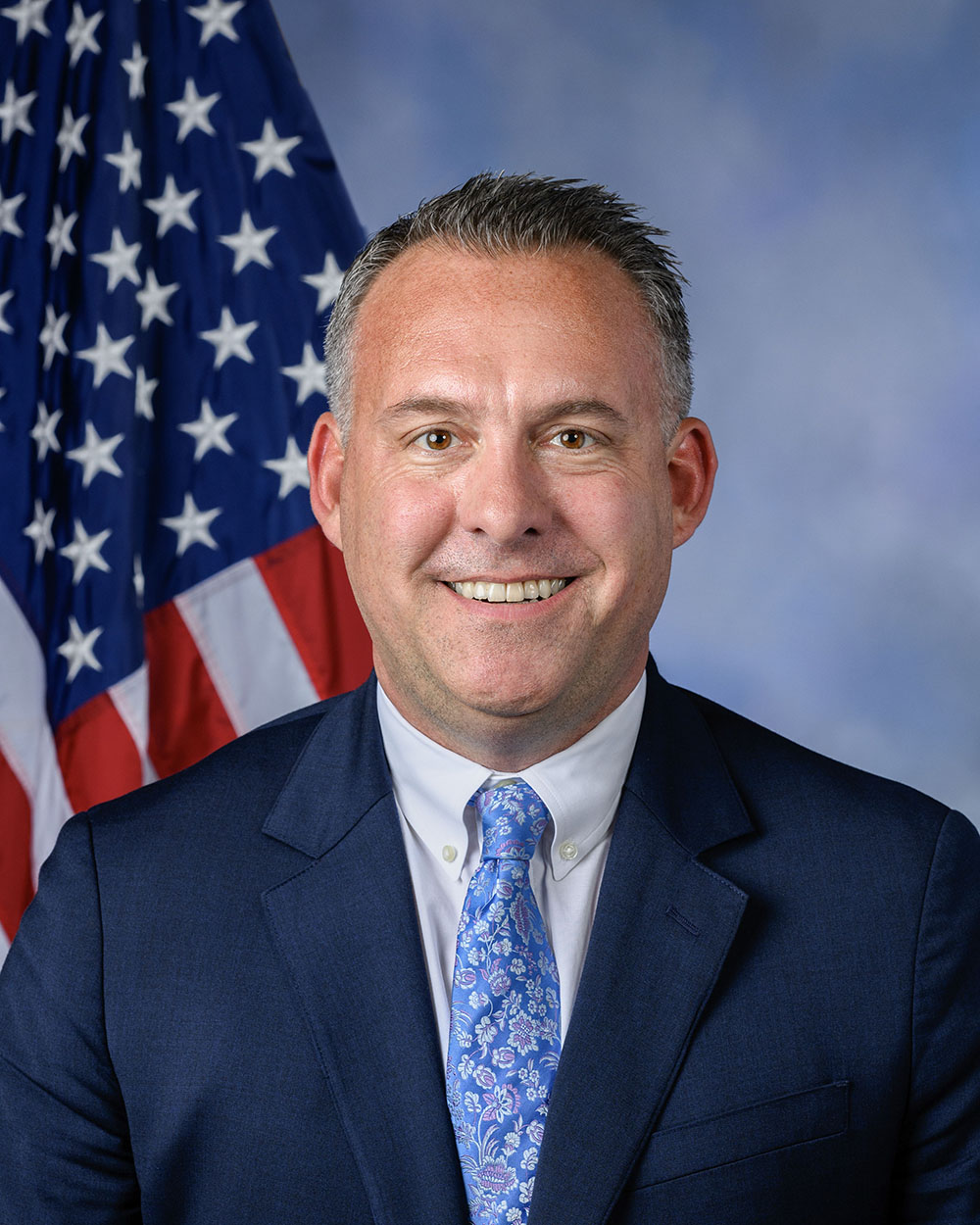
Rep. Adam Gray
Sponsored bills
Maddy summaryThe SPEED Act reforms the National Environmental Policy Act (NEPA) to streamline federal environmental reviews for projects. It limits agencies to considering only "proximate" environmental effects directly tied to a specific project (not speculative or distant impacts), sets strict 180-day deadlines for court remands, and restricts judicial review to procedural errors - not environmental outcomes. This primarily affects federal agencies (like the EPA or Corps of Engineers) and project developers (e.g., for infrastructure, energy, or construction projects) by reducing review scope and accelerating approvals. The bill clarifies NEPA is purely procedural, prohibiting courts from substituting their judgment on environmental effects or delaying actions for new scientific data after deadlines.
Maddy summaryThe Protect America's Workforce Act cancels an executive order issued on March 27, 2025, that excluded certain groups from federal labor-management relations programs, making it legally unenforceable. It also ensures that all collective bargaining agreements between federal agencies and labor unions, which were active as of March 26, 2025, remain fully effective until their agreed terms expire. This directly affects federal agencies, labor unions, and the employees covered by these agreements. The bill prevents federal funds from being used to implement the canceled executive order while preserving existing labor agreements.
Maddy summaryHR 6640, the Build Now Act, sets a strict one-year deadline for completing environmental reviews on federally permitted Central Valley Project (CVP) enhancement projects. This affects project applicants seeking permits for infrastructure like groundwater recharge, aquifer storage, or water source substitution systems. If agencies miss the deadline, they must either grant an extension with the applicant's approval or deny the permit. Applicants denied due to timeline failures can reapply immediately, and agencies must share prior review data to expedite new applications. The bill streamlines the review process under existing laws (NEPA and the Endangered Species Act) without altering water policy.
Maddy summaryThe Central Valley Water Solution Act (HR 6641) authorizes over $830 million in federal funding for water infrastructure projects across California's Central Valley. It directly supports agricultural water districts and communities by financing groundwater banking systems, canal repairs, water treatment plants, and reservoir construction to improve water storage, quality, and conveyance. Key provisions include $830 million for fixing subsidence in the Delta-Mendota Canal, $850 million for the San Luis Canal/Aqueduct, and $300 million for groundwater banking programs across multiple districts. These projects aim to enhance drought resilience, restore water delivery capacity, and support conjunctive use of surface and groundwater resources.
Maddy summaryHR 6639, the Water Agency and Transparency Enhancement Review (WATER) Act, requires the Secretaries of the Interior and Commerce to identify major water-supply and storage projects in California subject to the Endangered Species Act or National Environmental Policy Act. The bill mandates they designate federal officials to identify unnecessary regulatory delays or costs ("unduly burdens") on these projects and develop plans to suspend, revise, or rescind such regulations. It directly affects California water projects (including surface/ground storage and aquifer recharge) and the federal agencies managing their environmental reviews. The key mechanism is a streamlined review process to remove regulatory obstacles without compromising legal protections.
Maddy summaryHR 6575, the CommonGround for Affordable Health Care Act, extends enhanced premium tax credits for health insurance through 2026, directly benefiting millions of lower and middle-income Americans purchasing coverage through the ACA marketplace. The bill modifies income thresholds for premium subsidies, creating new income tiers that maintain or increase financial assistance for households earning up to 1,000% of the poverty level. It includes provisions to prevent fraud in health insurance exchanges by imposing civil penalties on agents and brokers who provide false information, and requires transparency in pharmacy benefit manager contracts to improve drug pricing accountability. The legislation also extends the annual open enrollment period for health insurance exchanges for the 2026 plan year, allowing more time for people to enroll or change coverage.
ePermit Act This bill establishes requirements related to digitizing environmental reviews conducted under the National Environmental Policy Act of 1969 (NEPA). The Council on Environmental Quality (CEQ) must develop, publish, and iteratively update data standards for the collection and curation of certain data related to environmental reviews. CEQ must also design, test, and build prototype tools for environmental reviews. Additionally, CEQ must publish guidance to assist relevant agencies in implementing such standards as well as certain minimum functional requirements, such as data sharing that enables automated transfer of relevant data among federal agencies. Federal agencies responsible for environmental reviews or authorizations must implement the data standards and such minimum functional requirements. To the maximum extent practicable, CEQ and such agencies must iteratively develop and maintain a unified interagency data system consisting of interconnected federal agency systems and shared services for environmental reviews and authorizations, including a common interactive, digital, cloud-based authorization portal. Within a year, CEQ must oversee a pilot of shared services for environmental reviews and authorizations, including the portal. To the maximum extent practicable, CEQ must develop and implement the unified interagency data system by December 1, 2027.
Maddy summaryThis bill amends federal pay rules to expand higher overtime pay rates for U.S. Border Patrol supervisors. It changes the eligibility from only GS-12 agents to include all supervisors classified from GS-12 through GS-15. The key provision modifies Section 5550(h) of Title 5, U.S. Code, to apply the higher overtime pay rate to these higher-grade supervisory positions. The bill aims to improve retention for experienced Border Patrol supervisors by increasing their overtime compensation.
Maddy summaryHR 6394, the Midwives for MOMS Act of 2025, provides federal grants to fund midwifery education programs at accredited colleges and universities. It allocates $15 million annually for general midwifery schools (50% for student support, 25% for program expansion, 25% for clinical supervisors) and $20 million annually for nurse-midwifery programs with similar funding splits. Priority is given to institutions serving rural areas, economically disadvantaged communities, and health professional shortage areas. The bill directly affects midwifery and nurse-midwifery education programs, excluding those within nursing schools, to expand training capacity.