Issue · Healthcare

Healthcare

Every healthcare bill, vote, and legislator stance in Georgia, automatically classified by Maddy, our AI policy reader.

Total bills
70
119th Congress
Top supporter
Jon Ossoff
68% support rate
Top opponent
Andrew S. Clyde
33% support rate
Ranked legislators
10
5 support · 5 oppose
Key legislators

Who's moving healthcare in Georgia

Legislators moving healthcare in Georgia
Legislator Party Stance Support rate Decisive votes
Jon Ossoff
Jon Ossoff Senate
D
Support
68% 22
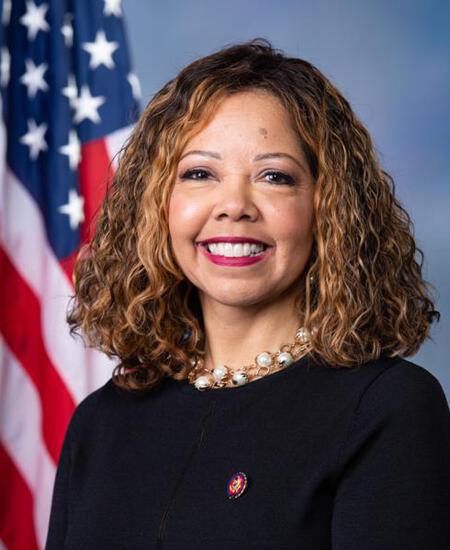
Lucy McBath
Lucy McBath House · District 6
D
Support
67% 12
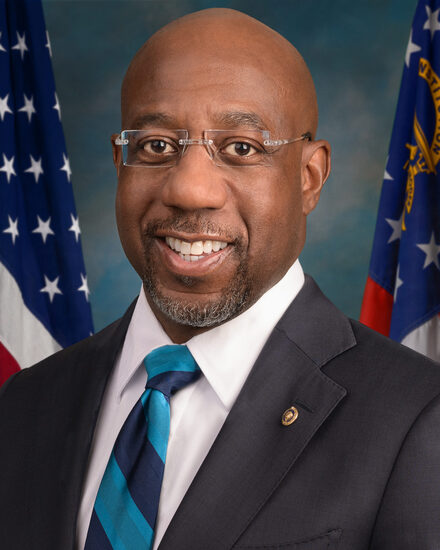
Raphael G. Warnock
Raphael G. Warnock Senate
D
Support
62% 21
Henry C. "Hank" Johnson, Jr.
Henry C. "Hank" Johnson, Jr. House · District 4
D
Support
61% 18
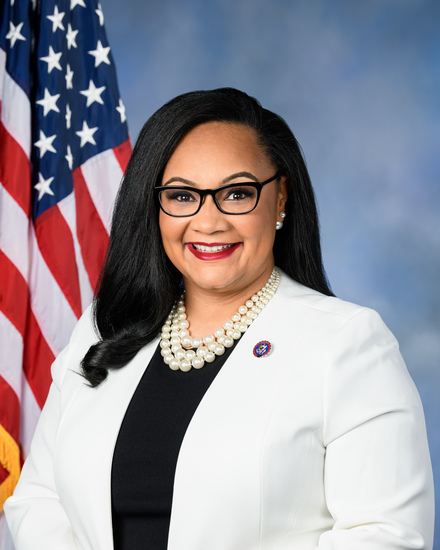
Nikema Williams
Nikema Williams House · District 5
D
Mixed
56% 16
Andrew S. Clyde
Andrew S. Clyde House · District 9
R
Oppose
33% 18
Barry Loudermilk
Barry Loudermilk House · District 11
R
Oppose
33% 18
Richard McCormick
Richard McCormick House · District 7
R
Oppose
33% 18
Rick W. Allen
Rick W. Allen House · District 12
R
Oppose
33% 18
Earl L. "Buddy" Carter
Earl L. "Buddy" Carter House · District 1
R
Oppose
38% 16
Showing 1–10 of 70 bills

All healthcare bills

in committee · United States · House Sep 24, 2026

HRES 1584: Recognizing the 50th anniversary of the Hyde Amendment and its enduring legacy of saving the lives of more than 2,600,000 unborn children and respecting the conscience rights of the American people.

This House resolution marks the 50th anniversary of the Hyde Amendment and honors its original sponsor, Congressman Henry Hyde. It asserts that the amendment has prevented over 2.6 million abortions by restricting federal funding for elective procedures. The text emphasizes that this policy protects taxpayer conscience rights by ensuring public money is not used to finance abortions. Additionally, it encourages Americans to reflect on the history of the amendment and the total number of abortions performed since the Roe v. Wade decision.
in committee · United States · House Jul 21, 2026

HR 9798: Employer Health Plan Flexibility Act

The Employer Health Plan Flexibility Act would allow certain employer-sponsored group health plans to opt out of the Affordable Care Act's requirement to cover specific Essential Health Benefits. This exemption applies to plans governed by the Employee Retirement Income Security Act and would take effect for plan years starting on or after January 1, 2028. While exempt from those specific coverage mandates, the bill explicitly states that employers must still comply with other federal rules, including those regarding mental health parity, nondiscrimination, and preventive services. To ensure transparency, employers claiming this exemption must annually inform their employees about the benefits included in their plan and identify any Essential Health Benefits that are not covered.
in committee · United States · House Jul 14, 2026

HR 9667: Securing Healthcare and Income Entitlements for Lawfully Domiciled Citizens (SHIELD Citizens) Act

The SHIELD Citizens Act aims to restrict access to federal welfare programs, such as food assistance, Medicaid, and housing aid, exclusively to United States citizens. By amending existing laws, the bill removes eligibility for noncitizens, including lawfully domiciled residents, while preserving access to emergency medical care, disaster relief, and services like soup kitchens. The legislation includes a transition period allowing current recipients to keep their benefits for up to 180 days after the law takes effect, which is set to begin 180 days after enactment. This change directly impacts noncitizen families who currently rely on these safety net programs, narrowing the pool of eligible individuals to citizens only.
Sub-Topics Medicaid
in committee · United States · House Jun 24, 2026

HRES 1382: Celebrating the historic anniversary of the June 24, 2022, decision of the Supreme Court of the United States in Dobbs v. Jackson Women's Health Organization.

This resolution commemorates the fourth anniversary of the 2022 Supreme Court decision in Dobbs v. Jackson Women's Health Organization, which removed the federal constitutional right to abortion. The text expresses support for state authority to regulate abortion and acknowledges the work of pregnancy centers that provide care to women and families. It also recognizes the belief that unborn life possesses inherent rights and calls for the protection of that life. As a symbolic measure, the bill does not change any laws or policies but serves to formally celebrate the anniversary and state the House's position on the issue.
Sub-Topics Women's Health
in committee · United States · Senate Jul 16, 2026

SJRES 198: A joint resolution providing for congressional disapproval under chapter 8 of title 5, United States Code, of the rule submitted by the Centers for Medicare & Medicaid Services of the Department of Health and Human Services relating to "Medicare Program; Implementation of Prior Authorization for Select Services for the Wasteful and Inappropriate Services Reduction (WISeR) Model".

This joint resolution seeks to officially disapprove a specific rule issued by the Centers for Medicare & Medicaid Services regarding the implementation of prior authorization for certain Medicare services. The proposed action would prevent the rule, known as the WISeR Model, from taking effect, thereby stopping the new requirements from being enforced. If passed, the resolution would nullify the regulation and maintain the status quo for the affected healthcare services.
Sub-Topics Medicaid Medicare
in committee · United States · House Apr 30, 2026

HR 8603: Dismemberment Abortion Ban Act of 2026

HR 8603, the Dismemberment Abortion Ban Act of 2026, prohibits physicians from performing abortions that involve dismembering an unborn child and extracting it piece by piece or crushed from the uterus. The law allows exceptions only when the procedure is necessary to save the mother's life, while explicitly permitting other abortion methods for reasons such as rape or incest. It imposes criminal penalties of up to two years in prison or fines on physicians who violate the ban and creates a civil lawsuit system where women or parents of minors can seek monetary damages and attorney fees against providers. The bill also defines an 'unborn child' as a human organism from fertilization until birth and clarifies that the woman undergoing the procedure cannot be prosecuted or held financially liable.
Sub-Topics Women's Health
in committee · United States · House Mar 12, 2026

HR 7902: Safeguarding Women from Chemical Abortion Act

This bill, titled the Safeguarding Women from Chemical Abortion Act, aims to revoke federal approval for the drug mifepristone (also known as RU-486) for use in terminating pregnancies. If enacted, the Food and Drug Administration's approval for mifepristone for this indication would be withdrawn within 14 days, making its introduction into interstate commerce for pregnancy termination a violation of federal law. Additionally, the bill establishes a new federal right for individuals to sue manufacturers of mifepristone if they experience bodily injury or harm to mental health attributed to its use for pregnancy termination. This legislation directly affects drug manufacturers, distributors, healthcare providers, and individuals seeking or having used medication abortion.
in committee · United States · House Sep 16, 2026

HR 7945: Nitrous Oxide Safety Act of 2026

The Nitrous Oxide Safety Act of 2026 would classify consumer products containing nitrous oxide as banned hazardous items under federal law, except for specific exceptions. The bill prohibits the sale of nitrous oxide products for recreational use while allowing continued sales for medical and dental treatments, food production in commercial kitchens, research and development activities, and food propellant applications. This legislation directly affects manufacturers, retailers, and consumers by restricting access to nitrous oxide in consumer products after 180 days from enactment. The law defines nitrous oxide as the gas known as laughing gas or whippits and specifies which entities and activities are exempt from the ban.
in committee · United States · House Mar 5, 2026

HR 7817: No Federal Tax Dollars for Illegal Aliens Health Insurance Act of 2026

This bill, titled the No Federal Tax Dollars for Illegal Aliens Health Insurance Act of 2026, amends the Affordable Care Act to restrict the use of federal taxpayer funds for health insurance coverage. It directly affects states that receive funding under the ACA and individuals seeking health insurance coverage through federal programs. The key provision prohibits states from using pass-through funding to pay for health insurance or related benefits for individuals who are not U.S. citizens, nationals, or lawfully present aliens. Additionally, the bill requires the Secretary of Health and Human Services to rescind any existing waivers that would have allowed such funding for unauthorized individuals had the new restrictions been in place at the time of approval.
in committee · United States · House Mar 26, 2025

HR 2378: Defining Male and Female Act of 2025

This bill amends the U.S. Code to define key terms like "sex," "male," and "female" based on biological characteristics present at conception, specifically referencing reproductive anatomy. It requires all federal agencies, courts, and Congress to use these biological definitions when interpreting laws, regulations, or agency actions - replacing current interpretations that consider gender identity. The bill explicitly states that "gender identity" does not constitute a valid basis for determining sex under federal law. This change would directly affect how federal agencies implement existing laws related to healthcare, education, employment, and civil rights by mandating biological sex definitions in their operations.
Showing 1 to 10 of 70 bills
1 2 3 … 7 Next