

Maddy summaryS 3661, the PATH to Education Act, creates new grants for public transit providers to partner with community colleges, Head Start programs, minority-serving institutions, career schools, and rural colleges to improve transportation access. Grants fund specific projects like adding bus stops/routes, increasing service frequency for student commutes, or covering operating costs for transit connecting to eligible institutions. The bill allocates $1 million in 2027 (rising to $5 million by 2031) for these grants, with priority given to partnerships involving schools where over 25% of students receive federal Pell Grants. This directly affects transit agencies, educational institutions serving low-income students, and Head Start participants needing reliable transportation.
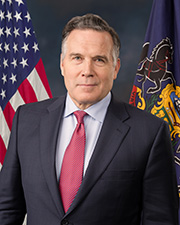
Sen. David McCormick
Sponsored bills
Maddy summaryThe ACCESS Act of 2026 amends the Securities Act of 1933 to raise the crowdfunding offering threshold requiring public accountant reviews from $100,000 to $250,000. This directly affects small businesses seeking to raise capital through crowdfunding, reducing the regulatory burden for smaller funding rounds. The bill also allows the Securities and Exchange Commission to potentially increase this threshold further (up to $400,000) based on recommendations from small business and investor advocacy offices. These changes aim to streamline capital access for small businesses by adjusting the point at which more rigorous financial reviews are mandated.
Maddy summaryThis bill allows closed-end investment companies (like certain mutual funds and business development companies) to invest their assets in private investment funds without SEC restrictions. It prevents the SEC from blocking such investments or imposing conditions on the sale or listing of these companies' securities, except for unrelated requirements. The bill updates definitions to align with existing terms for "private funds" (e.g., hedge funds) and clarifies that it doesn’t change fiduciary duties or valuation rules for these companies. This directly affects investment firms seeking greater flexibility in portfolio management.
Maddy summaryS 3643 establishes an independent Office of the Special Inspector General (SIG) specifically to audit and investigate fraud, waste, and abuse in U.S. federal child assistance programs (such as child care and nutrition funding). The SIG, appointed by the President, has authority to conduct audits and investigations without interference from agencies like Health and Human Services or Agriculture, and must report quarterly to Congress with detailed spending data on these programs. Key provisions require the SIG to publish reports publicly, mandate transparency in major contracts involving child assistance funds, and ensure agencies provide necessary cooperation. The office is funded at $10 million annually for fiscal years 2026-2027 and terminates on September 30, 2027.
Maddy summaryThis bill requires U.S. investors to divest from securities of Chinese military companies identified under existing defense laws. It mandates the Treasury Department to add these companies to the Non-SDN Chinese Military-Industrial Complex Companies List (NS-CMIC List) within 90 days of Defense Department identification. U.S. persons must sell such securities within one year of a company's listing on the NS-CMIC List, with the divestment period starting on the listing date. The policy implements prior executive orders and defense procurement restrictions by extending them to securities markets, directly affecting U.S. investors holding shares in listed Chinese military-linked entities.
Maddy summaryThis bill amends the National School Lunch Program to allow schools participating in the program to serve whole milk as an option to students, in addition to reduced-fat and fat-free milk. It permits schools to offer whole milk (organic or non-organic), reduced-fat, low-fat, and fat-free milk, as well as lactose-free milk and nutritionally equivalent nondairy beverages that meet specific nutritional standards. The bill clarifies that milk fat in whole milk should not be counted as saturated fat for compliance with meal nutrition standards. Additionally, it requires schools to include food allergy information in training for food service personnel. These changes directly affect schools participating in the National School Lunch Program and the students who eat school meals.
Maddy summaryThis bill increases base pay for Federal correctional officers by 35% above their current General Schedule or law enforcement officer rates, replacing their existing base pay for all compensation purposes. It directly affects Bureau of Prisons correctional officers whose duties involve inmate custody, control, or routine direct contact in custodial settings, including certain supervisory roles. The pay increase is capped at the rate for Executive Schedule Level V (for officers) or Level IV (for Federal Wage System employees), and expires after five years unless the Department of Justice Inspector General certifies progress in reducing non-custodial staff "augmentation" and excessive overtime. The law requires a review 180 days before expiration to assess staffing changes and impacts on recruitment, retention, and safety.
Maddy summaryS 3610, the "No Funding for Foreign Agents Act," prohibits U.S. government funding to entities controlled by agents of specific foreign governments. It bars direct or indirect U.S. financial assistance (including grants, loans, and vouchers) from being provided to any organization controlled by an agent of a "covered foreign principal," defined as governments of nations including China, Russia, Iran, North Korea, and several African countries listed in the bill. The law specifically targets entities acting under the direction of these foreign governments, excluding individuals or U.S.-based organizations not controlled by such agents. This policy change restricts federal funding eligibility for foreign-influenced groups without altering existing foreign aid programs.
Maddy summarySRES 288 is a Senate resolution condemning recent ideologically motivated attacks on Jewish individuals, including a violent assault in Boulder, Colorado, on June 1, 2025, and other incidents like the attack on Israeli Embassy staff in Washington, D.C., and fires at the Pennsylvania Governor’s Residence. The resolution formally expresses the Senate’s condemnation of these acts as part of a growing pattern of antisemitism and politically motivated violence. It reaffirms the Senate’s commitment to protecting peaceful assembly and religious practice, while urging federal, state, and local law enforcement to thoroughly investigate such incidents and calling on community leaders to publicly oppose antisemitism. This resolution has no legal effect but serves as a formal statement of the Senate’s position.
Maddy summaryThis is a Senate resolution (SRES 573), not a legislative bill, expressing the Senate's position on U.S. leadership in religious freedom. It reaffirms the U.S. commitment to promoting religious freedom globally, encourages the Secretary of State to use diplomatic tools to address foreign violations, and supports existing roles like the Ambassador-at-Large for International Religious Freedom. The resolution does not create new laws or change policies but serves as a symbolic statement urging continued U.S. engagement on this issue. It directly affects U.S. diplomatic efforts and messaging toward countries with religious freedom concerns, such as China and Nicaragua, as cited in the resolution's background.