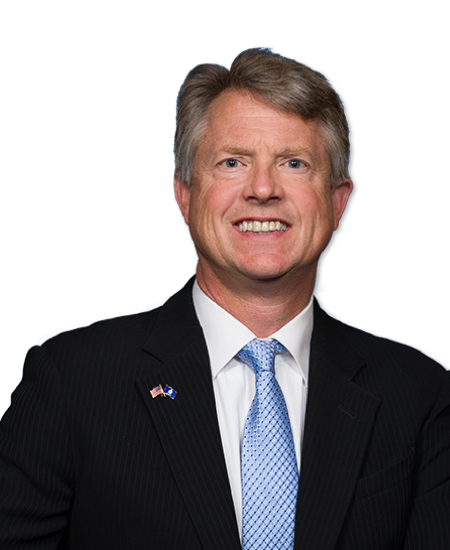
Photo of Roger Marshall
R United States Senate · Kansas On the 2026 ballot

Sen. Roger Marshall

Compare
Total votes
1,044
all sessions
Attendance
98%
17 missed
Near the chamber average
With party
93%
of cast votes
Higher than 87% of chamber peers
Bipartisan score
4%
crosses aisle rarely
Lower than 89% of chamber peers
Sponsored
1,335
bills & resolutions
Near the chamber average
Committees
11
assignments
1,335 bills and resolutions

Sponsored bills

Total
1,335
Primary
216
Co-sponsor
1,119
This page
1,335
matching current filters
Co-sponsor S 2507
In committee · Florida Senate · Co-sponsor
DAIRY PRIDE Act

Maddy summaryThis bill establishes that food products cannot use dairy product names like "yogurt," "milk," or "cheese" unless they meet specific U.S. Food and Drug Administration (FDA) standards for dairy. It directly affects food manufacturers who currently market non-dairy products (e.g., plant-based milks) using traditional dairy names. The bill amends federal law to require that any food using such names must be made primarily from mammal milk (lacteal secretion), not plant-based ingredients, and clarifies that the FDA will enforce this rule through new guidance. The FDA must issue enforcement guidance within 180 days and report on enforcement actions to Congress within two years.

In committee Jul 29, 2025 1 co-sponsor
Co-sponsor S 2491
In committee · Florida Senate · Co-sponsor
SAFE Sunscreen Standards Act

Maddy summaryThe SAFE Sunscreen Standards Act changes how the U.S. Food and Drug Administration (FDA) evaluates the safety and effectiveness of active ingredients in over-the-counter sunscreens. It allows the FDA to use real-world evidence (like data from actual product use) alongside traditional clinical trials and requires the agency to consider non-animal testing methods for these products. The bill also directs the FDA to base final decisions on historical safety data for existing sunscreens and the role of broad-spectrum sunscreens with SPF 15 or higher in skin cancer prevention. Additionally, the FDA must submit annual reports to Congress on implementing these new standards and progress toward non-animal testing.

In committee Jul 29, 2025 1 co-sponsor
Co-sponsor S 2426
In committee · Florida Senate · Co-sponsor
Equitable Community Access to Pharmacist Services Act

Maddy summaryThis bill expands Medicare Part B coverage to include specific pharmacist services, directly affecting Medicare beneficiaries and pharmacists who provide these services. It defines "pharmacist services" as evaluations and treatments for illnesses like COVID-19, flu, RSV, or strep throat, or services addressing public health emergencies, requiring collaboration with physicians as state law permits. Medicare would pay 80% of the lower of the actual charge or 85% of the physician payment rate (100% for public health emergencies), and prohibits balance billing for these services. The changes take effect January 1, 2026.

In committee Jul 24, 2025 1 co-sponsor
Co-sponsor S 2461
In committee · Florida Senate · Co-sponsor
Promotion and Expansion of Private Employee Ownership Act of 2025

Maddy summaryThis bill extends tax deferral for company stock sold to employee stock ownership plans (ESOPs) and fixes a rule that previously caused small businesses to lose government benefits after 49% ownership transferred to an ESOP. It creates a new Treasury Department office to provide education and technical assistance for companies adopting ESOPs, and establishes a Labor Department Advocate for Employee Ownership to coordinate federal efforts and promote employee ownership. These changes directly affect S corporations considering ESOPs, current ESOP-owned businesses, and small businesses seeking to maintain eligibility for government programs. The bill focuses on removing barriers to employee ownership through concrete tax, eligibility, and support mechanisms.

In committee Jul 24, 2025 1 co-sponsor
Co-sponsor S 2401
In committee · Florida Senate · Co-sponsor
287(g) Program Protection Act

Maddy summaryThis bill strengthens the federal 287(g) program, which allows state and local law enforcement agencies to collaborate with U.S. Immigration and Customs Enforcement (ICE) on immigration enforcement. It requires the Department of Homeland Security (DHS) to approve state/local requests for 287(g) agreements unless there is a compelling reason to deny them, prohibits limiting the number of agreements, and prevents arbitrary termination of existing agreements without due process. The bill also mandates annual public reports tracking participation, outcomes (like arrests and removals), compliance with training standards, and reasons for any agreement terminations. Additionally, it clarifies funding for the program by adding 287(g) expenses to the Breached Bond/Detention Fund and requires DHS to establish uniform training standards aligned with federal law enforcement training.

In committee Jul 23, 2025 1 co-sponsor
Co-sponsor S 2421
In committee · Florida Senate · Co-sponsor
CLEAR Waters Act

Maddy summaryThe CLEAR Waters Act (S 2421) clarifies the definition of "navigable waters" under the Clean Water Act by explicitly excluding certain water features from federal regulation. It directly affects wastewater treatment facilities (like lagoons and ponds), seasonal streams that flow only after rain, and groundwater by removing them from the Clean Water Act's jurisdiction. Key provisions add specific exclusions to the definition, including waste treatment systems, ephemeral features, groundwater, and future exclusions determined by the EPA and Army Corps. This changes which water bodies require federal permits for pollution control, shifting oversight away from these excluded features.

In committee Jul 23, 2025 1 co-sponsor
Primary S 2420
In committee · Florida Senate · Lead sponsor
No Surprises Act Enforcement Act

Maddy summaryThis bill strengthens enforcement of the No Surprises Act by increasing penalties for health insurance plans and providers that violate balance billing rules, raising fines from $100 to $10,000 per violation. It also adds new penalties for late payments after Independent Dispute Resolution (IDR) decisions, requiring plans to pay three times the difference plus interest for failing to make timely payments. The bill requires regular reporting to Congress about audits, enforcement actions, and penalties related to surprise billing violations. These changes directly affect health insurance companies, group health plans, and medical providers who don't participate in insurance networks.

In committee Jul 23, 2025 0 co-sponsors
Co-sponsor S 2362
In committee · Florida Senate · Co-sponsor
Ending Lending to China Act of 2025

Maddy summaryS 2362, the Ending Lending to China Act of 2025, directs the U.S. Treasury to instruct American representatives at multilateral development banks (like the World Bank and Asian Development Bank) to oppose all new loans and financial assistance to China. It targets China specifically because the bill states China has "graduated" from needing such aid (exceeding the income threshold for borrowing since 2016). The bill requires the Treasury to submit annual reports to Congress on China’s borrowing status, voting power at these banks, and efforts to encourage other countries to graduate from borrowing eligibility. This legislation changes U.S. voting policy at these institutions but does not alter China’s actual eligibility or stop existing loans.

In committee Jul 21, 2025 1 co-sponsor
Primary S 2316
In committee · Florida Senate · Lead sponsor
Cooper Davis and Devin Norring Act

Maddy summaryS 2316, the Cooper Davis and Devin Norring Act, requires electronic communication service providers and remote computing services to report to the Attorney General when they have actual knowledge of certain drug-related crimes involving fentanyl, methamphetamine, counterfeit prescription drugs, or unauthorized prescription medications. Providers must submit detailed reports within 60 days, including account information and relevant data about the crime, but not the content of communications. The bill imposes civil penalties of up to $190,000 for failing to report and $100,000 for submitting false reports, while protecting providers from being required to monitor content or scan for violations. It exempts broadband internet and text messaging service providers from these requirements and mandates annual reports from the Attorney General on the number and outcomes of submitted reports. The law aims to improve law enforcement's ability to address drug trafficking while maintaining privacy protections for users.

In committee Jul 17, 2025 0 co-sponsors
Co-sponsor S 331
Signed into law · Florida Senate · Co-sponsor
HALT Fentanyl Act

Halt All Lethal Trafficking of Fentanyl Act or the HALT Fentanyl Act This act permanently places fentanyl-related substances as a class into schedule I of the Controlled Substances Act. A schedule I controlled substance is a drug, substance, or chemical that has a high potential for abuse; has no currently accepted medical value; and is subject to regulatory controls and administrative, civil, and criminal penalties under the Controlled Substances Act. Under the act, offenses involving fentanyl-related substances are triggered by the same quantity thresholds and subject to the same penalties as offenses involving fentanyl analogues (e.g., offenses involving 100 grams or more trigger a 10-year mandatory minimum prison term). Additionally, the act establishes a new, alternative registration process for certain schedule I research. The act also makes several other changes to registration requirements for conducting research with controlled substances, including permitting a single registration for related research sites in certain circumstances, waiving the requirement for a new inspection in certain situations, and allowing a registered researcher to perform certain manufacturing activities with small quantities of a substance without obtaining a manufacturing registration. Finally, the act expresses the sense that Congress agrees with the interpretation of the Controlled Substances Act in United States v. McCray , a 2018 case decided by the U.S. District Court for the Western District of New York. In that case, the court held that butyryl fentanyl, a controlled substance, can be considered an analogue of fentanyl even though, under the Controlled Substances Act, the term controlled substance analogue specifically excludes a controlled substance.

Signed into law Jul 16, 2025 1 co-sponsor
Showing 191 to 200 of 1,335 bills
Previous 1 … 19 20 21 … 134 Next