Maddy summaryThe REAL Butter Act requires food manufacturers to clearly label products made from lab-created milkfat as "lab-created butter" on their packaging. This rule applies to any item marketed as butter that uses non-agricultural sources for its milkfat instead of traditional dairy. The law defines these products specifically as those that do not meet the existing federal standard of identity for butter. By mandating this specific wording on labels, the bill aims to ensure consumers can easily distinguish between traditional butter and synthesized alternatives.
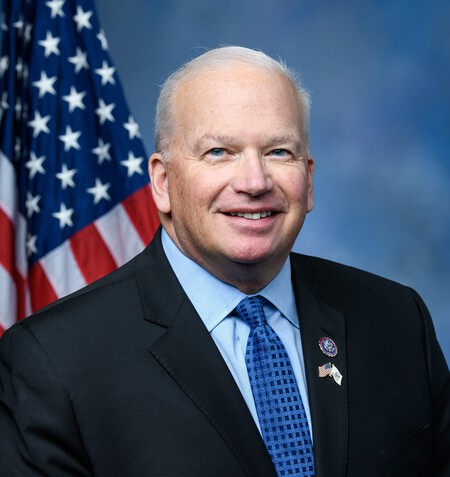
Rep. Scott Fitzgerald
Sponsored bills
Maddy summaryThe Foreign Adversary Patent Disclosure Act requires inventors to reveal specific ties to five designated foreign nations, including China, Russia, Iran, Cuba, and North Korea, when filing patent applications. Under this law, applicants must disclose if anyone with an ownership interest in the invention was employed by an entity controlled by these countries, received funding from state-affiliated programs, or obtained financial incentives related to the patent within the five years prior to submission. The bill also allows patent officials to request supporting documents for these disclosures while keeping them confidential, but it exempts small businesses that already report foreign ownership under existing Small Business Act rules.
Maddy summaryThis bill prohibits the U.S. Patent and Trademark Office from issuing or enforcing patents for inventions created by individuals or companies identified as threats to national security. Specifically, it bars patents for entities listed on the Chinese Military-Industrial Complex Companies List, designated Chinese military companies, or those providing equipment on the FCC's untrusted networks list. While the law prevents these entities from receiving or enforcing patents, it does not stop them from submitting patent applications, and it includes a provision allowing the President to grant temporary waivers if national security interests do not require the prohibition.
Maddy summaryThe BRIDGE Act directs the U.S. government to create a unified strategy to counter China's Belt and Road Initiative, which the bill defines as a global infrastructure project aimed at expanding Chinese influence. It requires the Secretary of State, along with other federal leaders, to submit a detailed report within 180 days outlining how China uses this initiative to challenge the U.S.-led international order and proposing a coordinated plan to respond. The legislation mandates that this strategy include specific goals, a timeline for execution, and a roadmap for aligning U.S. efforts with allies, particularly in the Indo-Pacific region. Additionally, the act requires a follow-up implementation plan within one year that sets clear metrics and evaluation methods to track progress against these objectives.
Maddy summaryThis bill, known as the Thwarting Regional Adversary Investments Now Act, aims to help governments in South and Central Asia better understand the risks associated with accepting investments from foreign adversaries. It requires the U.S. Secretary of State to provide training to officials in these countries on how to analyze and mitigate legal and financial dangers posed by such external investments. Additionally, the legislation mandates that the Secretary submit annual reports to Congress detailing the training provided and reviewing specific agreements between these nations and foreign adversaries. The law defines "foreign adversary" as entities with a history of actions harmful to U.S. national security and requires the State Department to consult with various federal agencies when carrying out these duties.
Maddy summaryThis bill, known as the State Emissions Authority Act of 2026, modifies the Clean Air Act to reduce federal mandates on vehicle inspection and maintenance programs. It primarily affects state governments by removing requirements for them to maintain specific inspection schedules and by limiting the federal government's ability to credit states for emissions reductions achieved through these programs. Additionally, the legislation adjusts rules regarding how states must report their environmental plans and clarifies compliance standards for federal vehicles and installations. By striking several existing sections of the law, the bill effectively shifts more authority over vehicle inspection policies from the federal level to the states.
Medal of Sacrifice Act of 2025 This act directs the President to issue a medal of sacrifice for eligible law enforcement officers and first responders who are killed in the line of duty. The act also directs the President to establish a commission on the medal of sacrifice and appoint its members. The act sets forth responsibilities of the commission, including to advise on the design of the medal and determine how the medal will be presented. Under the act, eligible law enforcement officers and first responders include federal, state, local, tribal, or territorial law enforcement officers or first responders who are not subject to an official act of wrongdoing (e.g., a determination that the officer or first responder acted outside the scope of their duties or in a manner that was not in accordance with official policies or procedures). A law enforcement officer or first responder who is subject to an official act of wrongdoing is generally not eligible for the medal of sacrifice. However, in the case of such an officer or first responder, the act requires the commission to investigate the circumstances surrounding the officer or first responder's cause of death and issue a final determination on their eligibility.
Maddy summaryHRES 1314, the America 250 Commemorative Flag Act, designates a special flag featuring the number 250 within the circle of stars as an official United States flag for the 250th anniversary of the Declaration of Independence. This resolution authorizes the America 250 flag to be flown alongside the national flag and POW/MIA flags at all government buildings, embassies, and official U.S. locations worldwide during the commemoration year. The bill serves as a ceremonial measure to honor the nation's history and the sacrifices made by patriots, without altering any existing laws or policies.
Maddy summaryThis bill modifies federal rules to allow adults with disabilities aged 18 and older to work for employers at wages below the standard minimum rate, whereas the previous law restricted this option to individuals under 24. It requires these employers to make documented efforts to find suitable jobs for their employees at regular intervals and permits the use of subminimum wages only if state agencies fail to provide necessary job counseling and referrals. Additionally, the bill mandates that employers must provide copies of these job search records to the individuals they employ. These changes aim to expand employment opportunities for adults with disabilities while maintaining specific oversight to ensure they are not denied access to regular competitive employment.
Maddy summaryThis bill would add pharmacist services to Medicare Part B coverage for beneficiaries, specifically covering pharmacist-led testing and treatment for illnesses like flu, COVID-19, or strep throat during public health emergencies. It defines covered services as those performed under state law, often requiring collaboration with a physician, and sets payment at 80% of the lesser of the actual charge or 85% of physician payment rates. Pharmacists would be prohibited from balance billing for these services, ensuring Medicare beneficiaries pay only their standard copayment. The changes would take effect January 1, 2026.