

Maddy summaryHR 2514, the Trucker Bathroom Access Act, requires businesses like warehouses, distribution centers, and shipping facilities (but not small restaurants under 800 sq ft) to allow commercial truck drivers access to their restrooms when delivering goods or waiting to load cargo. It also mandates that port terminals provide sufficient restrooms for drayage truck operators (drivers of large trucks moving cargo at ports) in safe, accessible areas, including parking spots for vehicle access. The bill does not require businesses to make physical restroom changes and exempts locations where access would create health, safety, or security risks. It defines "covered drivers" as those operating commercial vehicles regulated by the Department of Transportation and "covered restrooms" as those safely accessible to drivers. This law directly affects truck drivers and the businesses they interact with during deliveries or port operations.
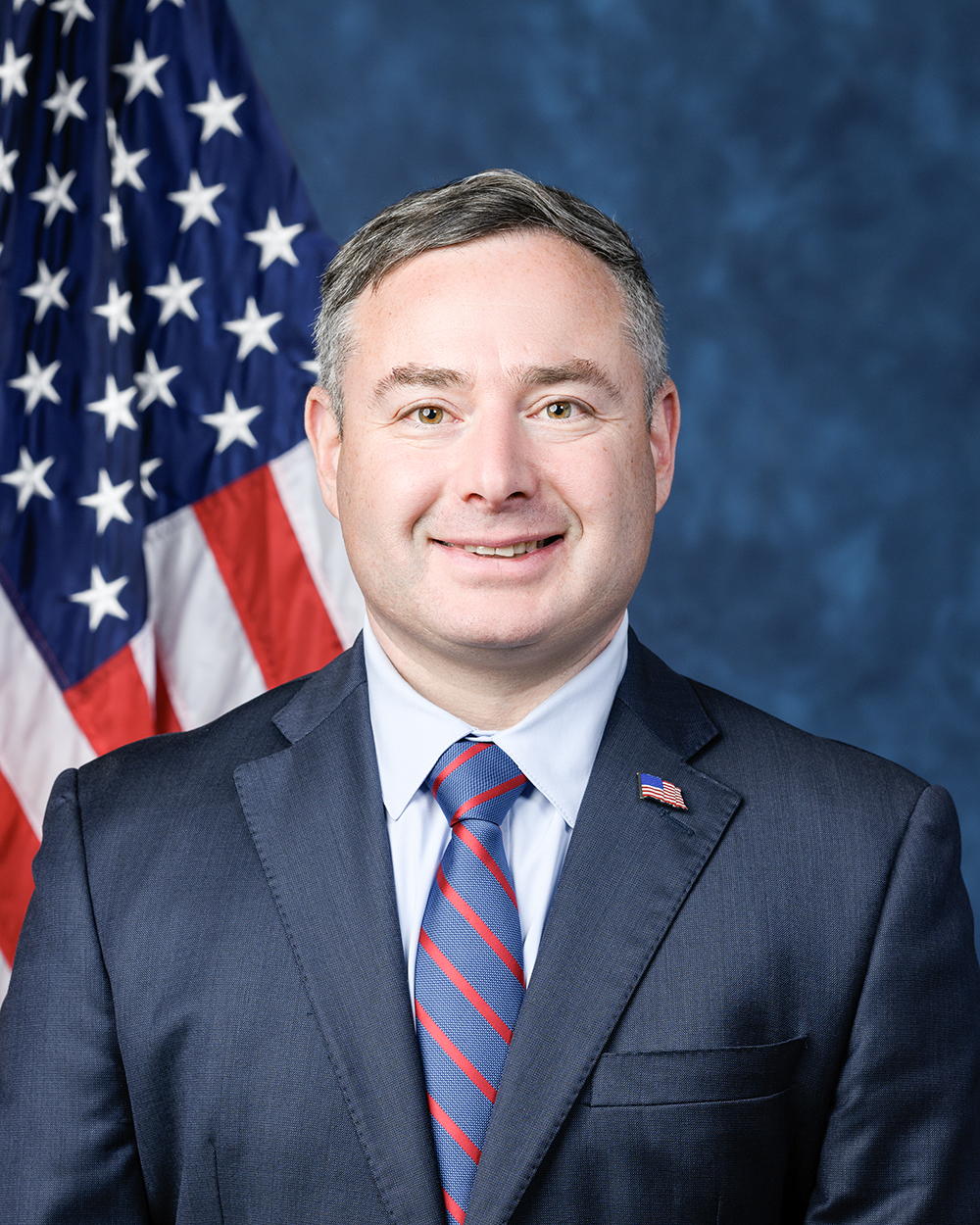
Rep. Eugene Simon Vindman
Sponsored bills
Maddy summaryThis bill establishes new security cooperation mechanisms between the United States, Israel, Greece, and Cyprus to enhance counterterrorism and maritime security efforts in the Eastern Mediterranean. It creates two new working groups - an interparliamentary group for legislative coordination and an interexecutive group for executive-level security discussions - that will meet at least twice yearly. The bill authorizes funding for specialized training programs at the Cyprus Center for Land, Open-seas, and Port Security and at Greece's Souda Naval Base to improve interoperability among these nations. It also requires regular reports to Congress on the implementation of these security cooperation initiatives.
Maddy summaryHR 2485, the Arts Education for All Act, requires states and school districts to integrate arts education into K-12 curricula and report on its availability. It mandates states to describe how they will support arts courses, increase certified arts educators (especially in high-need schools), and use arts to enhance teaching in core subjects like math and science (Section 202). Schools must track and report on arts course offerings, teacher qualifications, and student access - including disaggregated data by school poverty levels (Section 203). The bill also expands arts access in juvenile justice programs (Section 301) and funds research on effective arts education methods (Section 401). It directly affects public schools, arts educators, and youth in after-school and correctional settings.
Maddy summaryHR 2526, the Bus Parity and Clarity Act, clarifies that over-the-road buses operating in scheduled or charter service must pay the same tolls and access terms as public transit buses at toll roads, bridges, tunnels, and HOV lanes. It updates federal definitions to explicitly include "charter service" under existing equal access rules and requires toll facilities to offer these buses identical rates. The bill mandates the Federal Highway Administration to publish a public database of toll rates and terms within 180 days of enactment. This directly affects commercial bus operators using toll infrastructure, ensuring they receive equitable treatment compared to public transit vehicles.
Maddy summaryHR 2509, the COMPLETE Care Act, creates Medicare payment incentives for primary care providers who integrate specific behavioral health services into their practice. It directly affects Medicare providers offering services identified by HCPCS codes 99484, 99492, 99493, 99494, G2214, and G0323 (covering models like Collaborative Care and Primary Care Behavioral Health) during 2027-2029. The bill increases Medicare payments for these services to 125-175% of standard rates (phasing down from 175% in 2027 to 125% in 2029) and waives budget neutrality rules to fund these higher payments. Additionally, it requires the HHS Secretary to provide technical assistance to primary care practices adopting these models by 2026, with dedicated funding for 2025-2029.
Maddy summaryThe ABC Act (HR 2491) requires the Centers for Medicare & Medicaid Services and the Social Security Administration to review and simplify eligibility processes, forms, and communications for Medicare, Medicaid, CHIP, and Social Security programs. It specifically aims to reduce duplicate paperwork for family caregivers - defined as individuals supporting people with disabilities or health needs - and improve accessibility through features like ADA-compliant websites, translation services, and reduced call wait times. The agencies must gather input from caregivers and organizations, then implement changes to streamline interactions. Within two years, they must report findings and proposed actions to Congress, with follow-up reports every two years. This procedural bill focuses on administrative improvements, not new benefits.
Maddy summaryThe FARMLAND Act of 2025 strengthens oversight of foreign ownership of U.S. agricultural land, particularly from countries like China and other "foreign entities of concern" as defined in the law. It requires agricultural land buyers to conduct due diligence and certify compliance, creates civil penalties for false or missing reports, and prohibits foreign persons from participating in Farm Service Agency programs. The bill mandates annual reports to Congress on foreign ownership of farmland by specific countries and requires development of a centralized database tracking foreign ownership. It also expands the Committee on Foreign Investment in the United States' authority to review certain real estate transactions involving foreign entities of concern.
Amplifying Processing of Livestock in the United States Act or the A–PLUS Act This bill directs the Department of Agriculture (USDA) to revise its regulations to allow certain packers to hold an ownership interest in, finance, or participate in the management or operation of a market agency selling livestock on a commission basis. The bill applies to packers that have a cumulative slaughter capacity of (1) less than 2,000 animals per day or 700,000 animals per year with respect to cattle or sheep, and (2) less than 10,000 animals per day or 3 million animals per year with respect to hogs. In addition, USDA must revise its regulations to include a disclosure requirement for a market agency that has an ownership interest in, finances, or participates in the management or operation of a packer. Specifically, the market agency must disclose the existence of such ownership interest, financial relationship, or participation.
Maddy summaryThe Farm to Fly Act of 2025 amends agricultural programs to include sustainable aviation fuel (SAF) as a qualifying biofuel, directly affecting U.S. farmers, agricultural producers, and the aviation industry by creating new market opportunities. It defines SAF with specific requirements - meeting ASTM standards, not derived from palm oil or petroleum, and achieving at least a 50% lifecycle greenhouse gas emissions reduction compared to jet fuel. The bill mandates the Secretary of Agriculture to lead a new collaboration initiative focusing on advancing SAF development through partnerships with farmers, rural economic support, and public-private partnerships. Additionally, it expands existing manufacturing assistance programs to include SAF production, aiming to strengthen domestic energy security and grow markets for agricultural feedstocks.
Save America's Forgotten Equines Act of 2025 or the SAFE Act of 2025 This bill permanently prohibits the slaughter of equines (e.g., horses and mules) for human consumption. (Current law prohibits the slaughter of dogs and cats for human consumption. This bill extends the prohibition to equines.) Specifically, this bill prohibits a person from knowingly (1) slaughtering an equine for human consumption; or (2) shipping, transporting, possessing, purchasing, selling, or donating an equine to be slaughtered for human consumption or equine parts for human consumption. The bill subjects a violator to a fine. The bill applies to conduct in or affecting interstate or foreign commerce or within the special maritime and territorial jurisdiction of the United States. However, it does not apply to an activity carried out by an Indian for a religious ceremony. As background, in recent years, the appropriations acts have prohibited the Department of Agriculture (USDA) from using federal funds to inspect horses before they are slaughtered for human consumption. Therefore, there are currently no USDA-inspected horse slaughter facilities in the United States.