Maddy summaryHR 1212 requires the Department of Homeland Security (DHS) to annually assess terrorism threats from terrorist groups using foreign messaging apps like Telegram, WeChat, and Weibo. The assessments must analyze how these apps facilitate radicalization, funding, and recruitment, while ensuring compliance with privacy and civil liberties laws. DHS must share findings with Congress and state/local fusion centers, and post unclassified reports publicly. This is a procedural bill focused on monitoring and reporting threats, not on banning apps or changing policies.
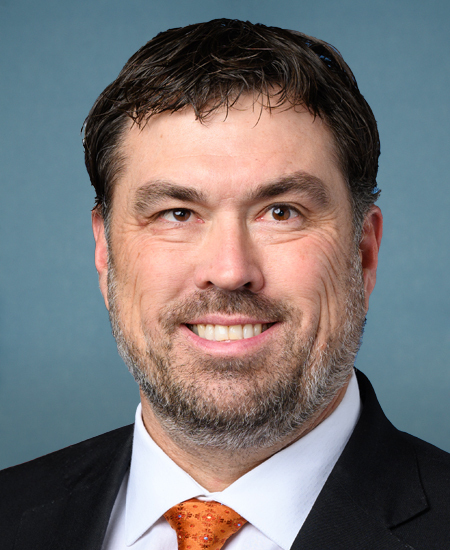
Rep. Morgan Luttrell
Sponsored bills
Maddy summaryThis bill designates the Department of Veterans Affairs community-based outpatient clinic in Lubbock, Texas, as the "General Bernie Mittemeyer VA Clinic" upon enactment. It updates all official references in federal laws, documents, and records to reflect this new name. The bill does not alter services, funding, or operations at the clinic - its sole purpose is to honor General Bernie Mittemeyer through a ceremonial naming designation. This change affects only the clinic's official identification within federal systems.
Cartel And Radical Terrorist Enforcement Log Act of 2025 or the CARTEL Act of 2025 This bill requires U.S. Customs and Border Protection to publish each month statistics related to encounters and arrests. The report must include, for example, the total number of individuals affiliated with transnational criminal organizations who have repeatedly attempted to cross unlawfully into the United States. The Department of Homeland Security must report annually on foreign terrorist organizations and transnational criminal organizations attempting to move their members or affiliates into the United States through the southern, northern, or maritime border.
Fair Access to Banking Act This bill places restrictions on certain banks, credit unions, and payment card networks if they refuse to do business with a person who complies with the law. Restrictions include prohibiting the use of electronic funds transfer systems and lending programs, termination of an institution's depository insurance, and specified civil penalties. Banks and other specified financial institutions are allowed to deny financial services to a person only if the denial is justified by a documented failure of that person to meet quantitative, impartial, risk-based standards established in advance by the institution. This justification may not be based upon reputational risks to the institution. The bill establishes the right for a person to bring a civil action for a violation of this bill.
Maddy summaryThis bill requires annual health assessments for all active-duty military members beginning in 2026. It mandates specific tests including a sports physical, an annual heart test (electrocardiogram), and detailed blood work covering metabolic and blood count panels, plus optional thyroid and heart-related tests if needed. The bill also ensures these assessments include any existing health evaluations required by prior laws, such as those from the 2020 National Defense Authorization Act. The policy directly affects all active-duty service members in the U.S. military.
Maddy summaryHRES 71 is a symbolic House resolution condemning Mexico for not meeting annual water delivery obligations to the U.S. under the 1944 U.S.-Mexico treaty governing the Colorado, Tijuana, and Rio Grande rivers. The resolution specifically states that the House "condemns the Government of Mexico for failing to fulfill its water deliveries" as required by the treaty. It does not impose new requirements or penalties but serves as a formal expression of disapproval. This resolution directly addresses the U.S. government's position regarding Mexico's compliance with the existing treaty terms. As a procedural resolution, it has no binding legal effect on water delivery operations.
Life at Conception Act This bill declares that the right to life guaranteed by the Constitution is vested in each human being at all stages of life, including the moment of fertilization, cloning, or other moment at which an individual comes into being. Nothing in this bill shall be construed to authorize the prosecution of any woman for the death of her unborn child.
Maddy summaryHR 21, the Born-Alive Abortion Survivors Protection Act, requires medical staff at abortion facilities to provide the same immediate care and hospital admission to any infant born alive during an abortion as they would for any newborn. It mandates reporting failures to provide this care to law enforcement and imposes penalties of up to 5 years in prison for violations, with harsher penalties for intentional killing. The bill also allows women who undergo abortions to sue for civil damages, including triple the abortion cost, and provides for attorney fees. It defines "abortion" to exclude procedures performed after viability to preserve a live birth. This law directly affects healthcare providers at abortion facilities and creates new federal legal obligations for them.
Maddy summaryHR 645, the National Constitutional Carry Act, would prevent all U.S. states and localities from requiring permits or imposing penalties for carrying firearms in public. It directly affects eligible U.S. citizens (including non-residents) who legally possess firearms under state and federal law, removing current permit requirements for public carry. The bill’s key provision amends federal law to invalidate any state or local law that criminalizes or discourages public firearm carry, except where private property owners clearly prohibit firearms or security screening occurs. This would override existing state permit laws, making permitless carry legal across all states and territories for qualified individuals.
Maddy summaryHR 703, the Main Street Tax Certainty Act, makes a key tax deduction permanent for small business owners. It removes the temporary sunset provision (subsection (i)) from Section 199A of the tax code, ensuring the qualified business income deduction remains available for eligible small businesses. This change directly affects pass-through business owners (like S-corps, partnerships, and sole proprietorships) who currently qualify for this deduction. The permanent change takes effect for tax years starting after December 31, 2025.