

Maddy summaryThis bill protects licensed amateur radio operators' ability to install antennas for emergency communications by preventing homeowners' associations and private land use restrictions from blocking such installations. It requires communities to allow antennas that don’t impair emergency use, with exceptions only for safety, structural requirements, or minimal visual impact (e.g., screened enclosures). Small antennas (under 1 meter diameter), flagpoles (under 43 feet), and wire/vertical antennas don’t require prior approval, and communities must approve applications within 45 days. The law directly affects over 770,000 licensed amateur operators who rely on these antennas for life-saving emergency communications during disasters.
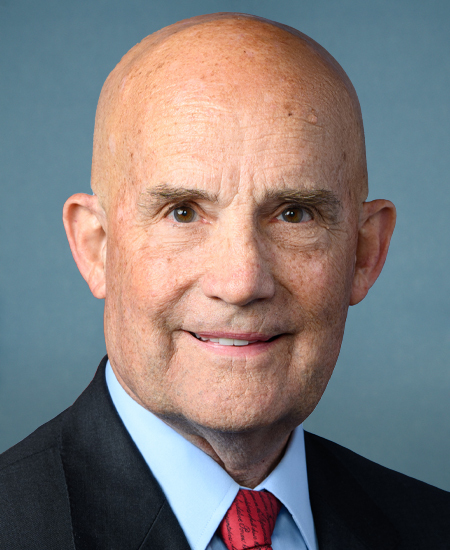
Rep. Keith Self
Sponsored bills
Maddy summaryH.J.Res. 116 seeks to block a Department of Labor rule finalized on January 10, 2024, which aimed to clarify how businesses classify workers as employees or independent contractors under the Fair Labor Standards Act (FLSA). If passed, this resolution would prevent the rule from taking effect, directly affecting businesses that use independent contractors and their workers, who rely on FLSA protections for minimum wage and overtime pay. The bill uses a specific congressional process (under Chapter 8 of Title 5, U.S. Code) to disapprove the rule, rather than creating new policy. This action would maintain the existing classification standards until a new rule is established.
Maddy summaryHR 7823, the Second Chance for Moms Act, requires new labeling on mifepristone (a medication used in medical abortions) and establishes a hotline. The bill mandates that mifepristone packaging include a warning label stating that natural progesterone may counteract the drug's effects, based on a statement from the American Society for Reproductive Medicine. It also directs the creation of a 24/7 toll-free hotline to provide support for women seeking to reverse the drug's effects. This bill directly affects pharmaceutical manufacturers (through labeling changes), healthcare providers, and women using mifepristone, with the labeling requirement taking effect six months after enactment.
Maddy summaryHR 6831, the VERDAD Reauthorization Act, extends existing U.S. sanctions and restrictions on Venezuela until December 31, 2025. It modifies four separate laws (the Russian-Venezuelan Threat Mitigation Act, Venezuelan Arms Restriction Act, Venezuela Emergency Relief Act, and Venezuela Defense of Human Rights Act) by updating their expiration dates from 2023 to 2025. The bill does not create new policies but ensures current measures remain in effect. This directly affects U.S. foreign policy enforcement toward Venezuela, maintaining economic restrictions and arms limitations. The key change is simply extending the sunset dates for these existing provisions.
Maddy summaryThis bill directs the U.S. Department of Homeland Security to implement the Migrant Protection Protocols (MPP) at the U.S.-Canada border, rather than the U.S.-Mexico border as previously applied. It requires asylum seekers arriving at the northern border to wait in Canada while their cases are processed, following the 2019 policy guidance. The bill directly affects individuals seeking asylum who cross into the U.S. from Canada. It makes no new funding or structural changes but shifts the geographic application of an existing policy. The summary reflects the bill’s concrete policy change without commentary on its implications.
Maddy summaryHR 7725 would block federal funding for graduate medical schools that require students or staff to adopt specific statements about race, gender, or identity (like claiming systemic racism or collective guilt), use race-based distinctions in admissions or programs, maintain DEI offices, or mandate "diversity statements" for admission. It directly affects graduate medical schools at colleges/universities receiving federal financial aid, including student loans. The bill exempts medical education about race-related health needs, demographic data collection for reporting, and religious institutions from adhering to policies conflicting with their beliefs. Schools violating these rules would lose eligibility for federal funds, though they could still comply with anti-discrimination laws and provide general academic instruction.
Maddy summaryHR 4278, the Restore VA Accountability Act of 2023, establishes new disciplinary procedures for VA supervisors and management officials (excluding senior executives and political appointees). It requires the VA Secretary to use "substantial evidence" for removal, demotion, or suspension, sets strict timelines (15 business days total for decisions), and creates a new internal grievance process. The bill limits judicial review to procedural errors, not penalty severity, and strengthens whistleblower protections by requiring Office of Special Counsel approval for disciplinary actions involving disclosures. This directly affects VA supervisors and managers whose performance or misconduct leads to disciplinary action.
Maddy summaryThe Laken Riley Act (HR 7511) would require federal authorities to detain non-citizens charged with or convicted of burglary, theft, larceny, or shoplifting offenses. It also creates new legal standing for state attorneys general to sue federal immigration officials in federal court if they believe immigration enforcement decisions (like releasing aliens or granting parole) cause financial harm exceeding $100 to the state or its residents. The bill amends immigration laws to expand detention requirements for certain property crimes and allows states to seek court orders to enforce immigration policies. It does not create new criminal penalties but modifies existing immigration enforcement procedures. The bill’s findings and political language about the Laken Riley case are not part of its policy provisions.
Maddy summaryHRES 1064 is a resolution passed by the U.S. House of Representatives recognizing that Texas operates its own electricity grid through the Electric Reliability Council of Texas (ERCOT), which serves over 26 million Texans and manages 52,700 miles of transmission lines. The resolution explicitly condemns any congressional or federal government action attempting to "federalize" Texas' electricity markets, which operate under the Texas Public Utility Commission and state legislature. It emphasizes that ERCOT is not subject to federal jurisdiction and rejects efforts to force connections to neighboring grids, as seen in previous legislative proposals. This resolution does not change laws but formally states the House's position supporting Texas' control over its energy system.
Maddy summaryHRES 1041 is a non-binding resolution introduced in the U.S. House of Representatives on February 29, 2024, that condemns the International Court of Justice's (ICJ) January 26, 2024, order requiring Israel to report on measures taken to comply with provisional measures related to South Africa's genocide case against Israel. The resolution specifically condemns the ICJ's order and South Africa's case, asserts Israel's right to self-defense against Hamas, and calls on the U.S. President to direct the Secretary of State to intervene in support of Israel. It does not impose legal requirements or alter policy, as resolutions like this express congressional opinion only.