Maddy summaryThis bill amends the Immigration and Nationality Act to add new grounds for deporting non-citizens. It makes any non-citizen deportable if they have been convicted of a felony or two misdemeanors (under either state or federal law) after entering the United States. The key provision expands deportation eligibility beyond previous standards by explicitly including state misdemeanor convictions alongside federal offenses. This change directly affects non-citizens with specific criminal records, potentially increasing deportation risks for those with certain convictions. The policy alters the legal standard for removal but does not change sentencing or enforcement procedures.
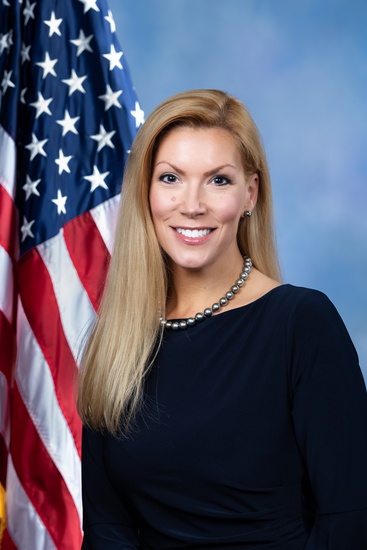
Rep. Beth Van Duyne
Sponsored bills
Maddy summaryThis bill amends the Federal Food, Drug, and Cosmetic Act to extend the destruction authority for counterfeit, adulterated, or misbranded tobacco products at U.S. borders, similar to existing rules for drugs and devices. It updates the law by adding "counterfeit tobacco product" to the list of items subject to destruction and replacing "drug or device" with "drug, device, or tobacco product" in relevant sections. As a result, U.S. border agencies like the FDA can now destroy illicit tobacco products upon import without needing separate legal authority. The bill does not affect the importation of legitimate tobacco products.
Maddy summaryHR 5926, the Mexican Energy Trade Enforcement Act, requires the U.S. Trade Representative to take specific actions to enforce Mexico's obligations under the USMCA regarding energy trade. It mandates either requesting a dispute resolution panel with Mexico under USMCA rules or demanding Mexico provide non-discriminatory market access for U.S. energy companies during the first USMCA review. The bill directly affects U.S. energy companies operating in Mexico and exporting energy to Mexico, which faced alleged preferential treatment of Mexico's state-owned energy firms (CFE and Pemex). The USTR must report to Congress within 90 days on actions taken under the law.
Maddy summaryThis bill ensures that critical firearm-related government operations continue during federal shutdowns. It designates background checks (via the FBI's National Instant Criminal Background Check System), Bureau of Alcohol, Tobacco, Firearms and Explosives enforcement, and firearm export licensing (handled by Commerce and State Departments) as essential services that must remain operational. These functions would be treated as "excepted" under federal law, meaning their employees would continue working even if other government services halt. The bill affects how background checks and firearm export licenses are processed during shutdowns but does not change gun ownership laws or eligibility.
Maddy summaryThe Caring for Mothers Act of 2025 requires health insurance plans to cover pregnancy-related care, postpartum care, and mental health services for birth mothers who place their newborns for adoption. It directly affects birth mothers (citizens or lawfully present individuals who are pregnant or within six months postpartum) and their health insurance plans. To activate coverage, an adoptive parent must submit a joint request with the birth mother, including attestations about the adoption plan. Coverage begins the month after the request is received and lasts up to one year from the child’s birth, ending if either party requests termination. The law explicitly states it does not require an adoption to proceed or impose penalties if adoption is not completed.
Maddy summaryHR 5813, the Women’s Health and Cancer Rights Modernization Act of 2025, requires health insurance plans to cover all medically necessary breast or chest wall reconstruction services following breast cancer treatment, including mastectomy or breast-conserving surgery. It mandates coverage for every reconstruction method (like implants, tissue flaps, or future recognized techniques), symmetrical surgery for the other breast, custom prostheses, and treatment of complications like lymphedema. Health plans must ensure at least one in-network provider for each reconstruction type, provide annual written notices to patients about this coverage, and cannot deny coverage or penalize providers for following these requirements. This applies to group and individual health insurance plans, with no effect on stricter state laws requiring broader coverage.
Maddy summaryHR 5815, the District of Columbia Medicaid Fairness Act, adjusts federal Medicaid funding for Washington D.C. by setting a specific Federal Medical Assistance Percentage (FMAP) for the district. It directly affects D.C. residents enrolled in Medicaid by guaranteeing a minimum federal funding share: 70% for fiscal years before 2027, gradually decreasing to 55% by 2029. For fiscal years 2030 and beyond, D.C. will receive the standard FMAP rate calculated under the Social Security Act, without the special adjustment. This change ensures D.C. receives a higher federal share than it would under the standard formula until 2029, after which it aligns with other states. The bill modifies Section 1905 of the Social Security Act to implement these funding adjustments.
Maddy summaryThis bill would require the U.S. Census Bureau to count only U.S. citizens, not all residents, when tabulating state populations for congressional apportionment based on the 2020 census. It mandates that states use this revised citizen-only count for determining congressional seats and all other purposes where they previously used total population data. States would lose federal grants if they do not adopt this revised count within 60 days of receiving it from the Commerce Secretary. The bill directly affects all 50 states by changing how they calculate representation and eligibility for federal funding tied to population data.
Maddy summaryThis bill would deny visas and immigration benefits to individuals who adhere to Sharia law, directly affecting immigrants and visa applicants. It allows officials to revoke existing immigration benefits, deport people found adhering to Sharia, and penalize false statements about Sharia adherence. Decisions under this law would be final and unreviewable by courts. The policy changes immigration eligibility based solely on adherence to Sharia law, with no judicial oversight.
Maddy summaryThis bill adds Medicare coverage for multi-cancer early detection screening tests (blood or biological tests analyzing cell-free DNA) starting January 1, 2028. It directly affects Medicare beneficiaries aged 68 and older (starting in 2028, with the age limit increasing by 1 year annually), requiring tests to be FDA-cleared and deemed reasonable/necessary by the Secretary for early cancer detection across multiple organ sites. Payment will initially match current stool DNA test rates before 2031, then shift to a lower rate or new payment system after 2031, with limits preventing more than one test per year. The bill explicitly states it does not alter coverage for existing cancer screenings like breast, colorectal, or prostate cancer tests.