

Save Our Shrimpers Act This bill prohibits federal funds from being made available to international financial institutions (e.g., the International Monetary Fund) for financing activities related to foreign shrimp farms. The bill also requires an annual report on compliance by U.S. leadership of international financial institutions with policies to oppose financing for certain commodities or minerals. Specifically, the bill requires the Department of the Treasury to condition any provision of federal funds to an international financial institution on the requirement that the funds not be used to finance any activity related to shrimp farming, shrimp processing, or the export of shrimp in any foreign country. Under current law, Treasury must instruct U.S. leadership of international financial institutions to oppose providing financial assistance for the production or extraction of any commodity or mineral for export if (1) the commodity or mineral is in surplus on world markets, and (2) the export of such commodity or mineral will cause substantial injury to U.S. producers of a competing commodity or mineral (or of the same or a similar commodity or mineral). This bill requires the Government Accountability Office to investigate and annually report to Congress on the extent to which U.S. leadership at these institutions have carried out Treasury's instructions.
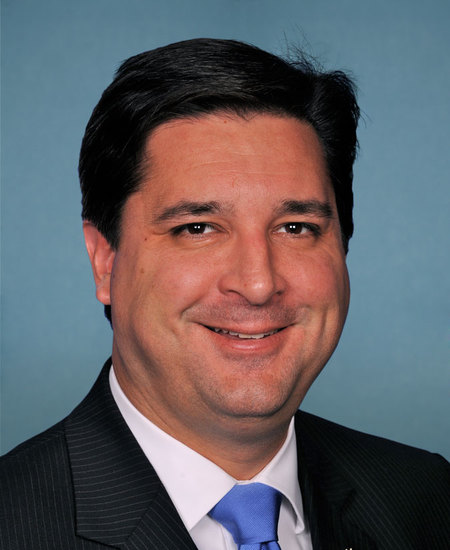
Rep. David Rouzer
Sponsored bills
Maddy summaryThe Prioritizing Primary Care Act of 2026 requires federal agencies managing health programs to submit annual reports detailing how much money they spend on primary care. To address these spending patterns, the bill mandates the creation of a working group that will study ways to increase primary care funding, improve provider access, and enhance service quality, particularly in rural and underserved areas. This working group will include members from various federal agencies and outside organizations, and it must gather input from states and healthcare stakeholders before submitting its recommendations to Congress.
Maddy summaryThis bill proposes to allow taxpayers to deduct interest payments on loans used to purchase certain vehicles, including cars, trucks, motorcycles, and recreational vehicles. The legislation defines eligible vehicles as those with fewer than 14,000 pounds gross vehicle weight rating or those designed for temporary living quarters like campers and trailers. These tax benefits would only apply to debts incurred after December 31, 2025, expanding the current rules that previously excluded most vehicle loans from interest deductions.
Maddy summaryThe FAIR Labels Act of 2026 establishes new labeling requirements for cell-cultivated protein products and plant-based alternatives designed to look like meat or poultry. It mandates that labels for these products prominently display the terms "cell-cultivated" or "plant-based alternative protein product" and include clear disclaimers stating the items are not derived from live animals or birds. Additionally, the bill updates regulatory oversight by requiring the USDA and FDA to revise their agreement, assigning the USDA primary responsibility for regulating cell-cultivated meat and poultry while the FDA oversees production safety and facility compliance. The legislation also directs these agencies to create common standards of identity for these products within 180 days of enactment.
Maddy summaryThis resolution formally welcomes King Charles III to the United States for his scheduled April 2026 visit and addresses a joint session of Congress. It reaffirms the long-standing special relationship between the two nations, highlighting their shared history, democratic values, and military cooperation. The document also calls for continued collaboration on defense, trade, and human rights issues. As a non-binding expression of sentiment, the resolution does not create new laws or alter existing policies.
Maddy summaryThe PROTECT Act requires the Department of Homeland Security to share safety and data protection guidelines with government agencies and private organizations within a year of passing. These guidelines focus on how to securely handle personal information for law enforcement officers and employees, as well as steps they can take to stay safe. The law defines personal information broadly to include any data that can identify an individual, regardless of their citizenship status. This initiative aims to improve security practices across federal, state, local, and private sectors without changing existing legal requirements for data handling.
Maddy summaryThis House Resolution proposes to formally "expunge" the two impeachments of President Donald Trump that passed the House of Representatives on December 18, 2019, and January 13, 2021. If passed, the resolution specifies that these impeachments would be treated "as if such Articles had never passed the full House of Representatives." This action directly affects President Trump by aiming to remove these impeachment proceedings from his official record and would alter the historical legislative record of the House. The resolution's text outlines several reasons for this action, including claims of wrongful accusations, lack of due process, and political bias in the original impeachment proceedings.
Maddy summaryThe Countering Russia's War on Faith Act requires the U.S. government to produce annual reports detailing how Russian forces in occupied Ukrainian territories are persecuting religious groups such as Christians, Jews, and Muslims. These reports must document specific actions like the destruction of religious sites, the detention of clergy, and efforts to force local faith communities to align with the Russian Orthodox Church. If the President certifies that specific individuals or entities are responsible for these violations, the law mandates imposing sanctions on them under existing U.S. regulations. The bill focuses on gathering factual information and enforcing penalties against those directly involved in religious persecution, without speculating on the broader geopolitical outcomes of these actions.
Equal Representation Act This bill requires that the statement sent by the President to Congress after the decennial census indicating the number of persons in each state exclude noncitizens. (This statement is the basis for reapportionment of U.S. Representatives.) The bill also requires any questionnaire used in the decennial census to include a checkbox or other similar option for respondents to indicate whether the respondent and each household member is (1) a U.S. citizen, (2) a U.S. national but not a citizen, (3) a non-U.S. national ( alien under federal law) lawfully residing in the United States, or (4) a non-U.S. national unlawfully residing in the United States. The Department of Commerce must make public the number of persons in each state, disaggregated by each of these four categories.
Maddy summaryThis House Resolution recognizes the efforts and public safety contributions of linemen and the important role they play in maintaining the nation's energy infrastructure. It expresses support for designating April 18, 2026, as "National Lineman Appreciation Day" and acknowledges linemen as first responders.