Death Tax Repeal Act This bill repeals the estate and generation-skipping transfer taxes. It also makes conforming amendments related to the gift tax.
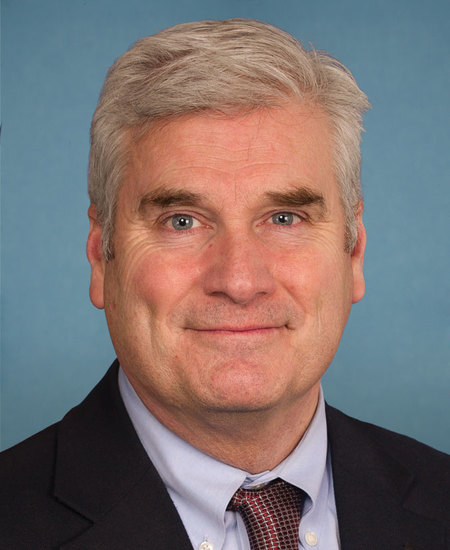
Rep. Tom Emmer
Sponsored bills
This bill expedites the approval process for renewable fuels under the renewable fuel standard (RFS) program. The existing RFS program requires transportation fuel to contain a minimum volume of renewable fuel. Producers must register renewable fuels under the program. The bill considers an application to register a renewable fuel under the RFS program to be approved by the Environmental Protection Agency (EPA) if the fuel has been approved under any state renewable fuel program. It also establishes a deadline for the EPA to make a decision on any pending application for a renewable fuel that has not yet been approved under any state program. In addition, the bill establishes deadlines for the EPA to make decisions on pending pathway petitions by producers to register biofuels. If the EPA does not make decisions on the petitions by the deadlines, then petitions are automatically approved.
Agricultural Intelligence Measures Act or the AIM Act This bill establishes the Office of Intelligence in the Department of Agriculture (USDA) under the National Intelligence Program. The office must leverage the capabilities of the intelligence community and the intelligence-related research of the National Laboratories to ensure that USDA is fully informed of threats by foreign actors to U.S. agriculture; focus on understanding foreign efforts to steal U.S. agriculture knowledge and technology, and develop or implement biological warfare attacks, cyber or clandestine operations, or other means of sabotaging and disrupting U.S. agriculture; prepare, conduct, and facilitate intelligence briefings for USDA; operate as the liaison between USDA and the intelligence community, with the authority to request intelligence collection and analysis on matters related to U.S. agriculture; collaborate with the intelligence community to downgrade intelligence assessments for broader dissemination within USDA; and facilitate the sharing of information on foreign activities related to agriculture with the intelligence community.
Retired Pay Restoration Act This bill allows the receipt of both military retired pay and veterans' disability compensation with respect to any service-connected disability. Under current law, only individuals with service-connected disabilities rated at 50% or more receive both without offset. Individuals who were retired or separated after at least 20 years of military service due to a service-connected disability shall be eligible for the full concurrent receipt of both veterans' disability compensation and either military retired pay or combat-related special pay.
This joint resolution proposes a constitutional amendment prohibiting total outlays for a fiscal year from exceeding total receipts for that fiscal year unless Congress authorizes the excess by a three-fifths roll call vote of each chamber. The prohibition excludes outlays for repayment of debt principal and receipts derived from borrowing. The amendment requires roll call votes of (1) three-fifths of each chamber of Congress to increase the public debt limit, and (2) a majority of each chamber for legislation increasing revenue. It also requires the President to submit a balanced budget to Congress annually. Congress is authorized to waive these requirements when a declaration of war is in effect or if the United States is engaged in a military conflict which causes an imminent and serious military threat to national security.
This resolution honors Officers Brian Sicknick and Howard Liebengood of the U.S. Capitol Police, and it commends the bravery and service demonstrated by officers of the U.S. Capitol Police, the Metropolitan Police Department of the District of Columbia, and the other law enforcement agencies and protective entities that assisted in responding to the January 6, 2021, attack on the U.S. Capitol.
Medicare Audiologist Access and Services Act of 2021 This bill provides for Medicare coverage of certain audiologist services. Specifically, the bill expands coverage to include diagnostic and treatment services that are furnished by audiologists and that would otherwise be covered if provided by a physician, including incidental services, regardless of whether such services are provided pursuant to a referral from, or under the supervision of, a physician or other health care practitioner.
Protecting the Right to Keep and Bear Arms Act of 2021 This bill prohibits (1) the President or the Department of Health and Human Services from declaring emergencies or disasters for the purpose of imposing gun control; and (2) a federal officer or employee, or person operating under color of federal law, from banning the manufacture, sale, or transfer of firearms or ammunition while acting in support of relief from a major disaster or emergency.
Special Drawing Rights Oversight Act of 2021 This bill imposes additional restrictions on the U.S. government's authority to vote on Special Drawing Rights (SDR) allocations at the International Monetary Fund (IMF). (The SDR is an international reserve asset maintained by the IMF based on contributions from IMF member countries. SDRs may be exchanged between member countries and may also be exchanged for currencies.) Under current law, U.S. representatives to the IMF may not vote for SDR allocations to the United States beyond an amount authorized by statute unless Congress authorizes such a vote. This bill further reduces the allocation amount that U.S. representatives to the IMF may vote for without congressional approval. Furthermore, U.S. representatives to the IMF may not vote for SDR allocations to a country if the President finds that the country's government has (1) committed genocide in the last 10 years, or (2) repeatedly supported international terrorism.
Jim Ramstad Legacy of Recovery Act This bill allows states to receive federal Medicaid payment for psychiatric and substance-use disorder services provided in institutions for mental diseases (IMDs) to patients who are enrolled with a Medicaid managed care organization (MCO) or in a prepaid inpatient health plan (PIHP). Current law generally prohibits federal payment under Medicaid for services provided in IMDs for individuals under the age of 65. However, states may receive federal Medicaid payment for monthly capitation payments to MCOs and PIHPs for services provided in IMDs to enrollees aged 21 to 64. Such services must be provided for no longer than 15 days per month and in lieu of other services covered under the state Medicaid program.