

Maddy summaryThe Veterans Housing Opportunity Act establishes a five-year pilot program that allows the Department of Housing and Urban Development to identify public housing agencies that are not effectively using their HUD-VASH vouchers. If an agency is found to be chronically underutilizing these funds, the department may take back the unused voucher assistance and redistribute it to other agencies. These reallocated vouchers must then be provided to veterans who are currently homeless or at risk of becoming homeless. The bill requires the department to report on the program's efficiency and housing outcomes after three years, while ensuring that any veteran who receives a voucher under this pilot keeps it even if the pilot program ends.
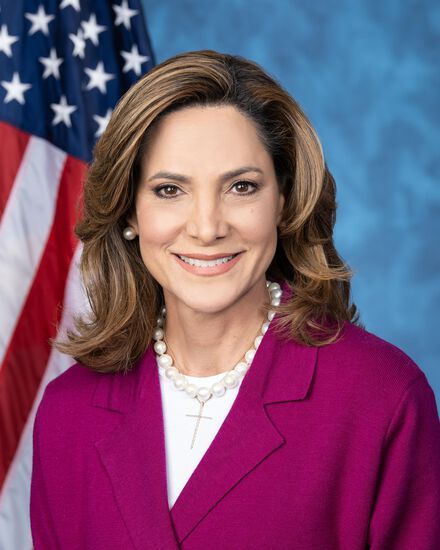
Rep. Maria Elvira Salazar
Sponsored bills
Maddy summaryThe VISITOR Act authorizes the Department of State to use collected passport and visa fees to fund general consular services, including the protection of U.S. citizens overseas. By allowing these funds to be transferred between specific accounts, the bill aims to provide more resources for processing applications and supporting diplomatic operations. A key provision sets a goal for the Secretary of State to ensure that 80 percent of nonimmigrant visa applicants are interviewed within three weeks of applying. This timeline target includes exceptions for cases where security concerns or the need to assist U.S. citizens abroad require different handling.
Maddy summaryThe Task Force on the Impact of the Affordable Housing Crisis Act of 2026 establishes a bipartisan, 18-member task force to study how a lack of affordable housing affects various aspects of life and government spending. The group will evaluate impacts on areas such as education, employment, health, and regional economic growth, while also quantifying the costs imposed on federal, state, and local programs due to housing shortages. Members will be appointed by congressional leadership within 180 days of enactment and must submit a final report with recommendations to Congress before the task force terminates two years after all members are appointed.
Maddy summaryThis bill designates Afghanistan for Temporary Protected Status, allowing nationals who have lived continuously in the United States since the law's enactment to apply for a legal stay until July 1, 2029. To qualify, applicants must pass background checks and submit biometric data, while the Department of Homeland Security is required to process these applications within 90 days unless national security concerns justify a brief extension. The legislation also permits eligible individuals to request fee waivers for their applications and allows for special travel consent in emergency situations that require a short trip abroad.
Maddy summaryThis bill prohibits the United States from providing any voluntary or assessed funding to the United Nations Relief and Works Agency for Palestine Refugees in the Near East. The restriction applies directly to the U.S. government's financial contributions to the agency, effectively cutting off official U.S. support. However, the law allows for humanitarian aid to individuals who receive help from UNRWA if that aid is delivered through other organizations that do not promote violence, terrorism, or antisemitism. Ultimately, the legislation mandates a complete halt to direct U.S. funding for UNRWA while permitting indirect assistance under specific conditions.
Maddy summaryThis bill reauthorizes and expands the Accelerating Access to Critical Therapies for ALS Act through 2031, extending funding for research into treatments for amyotrophic lateral sclerosis. It requires drug manufacturers to share interim clinical trial data with the FDA to better assess the progress of investigational drugs and clarifies that phase 3 clinical trial definitions include combined phase 2/3 trials and planned trials not yet enrolling participants. The legislation also mandates the FDA to publish an updated five-year action plan for ALS and other rare neurodegenerative diseases, including resource needs and coordination strategies with broader disease communities. Additionally, the bill requires the Government Accountability Office to submit a report on the program's implementation four years after enactment.
Maddy summaryThe STRATA Act of 2026 establishes a new program within the Department of State to foster international partnerships focused on advancing critical minerals technologies, aiming to strengthen U.S. supply chains and national security. This initiative allows the Secretary of State to form alliances with allied and partner nations, universities, and private companies while explicitly prohibiting collaborations with designated countries of concern such as China and Russia. Key provisions include the creation of International Centers of Excellence for research and training, the development of a digital platform to connect stakeholders with funding opportunities, and the establishment of clear guidelines for intellectual property and data security within these partnerships. The program authorizes the use of specific funding sources to support joint projects in extraction, recycling, and manufacturing, with a requirement that all activities conclude within ten years of the bill's enactment.
This bill designates the facility of the United States Postal Service located at 3255 Northwest 94th Avenue in Coral Springs, Florida, as the "Nancy Metayer Post Office Building".
Maddy summaryThe Main Street Capital Access Act reduces regulatory burdens for smaller banks, particularly those with less than $10 billion in assets. Key provisions include a 3-year phase-in period for new banks to meet capital requirements, lower leverage ratio requirements for rural banks (7.5% for the first 2 years), and a 30-day review process for business plan deviations. The bill also establishes an Office of Independent Examination Review, sets specific timelines for examinations (270 days) and reports (90 days), and creates a "least cost exception" for bank resolutions to prevent excessive concentration of the banking system. These changes aim to promote new bank formation, improve regulatory efficiency, and support community banking while maintaining financial stability.
Maddy summaryHR 4283 designates the U.S. Postal Service facility at 1157 West Mission Avenue in Escondido, California, as the "Captain E. Royce Williams Post Office Building." The bill updates all official references (laws, maps, documents) to this specific post office to use the new name. This is a ceremonial naming bill with no policy changes or direct impact on citizens' rights or obligations. It affects only the postal facility's official designation and related records.