Maddy summaryThis symbolic House resolution expresses U.S. congressional support for Iranian protesters demanding democracy and human rights. It condemns the Iranian regime's violent suppression of protests, including killings, mass arrests, and internet restrictions, while urging the regime to release political prisoners and restore communication access. The resolution reaffirms the Iranian people's right to self-determination through free elections and echoes a 2023 resolution (HCR 7) that similarly praised protesters. As a non-binding expression of support, it does not impose new policies or alter U.S. government actions.
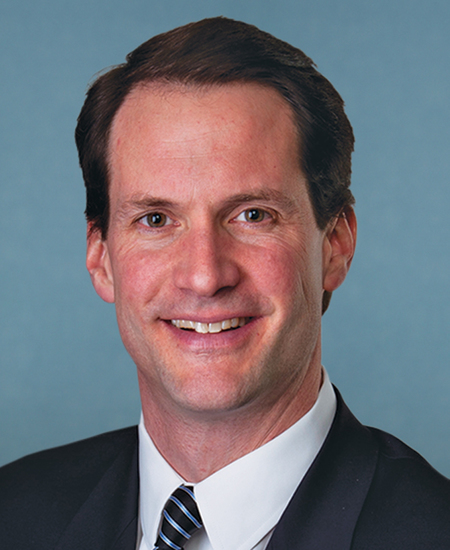
Rep. James A. Himes
Sponsored bills
Maddy summaryHR 6088, the *Restoring Food Security for American Families and Farmers Act of 2025*, repeals specific sections (10101-10108) from a prior reconciliation law. This action revives previous provisions related to food security programs that were modified by those repealed sections. The bill directly affects federal food assistance and agricultural support programs by restoring their prior legal framework. It does not create new policies but reverses recent changes to existing food security measures.
Maddy summaryHR 4509, the NOPAIN for Veterans Act, requires the Department of Veterans Affairs (VA) to add FDA-approved non-opioid pain medications to its national formulary within one year of their approval for pain management. These medications must reduce pain without acting on opioid receptors, directly affecting veterans receiving VA care who need pain treatment. The bill mandates the VA include such drugs in its formulary and drug standardization list, expanding access to non-opioid options. It also prohibits using funds from the Cost of War Toxic Exposures Fund to implement these changes, with implementation required within 90 days of the bill's enactment.
Maddy summaryHR 909, the Crime Victims Fund Stabilization Act of 2025, modifies how funds from the False Claims Act are deposited into the Crime Victims Fund. It specifies that from 2025 through 2029, certain False Claims Act proceeds (specifically those for qui tam plaintiff payments and government damage reimbursements) cannot be deposited into the fund. This change directly affects the composition of the Crime Victims Fund by excluding these specific revenue streams during the specified period. The bill does not create new benefits or alter victim services; it only adjusts fund allocation rules for existing False Claims Act revenues.
Maddy summaryHR 6997, the Community Passport Services Access Act, allows qualified public libraries to become official passport acceptance facilities and collect the standard execution fee for passport applications. It directly affects non-profit public libraries meeting U.S. State Department regulations, enabling them to serve as passport application sites - expanding access beyond current locations like post offices. Key provisions authorize new libraries to apply for this role and automatically authorize existing libraries that previously accepted passports. The bill also updates the Passport Act to formally include public libraries in the list of authorized acceptance locations. This creates a concrete policy change in where passport services are available to the public.
Maddy summaryThis concurrent resolution (HCONRES 69) commemorates the 15th anniversary of the January 8, 2011, Tucson shooting that killed six people and injured 13, including former Congresswoman Gabby Giffords. It honors the victims, survivors, and Giffords - now a prominent advocate for gun violence prevention - and recognizes her leadership in promoting civility and reducing gun violence. The resolution also commends Tucson residents and first responders for their resilience and reaffirms Congress’s commitment to respectful dialogue and opposing political violence. As a ceremonial resolution, it does not create new laws or policies.
Maddy summaryThis bill prohibits the use of federal funds for any military action against Venezuela from its enactment date through December 31, 2026, unless Congress either declares war or passes new specific authorization meeting War Powers Resolution standards. It directly affects all federal agencies and military operations that would require funding for actions targeting Venezuela. The key mechanism blocks funding for military force unless Congress explicitly authorizes it through one of two specific pathways. A narrow exception allows actions already compliant with existing War Powers Resolution rules. This is a funding restriction, not a ban on military action itself.
Maddy summaryHR 4611 (EACH Act of 2025) requires all federally funded health programs - including Medicaid, Medicare, military health plans, and the Indian Health Service - to cover abortion services without restrictions, repealing the Hyde Amendment's long-standing ban on federal funding for most abortions. This directly affects millions of people enrolled in these programs, particularly low-income women, women of color (including 25% of Black women and 22% of Hispanic women on Medicaid), and young people. The bill mandates coverage in all federally administered health plans and prohibits state or private insurers from restricting abortion coverage in health insurance. It aims to eliminate current federal and state barriers that deny abortion access to people who rely on government health programs.
Maddy summaryHCONRES 61 directs the President to withdraw U.S. military forces from hostilities against any terrorist organization designated by the president in the Western Hemisphere. This bill specifically applies to military operations involving U.S. armed forces in the region targeting such groups. The key provision requires the withdrawal unless Congress has passed a formal declaration of war or specific authorization for that military action. The resolution invokes Section 5(c) of the War Powers Resolution to compel this change in military deployment.
Essential Caregivers Act of 2025 This bill prohibits certain health care facilities from limiting the access of essential caregivers to residents of those facilities, including during designated emergency periods. Specifically, the bill generally prohibits Medicare skilled nursing facilities, Medicaid nursing facilities, Medicaid intermediate care facilities, and associated inpatient rehabilitation facilities from restricting the access of essential caregivers to residents of the facilities, including during emergency periods in which visitation rights are otherwise restricted. During emergency periods, facilities may restrict access for an initial period of up to seven days and for one additional maximum seven-day period (if the additional period is approved by the state health department). Facilities may restrict access for a total of 7 days (or 14 days with the approval of the state health department) during an emergency period. Essential caregivers must agree to comply with any safety protocols set by the facility, which may be no more stringent for caregivers compared to those for staff. Caregivers who fail to comply with these requirements may be denied access, subject to an appeals process.